

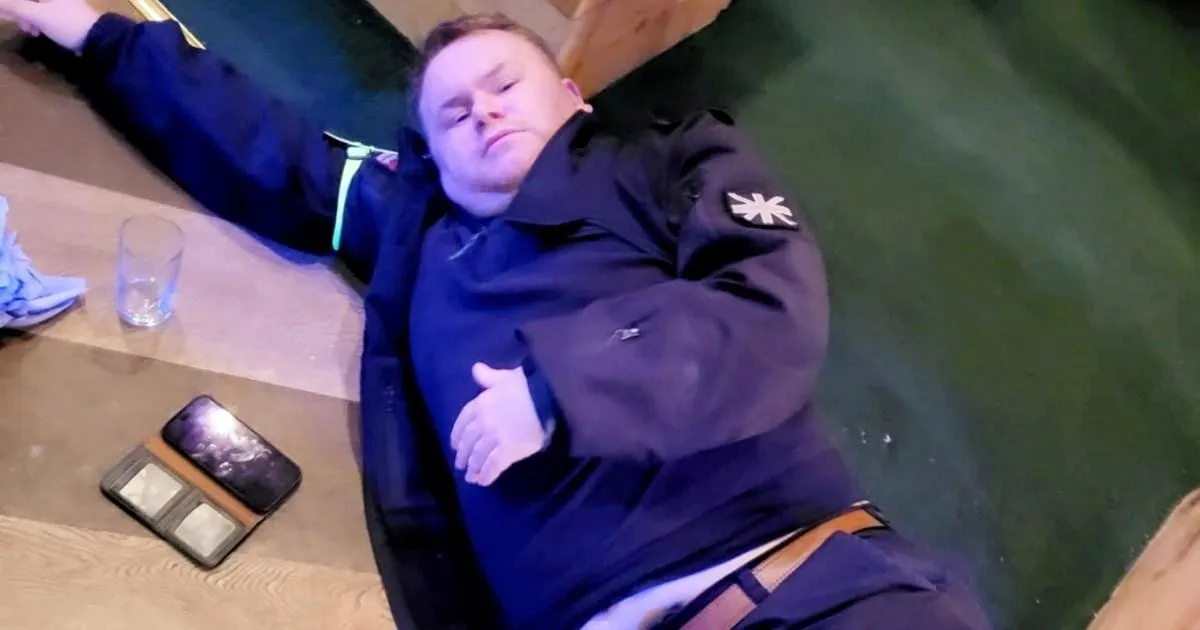
On an ordinary night in Folkestone, Jonathon Proctor walked into work as a doorman expecting to do what he had always done: stand at the door, keep the peace, and make sure everyone inside could enjoy their evening without fear. But on 23 November 2024, that ordinary night turned into a life-changing ordeal. Jonathon, then 33, was doing his job when he tried to escort a man named Craig Rimmer out of the Old Cigar and Olive. What happened next was captured on CCTV and would come to define the next two years of his life. Rimmer threw him to the floor. Jonathon landed heavily, and in that single moment he felt something give way in his knee. The pain was immediate, but the full scale of the damage would take months to understand. He has been using crutches ever since, and now, nearly two years later, he still cannot walk without them. He has not been able to work since the attack, and he has been forced to rely on benefits just to get by. For a man who had built his life around physical work, around protecting other people, around being strong enough to handle difficult situations, this sudden collapse of everything he relied on was devastating. What makes it worse is that he did not choose to be in that moment. He was simply trying to do his job, to help maintain order, to keep a potentially dangerous situation from escalating. Instead, he became the one left on the floor, his body broken, his career in ruins, and his faith in the justice system severely shaken.
The court case seemed like the chance for some kind of accountability, but for Jonathon it became yet another wound. Rimmer was charged with actual bodily harm, and Jonathon waited over a year for the possibility of facing the man who had injured him in court. He wanted to see justice done, to hear the court acknowledge the damage that had been caused, and perhaps to feel that his suffering mattered. Instead, Rimmer changed his plea at the very last moment, and the sentencing went ahead without Jonathon in the courtroom. He was not there to see what happened, and that detail haunts him. Rimmer was spared jail. He was ordered to pay £2,000 in compensation. The judge told Rimmer that he did not think the man “deserved or needed to be punished any further” for his offending, and then wished him luck in getting back to Great Yarmouth. For Jonathon, that moment was almost impossible to process. He had spent more than a year in pain, unable to work, waiting for the legal system to take his case seriously. What he got, in his words, was a “slap on the wrist.” He says the whole experience still makes him angry, and his anger is not just about the money or even the sentence. It is about the sense that the person who hurt him walked away with his life largely intact, while Jonathon was left to rebuild his from a position of real physical and emotional wreckage.
The physical impact of the attack has been brutal and unrelenting. Jonathon still uses crutches daily, nearly two years after the incident. His knee has not healed the way anyone hoped it would. A scan revealed tears in his meniscus and his ACL, the kind of injuries that require serious surgical intervention and long, uncertain rehabilitation. He now faces an operation, but even that offers no guarantee that he will ever regain full strength. In the meantime, his daily life is defined by limitations. Simple tasks that most people take for granted, standing at a counter, walking across a room, climbing a few stairs, have become difficult or impossible. He has been unable to work since the attack, which means he has lost not only his income but also the structure and purpose that came with his job. Relying on benefits has been humiliating for him, not because there is any shame in needing help, but because he had always been the kind of person who worked hard and provided for himself. Now he is dependent, through no fault of his own, and the uncertainty is constant. He does not know when the operation will happen, how successful it will be, whether he will ever walk without pain, or whether he will ever work again. Every day he wakes up and the first thing he feels is the pain in his knee, a physical reminder of a single violent moment that changed everything. The mental toll is just as heavy. He has had to watch his body stop being what it once was, and he has had to sit with the knowledge that the person who caused it is not paying a meaningful price.
Perhaps the deepest loss is not just physical but professional and personal. Jonathon was a doorman, a role that is often misunderstood and undervalued. Door staff are the invisible guardians of nightlife, the people who stand between trouble and the ordinary customers who just want to have a good time. They deal with aggression, intoxication, conflict, and risk, and they do it so that everyone else can feel safe. Jonathon was proud of that work. He understood that being a doorman was not just about strength; it was about judgment, presence, and a kind of quiet professionalism. He went to work to make sure people like Craig Rimmer could have a good night, and that is what makes the betrayal feel so sharp. He never expected to become a victim. He never expected that doing his job would result in his entire career being destroyed. Now, he says, his career is gone. He very much doubts he will ever be in the mental or physical state to return to the doors. The confidence required for that kind of work, the ability to stand your ground, to trust your body, to move quickly in a crisis, has been taken from him. Even if his knee somehow recovers enough, the fear and the memory of being thrown down will remain. He says Rimmer has effectively destroyed a good portion of what he can do now, and those words carry the weight of a life plan torn apart. This is not just a job loss. It is a loss of identity, of independence, and of a future he had imagined for himself.
What makes the whole story so bitter is the sense of injustice embedded in the legal process. In court, Rimmer’s defence painted a picture of a man who had built a respectable life since his previous troubles. He is a father of three, a foreman for the construction firm Balfour Beatty, someone with an impressive salary. His barrister suggested that his comfortable financial position meant an order for compensation could best be met. The judge took that to heart, concluding that Rimmer did not deserve or need further punishment. But Jonathon cannot help but notice the difference in treatment. One man walked out of court with his liberty, his job, and his salary intact, while the other man was left on crutches, dependent on benefits, unable to work, and facing surgery with no certainty of recovery. The inequality feels glaring. At one point, Jonathon says, it felt like arrogance. The legal system seemed to weigh Rimmer’s earning power and his years without trouble more heavily than the reality of what he had done. There was no real acknowledgment of the suffering Jonathon has endured, no recognition that a man’s life was derailed in a few seconds. Instead, a last-minute plea change meant the victim was not even present to hear the sentence. Jonathon had waited over a year for the chance to see justice, and he was denied even that basic opportunity. For anyone watching, the message is troubling: if you are in a respectable job, if you have money, if you can present yourself well in court, the consequences for violence may be very light indeed.
Looking ahead, Jonathon does not know exactly what his future holds. He is facing an operation on his knee, and after that comes the slow, uncertain work of rehabilitation. He would love to walk without crutches again, to move through a day without pain, to find some kind of work that gives him purpose. He is not asking for sympathy, and he is not asking for revenge. What he wants is for his experience to be seen, for victims to be treated with dignity, and for the justice system to recognise that the consequences of a crime do not end when the attacker leaves the courtroom. The £2,000 compensation order may be paid, but it does not come close to covering what Jonathon has lost. It will not restore his knee, his career, his confidence, or his peace of mind. It will not give back the nearly two years he has spent on crutches, waiting, worrying, and wondering why the man who hurt him was allowed to walk away so easily. He still gets angry, and that anger is justified. But beneath it there is something more complicated: grief for the old life he used to have, anxiety about the life he still needs to build, and a deep weariness from having to fight for something as simple as being heard. As he prepares for surgery, Jonathon holds on to a small, stubborn hope that he will one day stand on his own two feet again, not because he is confident, but because he refuses to let one violent moment be the final word. It is a long road ahead, and he will have to walk it largely alone, with a damaged knee and a heavy heart, but he is still here, still telling his story, still waiting for someone in power to truly listen.