

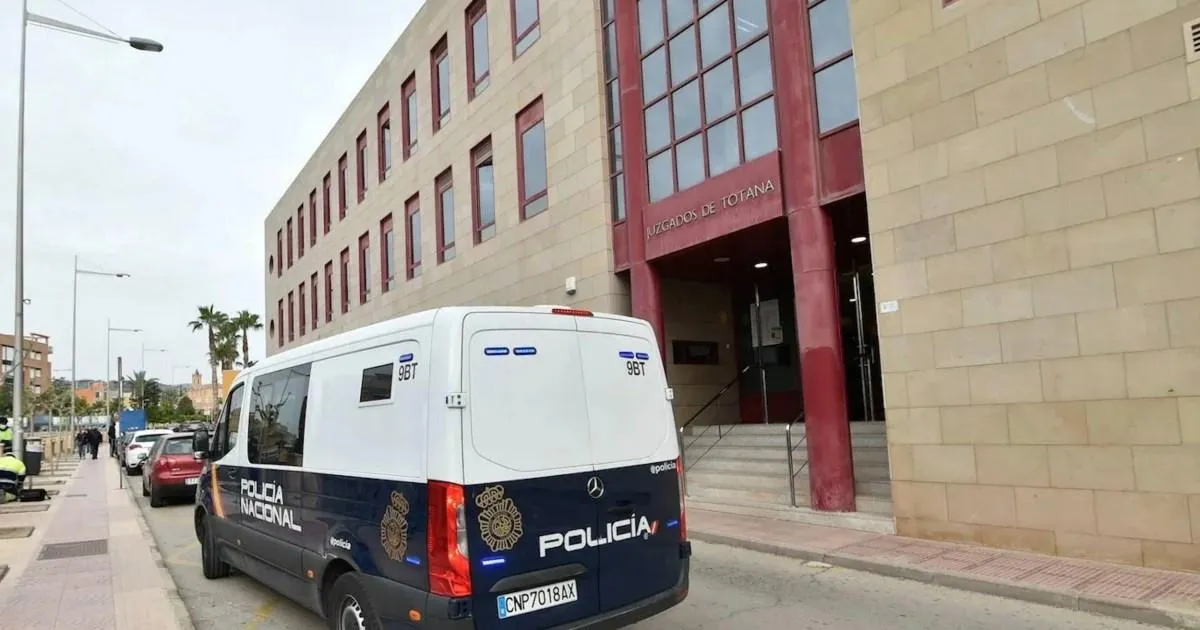
On a sun-bleached street in Camposol, a development in the Murcia region of southeastern Spain popular with British expats, a quiet December evening turned into a nightmare that would echo far beyond the whitewashed walls of a new home. The couple at the centre of the story, Michael John C. and Vanessa Elizabeth, had only recently moved into the property, still busy with unpacking and adjusting to a life that should have been about retirement, sunshine, and the company of their dogs. Instead, on December 4, 2022, 57-year-old Vanessa was found lying outside the house, gravely injured. She was rushed to hospital, but her life could not be saved. Her husband, a British man whose name has been withheld under Spanish legal restrictions, was arrested at the scene. Now, after months of investigation, he is standing trial for aggravated murder, a charge that could keep him in prison for the next 25 years. The case has shaken the small expat community, where neighbours remember seeing the pair as an ordinary couple, perhaps a little private, often outdoors with their beloved animals. But behind that ordinary image, as court proceedings have revealed, lies a story of rain-soaked bar visits, a drunken ride home, and a fatal sequence of events that two very different accounts are trying to explain.
The defence has offered a version of events that is tragic and, they insist, accidental. According to Michael’s lawyer, the couple had spent the day drinking in local pubs, and by the time they returned home, Michael was heavily intoxicated. His story is that Vanessa got out of the car to make sure the dogs did not escape from the property, while he prepared to reverse or manoeuvre the vehicle. In his befuddled state, he claims, he did not see her and accidentally knocked her over with the car. The lawyer says that when Michael realised Vanessa had not come back, he got out and found her lying motionless only a few inches from the car, her head against the kerb, blood visible beneath her. In that terrible moment, according to the legal account, he approached her and called out: “Hello, hello, wake up.” She did not respond. The image is wrenching: a man startled from drunkenness into a horrifying reality, desperately trying to revive the woman he had shared his life with, only to discover that she was already slipping away. The defence insists that this was a tragic accident, a catastrophic error made in an instant of confusion and drink, and that Michael had no intention to harm his wife, let alone kill her. They argue that manslaughter, rather than aggravated murder, is the only legally possible outcome, and they are seeking an acquittal on the more serious charge because, they say, there was no will to kill and no conduct aimed at causing Vanessa’s death.
Prosecutors, however, tell a radically different and far darker story. In their pre-trial indictment, they describe a heated argument that erupted after a day of drinking, and they accuse Michael of suddenly and brutally turning on his wife. They claim that, “abusing his physical superiority” over Vanessa, he began to hit her violently in the face and body with no warning, causing her to fall to the ground in front of their home and in front of the vehicle. The violence, according to the indictment, did not stop there. The prosecution alleges that, with the intention of inflicting great pain and severe physical and psychological suffering, Michael then kicked her forcefully all over her body several times, jumped on her, immobilised her, covered her mouth, and compressed her chest. The chilling detail in the charges paints a picture not of a momentary lapse but of a sustained, deliberate assault by a man determined to dominate and punish his wife. If the jury accepts this account, the tragic accident becomes a chilling act of intimate violence. The contrast between the two versions could hardly be starker: one tells of a husband who made a terrible mistake and then watched helplessly as his wife died; the other tells of a man who, in a drunken fury, systematically beat his wife until she lay broken on the ground. The court will have to decide which of these narratives is closer to the truth.
The legal battle that has unfolded in a Spanish courtroom is framed by a technical dispute over intent. Under Spanish law, aggravated murder requires proof that the accused intended to kill or was aware that his actions would likely cause death. The defence has argued that Michael lacked any such will to kill, pointing to his claim that he was drunk and that the entire episode was a tragic accident. They have suggested that alcohol consumption should be treated as a mitigating factor, reducing any potential conviction from murder to manslaughter. His lawyer has said that a manslaughter verdict with mitigating factors including alcohol consumption would be the only legally possible outcome if the court finds that he caused Vanessa’s death at all. But prosecutors are seeking the maximum penalty, and the possibility of a 25-year sentence hangs over Michael as he prepares to take the stand. According to local reports, he is expected to testify on October 30, which would give him the chance to tell his version of events directly to the jury. The trial is not just about punishment; it is about the interpretation of a single evening, and the words spoken in court will determine whether a man spends the rest of his life in prison or walks away with a conviction for a lesser crime. For Vanessa’s family and friends, meanwhile, the testimony will be painful to hear, reopening wounds that have never fully healed.
What makes the case even more troubling is what lies in the background. Reports have emerged that the man now on trial had been reported to police for domestic violence several times in the past. Yet despite those reports, there was no active registration in place relating to the British couple on Spain’s VioGen system, the specialised database created in 2004 as part of national efforts to combat gender-based violence. This apparent gap raises difficult questions about whether warning signs were missed, whether previous incidents were dismissed, or whether a pattern of abuse existed that never made its way into the official record. The couple had not lived in Camposol for long; they had moved into the house where Vanessa died only a few days before the fatal incident, after spending time in other nearby towns. The new surroundings were supposed to be a fresh start, a place where the sun and the sea could smooth over old troubles. Instead, the move became the final backdrop for a tragedy that had perhaps long been in motion. For those who lived nearby, the news that Michael had been reported to police before complicated the sympathetic portrait drawn by his defence. They began to wonder if the cheerful waves from the driveway had hid something darker, if Vanessa had been suffering in silence, or if the system meant to protect her had simply failed.
In the end, this is a story about two lives that crossed into a fatal collision one night in a quiet Spanish cul-de-sac. It is also a story about the impossibility of knowing what truly happens between two people behind closed doors. The court will sift through forensic evidence, witness accounts, and the testimony of the man at the centre of it all, trying to find a version of events that feels true enough to justify a verdict. But for those who loved Vanessa, no verdict can undo the horror of that December night. She was a woman who had come to Spain to start a new chapter, with her husband, her dogs, and her dreams of peaceful days. Instead, she died outside her own home, and the man who was supposed to protect her now stands accused of ending her life. Michael John C. faces the rest of his life in prison, but in a deeper sense, both of them have already lost everything. The trial on October 30 will be a final reckoning, a moment when the world hears from the only person still alive who can describe what happened in those last fraught moments. No matter how the legal advocates frame their arguments, the sadness remains: a partnership that once held promise dissolved into violence or catastrophe, leaving behind a grieving family, a shattered community, and a question that may never be fully answered.