

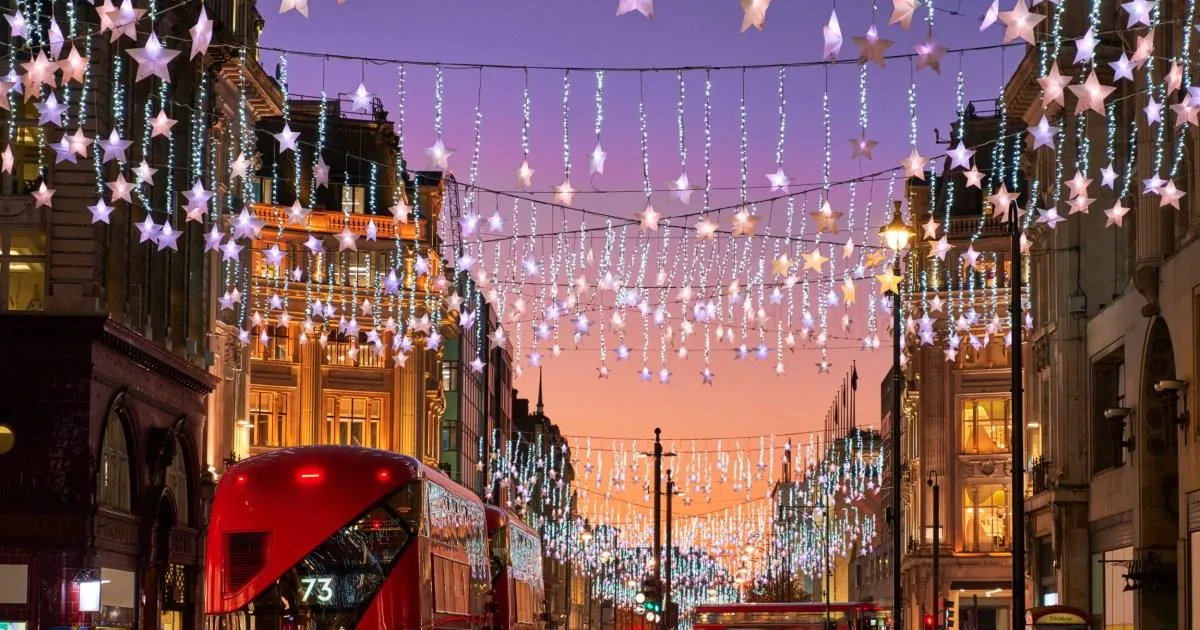
London’s Oxford Street has always been more than just a road. For generations, it has been the beating heart of British retail, the place where thousands of people come to shop, to work, to celebrate, and sometimes just to people-watch. But it has also been a place of constant struggle, where crowded pavements meet roaring traffic, where buses grind through narrow gaps between shoppers, and where the air has tasted of diesel for as long as anyone can remember. That is about to change, and dramatically. From tomorrow, October 26, one of the most famous shopping streets in the world will begin its long-awaited transformation into a pedestrianised zone. A one-kilometre stretch of the road, the section that runs from Selfridges at Orchard Street to Great Portland Street, will go completely vehicle-free in what transport officials are calling the ‘transition phase’. Cars, buses, taxis and bicycles will all disappear from this stretch, and for the first time in over a century, the heart of London’s West End will belong entirely to people on foot. It is a bold, historic, and for some a slightly terrifying change, but it is also one that has been coming for a very long time.
The first phase of pedestrianisation was given the green light back in February, and the plans are far more ambitious than simply putting up a few barriers and letting people wander freely. The vehicle ban covers a very specific but highly significant area: from Orchard Street, where the grand facade of Selfridges has watched over Oxford Street for over a century, to Great Portland Street, just east of Oxford Circus Underground Station. Crucially, the pedestrianised zone also includes Oxford Circus itself, the famous intersection where Oxford Street crosses the much wider Regent Street. This is arguably the most recognisable junction in London, a place normally so packed with tourists, commuters and double-decker buses that moving through it can feel like a contact sport. Under the new rules, all cars will be banned except for emergency services and delivery trucks, and even those delivery vehicles will only be allowed between 7am and midnight. That means for most of the day, the only things moving through this central shopping district will be human legs, wheelchairs, prams and the occasional wheeled suitcase. E-bikes and e-scooters will also be banned from the pedestrianised section, which may come as a surprise to some, although Transport for London has confirmed that new cycleways are being developed nearby to make sure cyclists are not completely forgotten. Interestingly, cars will still be able to cross Oxford Street at certain points along the route, including Duke Street, Davies Street, Stratford Place, Holles Street and New Bond Street, though most of these crossings will be one-way. It’s not quite a complete wall of traffic, but it is certainly a dramatic reorganisation of the space.
What is happening on the surface of Oxford Street itself is just as important as what is being banned from it. The plan is not simply to leave the road as a giant empty tarmac runway for pedestrians; it is to physically rebuild the street so that the old road and pavement become one continuous, level surface. Transport for London has confirmed that the height of the road will be raised to meet the pavement, creating a seamless, step-free environment that feels less like a road and more like a public square. This is a subtle but deeply significant change, because it changes the psychology of the space. When the road is level with the pavement, you stop thinking of it as a road at all. You are no longer walking alongside traffic, but through a space that has been designed for human comfort first. The first two sections of this road-raising work, between Orchard Street and Duke Street, and between Old Cavendish Street and Holles Street, are expected to be completed by spring 2027. The remaining sections will follow in later phases, but the overall vision is already clear. This will not just be a street where cars happen to be banned; it will be a proper pedestrian boulevard, the kind of thing you might see in Copenhagen or Barcelona rather than in the heart of London. Around 50 new trees will also be planted along the pedestrianised area, along with more than 100 new seats, giving tired shoppers somewhere to rest their feet and families somewhere to stop and take a breath. Two new public squares will also be created, though their exact locations have not yet been revealed, and Transport for London is even considering installing a water feature, which would add an extra layer of calm and playfulness to the area.
The most immediate and practical impact for most people, however, will be on the buses. Oxford Street is currently served by a huge number of day and night bus routes, and all of them are going to be rerouted away from the pedestrianised section. That is a big deal for anyone who has ever relied on the number 7, 94, 98, 139, 390, or any of the night routes that have traditionally moved thousands of people through the West End every evening. According to the plans published by Transport for London, all of these routes will now be redirected down Wigmore Street and Henrietta Place, which run behind John Lewis, before rejoining Oxford Street at Great Titchfield Street on the other side of Oxford Circus. The one exception is route 139, which will continue its journey along Regent Street instead. New bus stops will be placed on Wigmore Street, Henrietta Place and Cavendish Place, which means passengers will need to walk an additional 100 to 200 metres to reach their buses. For some, especially those with limited mobility or heavy shopping bags, that extra walk will be a real inconvenience, and it could take a while to get used to. Transport for London seems aware of this, and staff will be deployed near bus stops and along Oxford Street over the next week to help confused passengers find their way. Still, there is no doubt that the bus rerouting will be the most visible and disruptive part of the transition phase, at least in the short term. If you usually catch a bus along Oxford Street, it is worth checking the new routes before you travel, because the old familiar bus stops are simply going to vanish.
Beyond the practical disruption, though, there is something genuinely exciting about what this change represents. For years, pedestrians on Oxford Street have been treated as second-class citizens, squeezed onto narrow pavements while buses, taxis and delivery vans hogged the rest of the space. The air has been polluted, the noise has been relentless, and simply walking from one end of the street to another has often felt like navigating an obstacle course. Now, at last, the priorities are being flipped. The people get the road. The people get the space. The people get the peace and quiet. When the road is raised and the trees are planted and the new squares are opened, this could become one of the most pleasant public spaces in London, rather than one of the most stressful. There is a reason why cities all over the world have been pedestrianising their main shopping streets for decades. It works. It brings people together. It encourages people to stay longer, to spend more money, and to enjoy the city in a way that is simply not possible when traffic is roaring past. Of course, not everyone is happy about it. Shops that relied on deliveries may face complications, drivers who live or work nearby will have to learn new routes, and some politicians and business owners have warned that removing buses could actually push people away from Oxford Street, especially those who live in the suburbs or have difficulty walking long distances. These are legitimate concerns, and the next few months will be a real test of whether the new arrangements work for everyone.
But this is not the end of the story; it is only the beginning. The pedestrianisation of Oxford Street is a project that will take years to complete, and the spring of 2027 is currently the target date for the full transformation to be finished. The ‘transition phase’ that begins tomorrow is just the first awkward, necessary step in a much longer journey. There will be teething problems. There will be confusion at bus stops. There will be people who miss the old way of doing things and wonder whether the whole experiment is worth it. But if history tells us anything, it is that big changes to city streets always feel strange at first, and then, before long, they start to feel completely normal and even essential. London has already done this with places like the South Bank, where the removal of traffic opened up one of the most beloved walking routes in the city. Now it is Oxford Street’s turn. From tomorrow, the road will look and feel very different, but that is exactly the point. It is not just about banning vehicles. It is about reclaiming a space that belongs to the people of London and the millions of visitors who come here every year. It is about creating a street you can walk down without holding your breath, a place where you can stop and stand in the middle of the road and not worry about being hit by a bus. It is about understanding that a great city is not measured by how many cars can squeeze through its main street, but by how many people can happily walk along it. So if you are in London over the next few weeks, do yourself a favour: take a walk along the new Oxford Street, hear the difference, breathe the difference, and be part of the moment when one of the world’s most famous streets finally began its transformation.