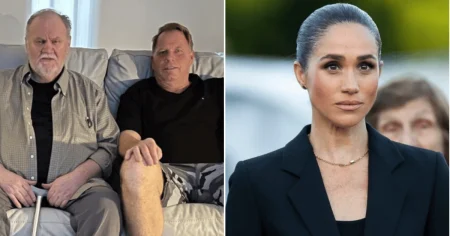



It was a quiet Saturday afternoon when the Metropolitan Police issued a carefully worded statement that, in a few measured sentences, pulled a deeply personal family fracture back into the public eye. Scotland Yard confirmed that it had received a letter in 2019 containing “a number of claims” about Thomas Markle Sr., the estranged father of Meghan, Duchess of Sussex. The letter had not been sent to a general complaints inbox or buried in administrative paperwork; it was directed to the MPS Protection Command, the unit responsible for the safety of high-profile individuals. The reason, the police said, was to “raise concerns in relation to the security of the Duchess of Sussex.” The claims were reviewed, and a decision was made to pass the letter to the office of the Duke and Duchess of Sussex “for their awareness.” But the allegations were not shared with any other law enforcement agencies. Now, years later, the police are reviewing how that handling unfolded and whether the matter should be referred to the Independent Office for Police Conduct, the watchdog that investigates potential misconduct by officers. The statement was dense with institutional caution, but beneath it lay a human story of estrangement, fear, memory, and the impossible weight of being a public figure whose private wounds are dissected by millions.
The timeline, as it has emerged, is more complicated than it first appeared. On Friday, Meghan said she had been made aware of “disturbing allegations” about her father in 2018. She described being shown a letter sent to Scotland Yard eight years earlier—a letter that made “troubling” accusations against Thomas Markle Sr.—and she recalled being assured that the matter was under investigation. But the police’s own records told a slightly different story. According to the Met, the letter was not received in 2018 but in January 2019. The force was emphatic on this point: “Following a thorough review of Met Police systems and records, we have confirmed that in January 2019, we received a letter containing a number of claims about alleged offending outside the United Kingdom.” In other words, the timing was off by a few months, not by years. The discrepancy might seem small, but in a story already tangled with accusation and counter-accusation, even a small gap can become a weapon. The Met’s statement also made clear that while the letter was reviewed and shared with the Sussexes’ office, the details contained in it were never passed to other law enforcement bodies. That detail is significant, because allegations of the nature involved would ordinarily raise questions about whether they should be forwarded to relevant authorities, especially given that the alleged offending was said to have taken place outside the United Kingdom.
Meghan’s response, delivered through a spokesperson, was both measured and human. She acknowledged the discrepancy in dates but offered a simple explanation: memory, especially memory of events that took place more than seven years ago, is not always precise. “In recalling events from more than seven years ago, without the benefit of a diary entry or contemporaneous record, it is understandable that she may have been mistaken by a few months,” the spokesperson said. The statement went further, gracefully deferring to the police’s records: “If the MPS holds a time-stamped record confirming that the letter was reviewed in 2019, that should be treated as the accurate reference point for when it was received and shared with the Duchess.” There was a quiet dignity in that concession, an acknowledgment that official documents often outlast human memory. The spokesperson also stressed that Meghan was doing her best to recall “precise timing of events that were not diarised at the time,” and that any discrepancy was an “understandable consequence” of the passage of time. It was the kind of response that tries to lower the temperature, to remind the public that people are not databases. And yet, the stakes were not merely semantic. The underlying content of the letter—disturbing allegations about her father—would be enough to unsettle anyone, let alone someone living under the constant glare of global media scrutiny. The fact that she had been shown such a document at all, and then asked to carry that knowledge while navigating a very public life, speaks to the strange cruelty of circumstances that few could imagine.
The allegations themselves come from a source that adds another layer of pain to an already fractured family. According to The Sun, Meghan’s half-brother, Thomas Markle Jr., told police in the Philippines that he had discovered a stash of images belonging to their father at his former home in the country. He claimed that child sex abuse pictures and videos were mixed in with innocent family mementos, a detail that, if true, would make the discovery all the more disturbing. The report said he had also contacted FBI investigators in the United States in July. The accusations were sweeping and specific, and they immediately reignited public interest in the long and painful history between Meghan and her father. Thomas Markle Sr. has been a recurring figure in the royal narrative, often through estranged and bitter exchanges played out in tabloid headlines. But this was not a dispute over wedding invitations or the optics of a father walking his daughter down the aisle. These were allegations of a far more serious and sinister nature, leveled by a son against his own father. The family dynamic has always been complicated: Meghan was the only child of Thomas Markle’s marriage to Doria Ragland, but she has two half-siblings, Samantha and Thomas Jr., from her father’s earlier marriage. Those relationships have rarely been smooth, and the Markle family’s private conflicts have frequently spilled into public view. Now, with one brother accusing the other of unspeakable behavior, the fractures seemed deeper than ever.
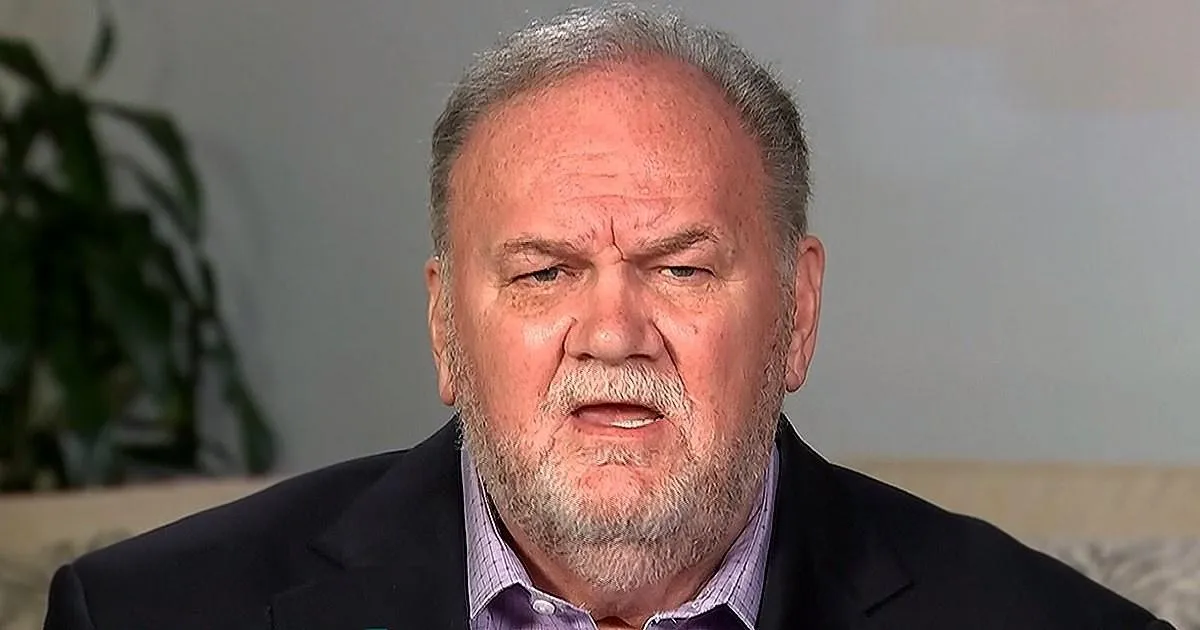
Thomas Markle Sr. responded with raw, emotional denial. In an interview with the Daily Mail, he rejected the accusations entirely, calling them “sick lies.” He said he was “shocked,” “hurt,” and “very upset” that his son was making such claims against him. “I could never do what I’m being accused of,” he insisted. “It’s the worst thing anyone could accuse me of.” His words carried the heavy weight of a man who felt cornered and betrayed, not only by the nature of the allegations but by the source. “This is bulls***,” he said bluntly. “It’s just a bunch of lies. It’s sick. I have no idea why Tom is trying to destroy me with these lies.” The interview was raw, unfiltered, and filled with the kind of desperation that comes from watching one’s reputation collapse in real time. The context matters here too: Thomas Markle Sr. has been in declining health in recent years, suffering a series of strokes that prompted his move to the Philippines in 2025 for a new life. It was meant to be a fresh start, a quiet place to recover away from the pressures and conflicts of the past. Instead, he found himself facing allegations that would devastate anyone, made all the more painful by the fact that they came from his own son. Whether the accusations have any basis in fact remains to be seen; investigations in the Philippines and possible interest from U.S. authorities are still in their early stages. But the human dimensions of the story—an aging, unwell father, a son willing to make explosive claims, and a daughter caught in the middle of a public and private storm—are almost unbearably sad.
At its core, this is not just a story about royal scandals or police procedure. It is a story about a family that has been broken for years, whose wounds have been repeatedly opened under the glare of international media. For Meghan, the letter was a reminder that her father’s presence in her life has been marked by conflict, estrangement, and, now, allegations so grave that they have drawn the attention of law enforcement on two continents. For Thomas Markle Sr., it is the latest and most devastating chapter in a life that has already seen his relationship with his daughter disintegrate in public. For Thomas Markle Jr., it is a startling act of accusation that raises questions about motive, evidence, and the desperate need to be heard. The police, for their part, are now sifting through their own records to determine whether they handled the letter correctly. They are asking whether they should have done more with the information, whether other agencies should have been notified, and whether their own internal processes need closer scrutiny. These are necessary questions. But as the investigation unfolds, there is also a need for restraint, for patience, and for a recognition that behind every official statement is a human being trying to make sense of an unbearable situation. The justice system must do its work, and the truth must be pursued with rigor. But in the meantime, the public would do well to remember that the people at the center of this story are not just headlines or hashtags. They are a father, a daughter, a brother, and a family—each carrying their own version of a painful past, and each now facing an uncertain and deeply unsettling future.