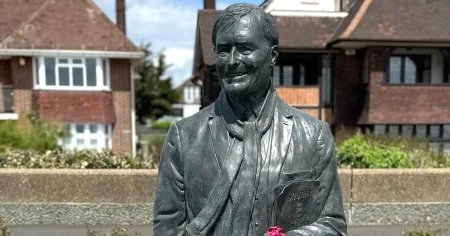



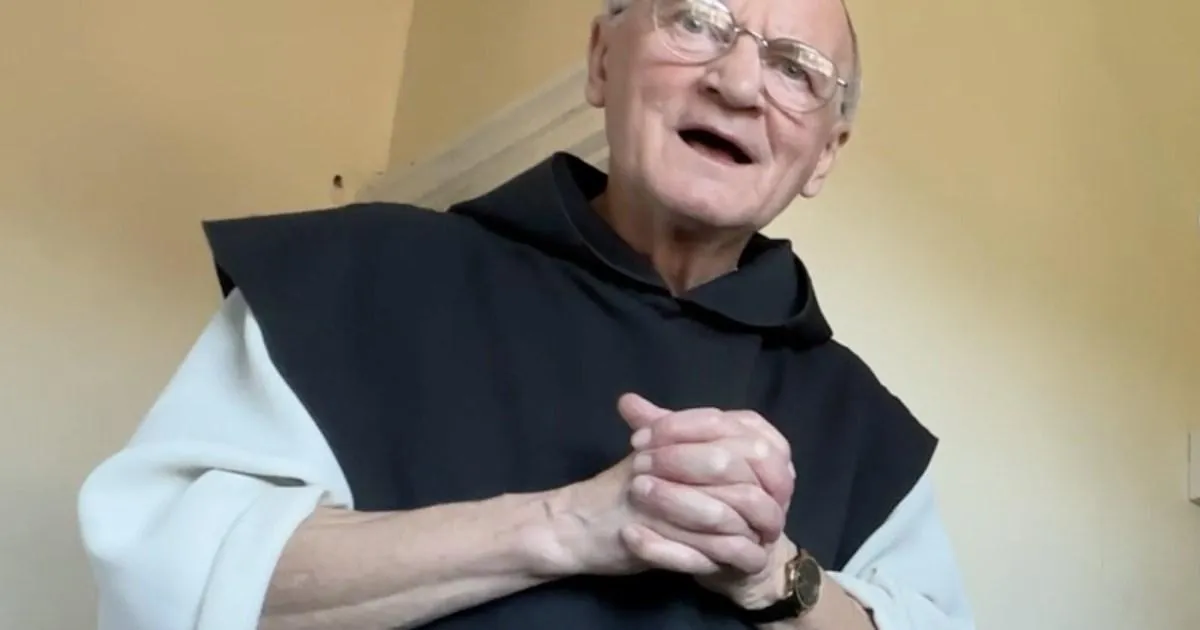
Caldey Island is a small, fiercely beautiful piece of land off the coast of Tenby in Pembrokeshire. It covers only 2.18 square kilometres and is owned by Cistercian monks, who have created a community of prayer, work, and silence there. Each year around 50,000 visitors take the short boat journey across the water, seeking beach paths, ancient churches, and an atmosphere far removed from the pressures of modern life. The island gives the impression of sacred peace. Yet over the past several years, that impression has been challenged by a series of disturbing allegations. The latest centres on Brother Titus Keet, a 78-year-old monk who has served on Caldey and is now accused of sexually assaulting visitors and staff, as well as taking and sending naked photographs of himself. Natalie Roberts, a single mother who chose to waive her legal anonymity, has come forward to say that Keet assaulted her while she was walking alone on a beach. She describes the incident as an “absolute violation”, saying he sneaked up behind her and sexually harassed her over her clothes. More heartbreaking is her description of the aftermath: it “took away my whole spiritual belief in Catholicism”. Her faith did not simply weaken; it disappeared, because the man who broke the boundary between them was exactly the kind of figure she had trusted to represent God. Keet denies her account, claiming that Ms Roberts turned “wickedly against him” after he rejected her advances. He also said he would reflect on his conduct. The accusation cannot be separated from Caldey’s wider history; in 2017, the island community settled a civil claim brought by six women who said they were abused as children by a monk named Thaddeus Kotik. For a place that trades in tranquillity, the shame is not in being imperfect, but in hiding darkness for so long.
To understand how deeply Natalie Roberts was wounded, one has to understand the role a monk plays in a believer’s life. A monk is not just an employee of the Church; he is a symbol of spiritual commitment, someone who has given his life to God. When such a person is sexually abusive, the damage goes far beyond the physical. It pollutes prayer, worship, and the very idea of sacredness. Ms Roberts’ decision to speak openly is a powerful act, because she knows that a woman who accuses a monk will often be seen as a troublemaker, a liar, or a predator herself. Keet’s counter-explanation—that she became vindictive after being rejected—is precisely the kind of story that institutions love to circulate, because it turns the survivor into a jilted woman. It is also a story that no one else can disprove, which is why it is so damaging. The podcast gave Ms Roberts a chance to tell her own story in her own voice. She did not exaggerate or sensationalise; she simply described a violation that changed her life. The phrase “absolute violation” is carefully chosen. It suggests that she did not just feel touched unwantedly; she felt invaded, broken, and stripped of dignity. In the aftermath, she has had to rebuild an identity without the religious foundation that once held her together. That is a slow, invisible labour. She will not be healed by Keet’s vague promise to reflect on his conduct. Reflection is easy; accountability is hard. What she and other survivors need is for the Church to stop defending its own and to start listening to those who have been harmed. Until that happens, Caldey’s beauty will always carry a shadow.
The details of the unnamed employee’s allegations make the pattern of behaviour even clearer. According to her account, Keet touched her body and made comments about it, telling her she should regard his sexual attention as flattering, even lucky. When she dared to say she would report him, he allegedly warned that she would lose her job. This is institutional abuse in its simplest form: a man with authority using that authority to silence a woman with less power. She was not a tourist who could leave; she was part of the small island economy, dependent on the monastery for her livelihood. Keet denies her allegations and responds with a biblical text: “To all who are pure themselves, everything is pure; but to those who have been corrupted and lack faith, nothing can be pure.” It is hard to imagine a more painful answer. He is effectively saying that his actions were pure and her perception was corrupt. That is a gaslighting technique dressed in scripture. It asks the survivor to doubt her own mind, and it tells any other potential victims that the Church will side with the monk. Keet also says he and the employee “co-operated very pleasantly together” over three years, as if friendliness rules out abusive behaviour. But abusers are frequently friendly; they need to be. They gain trust by being charming and then use that trust to exploit. The employee’s complaint might have been easier to dismiss if she were a stranger, but she was not. She worked alongside Keet, cooked for him, maybe cleaned after him. Her allegation carries the weight of familiarity. And her fear of losing her job is a fear that many workers in religious institutions recognise only too well. When the employer is also your spiritual superior, and when there is no independent human resources department, justice becomes impossible.
Lisa Love’s experience shows how a legal system can fail when confronted with religious language. Keet was reported over sending around 200 explicit photographs of himself to Love, a mother of now 55 who had met him fifteen years earlier. She had considered him a friend, probably a spiritual guide. The images were not random; they were sent in a stream over time, a campaign that she experienced as harassing. When the case reached the Crown Prosecution Service, Keet argued that the photographs were “spiritually motivated”, a form of art meant to display “my body in the light”. Astonishingly, the CPS accepted this explanation, and no prosecution followed. Love accused the CPS of siding with Keet because he is a religious man. Her critique is not bitter; it is rational. If a plumber, a teacher, or a local politician had sent 200 naked pictures to someone they had known for fifteen years, would the explanation “spiritual art” be accepted? It is deeply unlikely. The phrase “my body in the light” sounds poetic, but it also sounds exactly like what someone might say after being caught. Love has admitted that she was naïve. That admission should not be used against her; it is a reminder that friendship assumes good faith. She could not imagine that a monk would use his sacred office to send nude photographs, so she kept trying to find a saintly meaning in what was happening. The decision not to prosecute had consequences. It allowed Keet to remain a presence on Caldey Island until 2024, and it sent a destructive message to other survivors: if a man has faith on his side, the law may not believe you. Clerical privilege is not a formal legal category, but it operates in practice whenever a religious authority is given special credibility.
None of these accusations happen in a vacuum. Caldey Island was already tarnished by a prior scandal. In 2017, six women reached a civil settlement with the island’s community after alleging they had been sexually abused as children by a monk named Thaddeus Kotik. The settlement was not a criminal conviction, but it was an acknowledgment that serious harm had occurred. Then, in 2024, an independent review found that the victims had been treated in a hostile and cruel manner by the community, and that reports of abuse had never been passed to the police. This is a devastating finding. It shows that the island’s response was not protective but defensive, and that the institution was more interested in preserving its image than in doing justice. The review led to new safeguarding measures: prospective staff now have to undergo background checks and be interviewed by the island manager and abbot. These changes are necessary, but they are not sufficient. They do not address the culture that allowed an abuser like Kotik to be protected. They do not offer reparation to the women who were harmed decades ago. And they do not explain why the victims were treated with cruelty after they summoned the courage to speak. For a community of monks, silence might have felt like loyalty; for survivors, it felt like being abandoned again. The review’s findings should have been a turning point. But turning points require humility, and humility is rarely easy for institutions that have long believed they are above suspicion. Caldey’s monks are now being asked not just to change their procedures, but to change their understanding of themselves.
Today, Brother Titus Keet has been barred from Caldey Island and is believed to be living in Belgium. Dyfed-Powys Police have confirmed that there are no further ongoing investigations and that all relevant lines of enquiry have been followed. For the legal system, the matter may be over. For the people he is accused of harming, it will never be over. Natalie Roberts has lost her Catholic faith. Lisa Love has lost an intimate friendship that she once believed was spiritual. An unnamed employee has lost her ability to feel safe in the place where she worked. The six women from the Kotik case have lost years of their lives to a secret that was not their fault. Humanising this story means remembering all of those losses and not reducing them to a list of charges. It means paying attention to the courage it takes to speak when the institution you are accusing is older than your government, and when its leaders are dressed in robes that symbolise moral authority. It means rejecting the idea that a monk’s holy status is a valid defence for harassment or abuse. The island itself remains beautiful, quiet, and open to thousands of visitors. But no one should visit it without understanding that beauty can coexist with great pain. The prayers of the monks will continue, but so will the memories of those who were harmed in the shadows of their walls. The story of Caldey Island is not finished. It lives on in survivors, in podcast episodes, in small changes made too late, and in the hope that the next person who walks alone on a beach will never have to face a monk who believes his power is absolute. What kind of faith is worth having if it protects abusers? The survivors have answered: none.