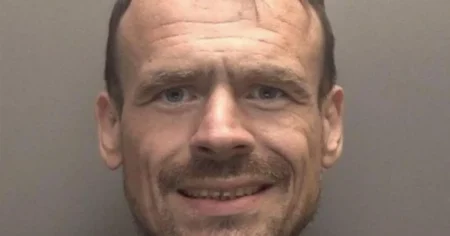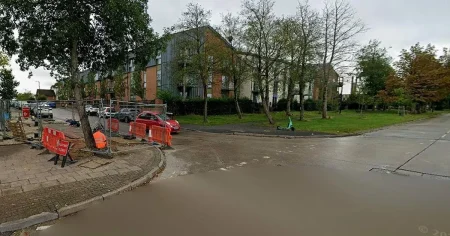



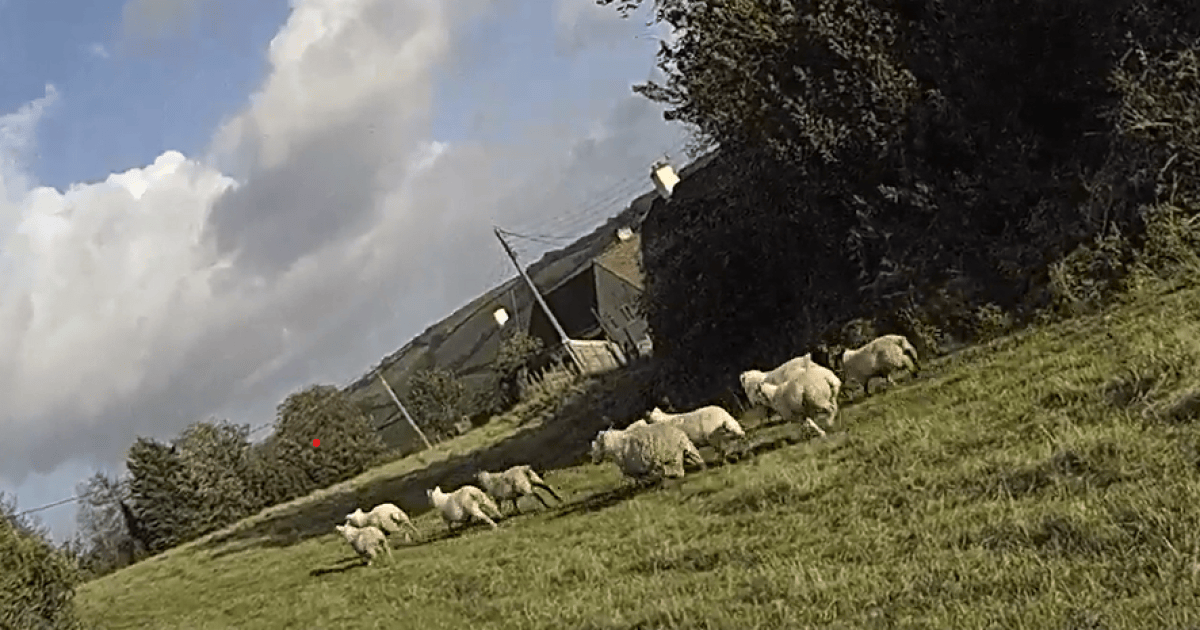
On an autumn morning, officers from the City of London Police arrived at a property in South Molton, a small market town in the heart of Devon. They were not there for a routine farm visit. They had come to investigate a reported livestock theft so large that it should have been devastating: 650 sheep, the kind of loss that would make any farmer’s heart sink and leave neighbours checking their own gates and boundaries. In rural areas, livestock theft is not just a financial blow; it is an invasion, a violation of the quiet trust people place in the countryside, and a reminder that even isolated farms are not immune to organised criminality. But as the officers made their way around the rented fields and began to count the flock, something strange became obvious. The missing sheep were not missing at all. They were grazing in plain sight, unharmed, relaxed, and seemingly unaware that they had been at the centre of an insurance claim worth tens of thousands of pounds. There was no sign of a raid, no broken fencing, no evidence that anyone had tried to load 650 animals into a lorry under the cover of darkness. Instead, there was a 24-year-old man who, according to investigators, had filed three separate claims for stolen sheep over the course of a single year. Now he was being arrested, and what had started as a search for stolen livestock had turned into something far more complicated: a suspected insurance fraud, with the so-called victim as the prime suspect. The contrast between the paperwork and the reality could hardly have been starker, and for the officers on the ground, the moment of realisation must have been striking. They had travelled to Devon expecting to find evidence of a serious rural crime. Instead, they found a flock of healthy sheep and a young man whose story was beginning to fall apart.
According to the City of London Police, the man’s scheme was not a momentary lapse in judgment. Over a period of twelve months, he submitted three separate claims, each one describing sheep that had supposedly been stolen from land he was renting in Devon. The figures involved were significant. Together, the three claims added up to more than £90,000, a sum that would represent a serious pay-out for any insurer and, if genuine, a serious loss for the claimant. The first two claims were accepted and processed, and a total of £28,200 was released to him. That money was paid out on the basis of documents and statements that investigators now believe were false. The alleged thefts, they say, never took place. The sheep were never taken, the fields were never raided, and the insurance company was led to believe something that simply was not true. The fraud only became apparent when the man submitted a third claim, this time for £64,800, and the insurance company’s brokers started to ask questions. They reported their concerns to the Insurance Fraud Enforcement Department, a specialist unit dedicated to investigating insurance crime, and officers began to examine the paperwork more closely. What they found were documents that contained evidence pointing away from a theft and towards a fabrication. The claims may have looked plausible on the surface, but the more closely they were inspected, the clearer it became that they were built on a foundation of falsehoods. It was the kind of case that insurance investigators see less often in rural settings but that causes just as much damage when it occurs. Fraud of this kind can be difficult to spot at first because it trades on a real problem. Sheep rustling does happen, and insurance companies know it. But the very thing that made the claims believable in the beginning, the existence of actual fields and actual sheep, also made them easy to verify. The third claim was not paid out, and the man’s attempt to collect thousands of pounds more was stopped in its tracks.
Once the insurance brokers had raised the alarm, the investigation expanded quickly. Officers searched two addresses and examined two vehicles and a mobile phone, looking for evidence that the man had prepared or generated false documents to support his claims. Those details matter in fraud cases because the offence of making or supplying articles for use in fraud can apply to anything from fabricated invoices to forged letters, and prosecutors have to show that the materials were intended to be used to deceive. During the searches, officers made an unexpected and worrying discovery: two shotguns were found at the property, and they were being kept in breach of licensing conditions. The law around shotgun ownership is strict for a reason, and any breach of those conditions can lead to separate charges. The presence of the guns added a new dimension to the case and made the situation even more serious for the young man at the centre of it. He was arrested on suspicion of fraud by false representation and for making or supplying articles for use in fraud, and he was taken into custody. The arrest sent a clear signal that the investigation was more than a desk-based review of paperwork. Officers had travelled across the country, carried out physical searches, and gathered evidence that went beyond the original insurance claim. For the insurance company, the report to IFED had triggered a process that would eventually reveal not just a suspected fraud but a firearms issue as well. For the man, a scheme that may have seemed carefully planned was now falling apart in a very public way. The paperwork he had submitted had been designed to persuade strangers that he was a victim. Instead, it had given investigators the evidence they needed to treat him as a suspect. At this stage, the question of what the shotguns had to do with the sheep theft, if anything, remains unclear; what is clear is that the man’s day ended in handcuffs.
DC Carley Parodi, who works with the Insurance Fraud Enforcement Department, said that while rural insurance fraud may be less common than fraud in other sectors, its impact should not be underestimated. In her statement, she explained that fraudulent claims distort the true picture of risk and can contribute to higher premiums for honest policyholders. That may sound like generic corporate language, but the reality behind it is very human. Insurance works because millions of people pay premiums based on shared risk. When someone makes a false claim, the insurer does not simply absorb the loss. The cost is spread across every policy, every bill, and every honest customer. Farmers who have spent years protecting their animals, maintaining their fences, and paying their premiums are effectively asked to cover the cost of someone else’s dishonesty. Over time, that leads to higher premiums, tighter conditions, and a greater sense of suspicion, which makes the system more difficult to navigate for the very people it is designed to help. DC Parodi’s team exists to identify those cases and take action, and she was clear that the police will continue to investigate this kind of offence. The message is simple: insurance fraud is not a victimless crime, and the people who commit it should expect to face consequences. The fact that this case involved sheep and rural fields does not make it any less serious. If anything, it makes it more important, because the number of rural fraud cases is small and the resources devoted to them are limited. When one is uncovered, it needs to be seen through to the end, both to protect the insurance system and to reassure the public that nobody is above the rules.
Tim Passmore, the chair of the National Rural Crime Network, also responded to the investigation with a warning about the wider impact on rural communities. He said that livestock insurance fraud harms rural businesses, increases costs for honest policyholders, and undermines efforts to understand and tackle rural crime. His second point is especially important. When someone makes a false claim about stolen animals, it does not just cost money. It also pollutes the data that police and rural organisations use to build their picture of crime in the countryside. If officials believe that 650 sheep were stolen from South Molton when in fact nothing happened, they may make decisions based on a distorted image of local threats. Resources might be sent to one area instead of another, public warnings might be issued for a crime that never occurred, and genuine victims of livestock theft may find it harder to be believed because false claims have made insurers and law enforcement more sceptical. Passmore welcomed the partnership between insurers, the Rural Crime Agency and the City of London Police, and his comments reflect a growing recognition that rural crime cannot be tackled by any single organisation alone. Information has to be shared, suspicions have to be reported, and cases have to be investigated with the same seriousness as urban fraud. The National Rural Crime Network has long argued that rural communities deserve the same level of police attention as the rest of the country, and this case is an example of that principle in action. It also serves as a reminder that the people who live and work in rural areas are often the first to notice when something is wrong, and their willingness to speak up is vital.
At its heart, this case is about the gap between the story people tell and the life they live. The 24-year-old who claimed he had lost 650 sheep told a story of catastrophe, of a farmer stripped of his animals and left to fight with an insurance company for fairness. But the story was not true. The sheep were alive, the documents were false, and the only catastrophe was the damage done to the credibility of genuine claimants. It is impossible to say what the man was thinking when he submitted his claims, but it is easy to imagine the temptation. A few pieces of paper, a trip to the police station, a statement about stolen animals, and thousands of pounds could appear in a bank account. The system is built to help people in trouble, and that trust can be exploited. But the system also has checks, and this time those checks worked. Insurance brokers noticed a pattern, reported it to specialists, and police drove to Devon to see the truth for themselves. The sheep, standing in the field, were the evidence he had forgotten to account for. Their presence meant the story collapsed, and the man’s arrest followed. For honest farmers, this case will feel intensely personal. Livestock are not just numbers on a spreadsheet. They are the result of years of care, breeding, feeding, and worry, and losing them to thieves is a genuinely painful experience. When someone fakes that experience for money, it cheapens the suffering of people who have actually lived through it. For the rest of us, it is a reminder that we all pay for fraud, in premiums that are higher than they should be and in systems that are less generous than they could be. The man in South Molton may have thought he was only taking money from an insurance company. In reality, he was taking from every policyholder, every honest farmer, and every future claimant. The sheep are safe, but the trust they were used to break may take much longer to recover.