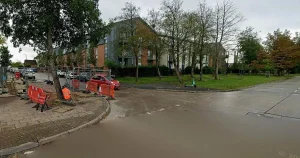

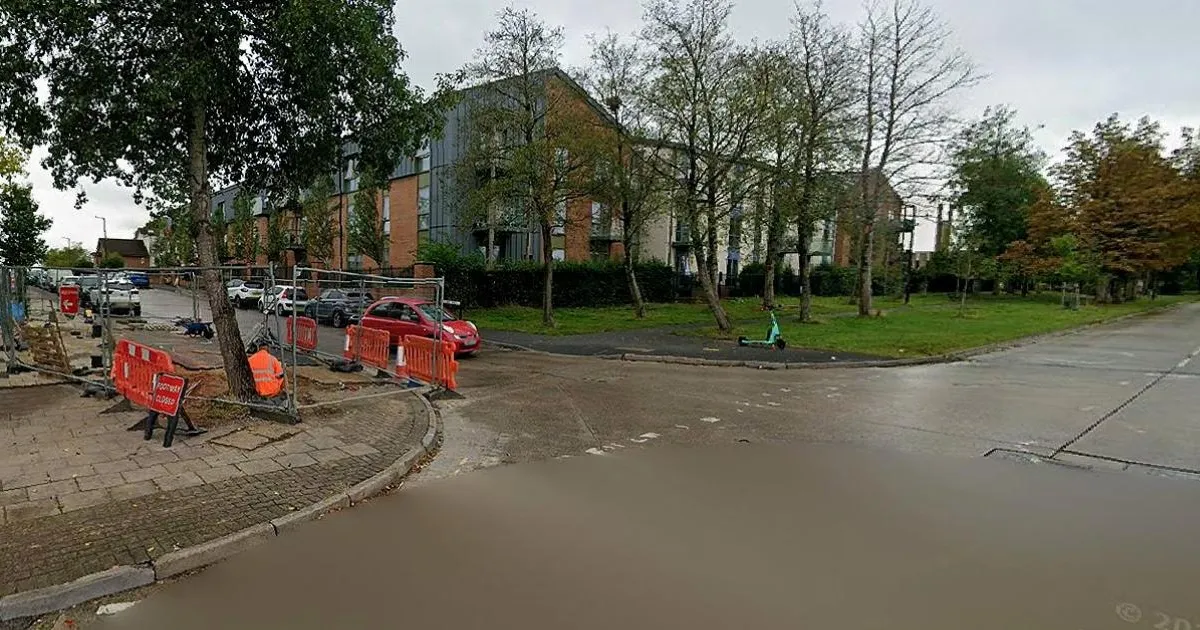
Every street has its own quiet rhythm. In the daytime it might be traffic, school runs, the clatter of footsteps on pavement, the low growl of a bus pulling away from a stop. But late at night, after eleven o’clock, that rhythm slows into something softer: the hum of streetlights, the hush of closed doors, the gentle presence of a man walking his dog before bed. On Thursday, October 22, in Bristol, that ordinary late-night ritual became the centre of a devastating tragedy. Emergency services were called to the junction of Stockwood Lane and Hollway Road at around 11.10pm after a bus collided with a pedestrian. That pedestrian was a man in his 70s. He was not just an age on a police report. He was someone’s family member, someone’s friend, a person with a lifetime of memories and a small daily routine that included taking his dog out into the evening air. The dog was beside him, as dogs have always been for humans: loyal, trusting, assuming the night was safe. Both were critically injured. Despite the urgent efforts of those who arrived at the scene, the man and his pet died there, far from the comforts of home. The driver of the bus, believed to be in his 30s, was arrested and taken into custody, where he now remains while police piece together what happened. The road was closed for hours, its surface examined, its night broken by blue lights and the quiet conversations of investigators. It has since reopened, but for everyone who lives nearby, and for everyone who reads about this and feels a shiver of recognition, it has become a place where something important was lost. In those final moments, perhaps the man heard the bus approach, or perhaps he did not. Perhaps the dog pulled at its lead, or trotted calmly beside him. These are the details that investigators will try to reconstruct, because they matter. The collision occurred at a junction that will now be analysed, marked, and remembered. It is easy to say the word “pedestrian” and move on, but this was a whole human being, with decades of experience, with people who loved him, with a dog who trusted him. On this street, in this moment, he was not a statistic. He was a life, and that life ended in the dark, on a night that probably began in an entirely ordinary way.
At the heart of this story are two lives: a man in his seventies and his dog. The bond between an older person and their dog is often one of the most constant and reassuring relationships in life. Children grow up, friends move away, the world changes; but a dog remains present. It waits by the door, eats dinner in the same room, walks beside its owner through all seasons. It does not care about age or illness or loneliness. It simply offers love. To lose both at once is a double wound, one that cuts through the very foundation of daily life. The man’s family are now facing an unimaginable grief. Police have confirmed that formal identification has not yet taken place, which means the family must also endure a period of waiting, a strange suspension between knowing and not knowing, before they can begin to lay their loved one to rest. Specialist family liaison officers have been assigned to support them. Those officers will be the quiet presence at the door, the people who bring updates and answer questions, the understanding hands in a storm of paperwork and procedure. But no amount of procedure can replace a life. The man was in his seventies. He had likely been on this earth for decades, had lived through changes in technology, in society, in Bristol itself. He had a name, a history, a voice. His dog also had a personality: perhaps an excited tail when the lead was picked up, a patient stare at mealtimes, an unshakeable trust in its owner. In the space of a few seconds, both were gone. For the family, for the community, for anyone who has ever loved an animal, the weight of that is immense. And for the dog itself, there is a particular sorrow: it did not understand the danger, it did not choose the walk, it was simply being a dog—loyal to the end. That devotion deserved a kinder conclusion. Instead, a routine evening became a death scene, and the family is left with a silence where there used to be the sound of paws on the floor and a familiar voice saying goodnight.
We must also spare a thought for the bus driver, a man believed to be in his 30s, who was arrested after the collision and remains in custody. It would be easy to paint him as a villain, but that would be unfair at this stage. An arrest in a serious collision is a standard part of the investigative process. It allows officers to carry out formal interviews, take forensic samples, and gather evidence while memories are fresh and physical traces remain. It does not mean the driver is presumed guilty; it means the law is doing its careful, methodical work. Consider what it must have been like for him. A normal evening shift, a familiar route, passengers perhaps, the weight of responsibility that comes from controlling a large vehicle. Suddenly, a figure appears, a dog, a jolt, a catastrophic impact. In an instant, his life changes as much as the victim’s family’s lives. He may be traumatised, unable to replay the events without horror. He may be replaying every second, wondering if there was anything he could have done differently. He may be suffering from shock, guilt, disbelief, fear. It is not for any of us to assign blame. It is for the police and, eventually, the courts, to examine the evidence with calm and care. The road has reopened, but the questions remain. Was it a blind spot? Was it the darkness? Was it a moment of inattention, a tragic misjudgement, or simply a terrible accident? Until those answers are found, the driver sits in custody, his life suspended, his reputation in limbo, while investigators work. He, too, is a human being caught up in an event that no one could have predicted or desired. Buses are symbols of everyday public life, carrying people to jobs and families and hospitals. They are not weapons. But in the wrong second, with the wrong timing, a machine that should be safe becomes part of a heartbreak. The driver must now live with that, whatever the legal outcome. He may never drive a bus again. He may never pass that junction again without seeing the image of that night. His family, if he has one, will also be living under a shadow. This is the nature of tragedy: it ripples outward, touching not only the victim but everyone standing near the centre of the event.
Detectives from Avon and Somerset Police are now appealing for witnesses and, crucially, for dashcam and CCTV footage. In a statement released after the incident, a spokesperson said: “We are appealing for witnesses and dashcam footage after a pedestrian died following a collision with a bus in Bristol on Thursday, October 22. The collision happened at the junction for Stockwood Lane and Hollway Road at around 11.10pm. The road has since reopened after enquiries were carried out at the scene. The pedestrian, a man in his 70s, was critically injured and died at the scene. While formal identification is yet to take place, his next of kin have been informed and will be supported by a specialist family liaison officer.” The wording is polite and procedural, but behind it lies a deep and urgent need: the need to know exactly what happened. Every camera lens is a potential witness. Every driver who was in the area at that time may hold a fragment of footage that could help piece together the final moments. This is why the police have made such a public appeal. They don’t just want evidence for its own sake; they want justice, clarity, and closure for the bereaved family. They want to answer questions that the family may carry forever: Was he suddenly ill? Did he try to cross? Did he see the bus? Was there anything that could have prevented it? The reference number for the inquiry is 5226345957, and anyone with information is asked to call police on 101. It may be tempting to assume that someone else will come forward, but every missing piece matters. A small memory, a blur of motion, a split-second detail—these are the things that can bring a case into focus. For those who hesitate to call because they don’t want to bother, that hesitation is understandable. But the police have explicitly asked for help. The man’s family is waiting. The dog is gone. The bus driver is in custody. The only way forward is through truth, and truth often comes from the small observations that ordinary people decide to share.
When news like this first appears, it is easy to scroll past. The modern world is full of stories about accidents and loss, and the mind protects itself by turning them into background noise. But for the people who live around Stockwood Lane and Hollway Road, this is not background noise. It is their street, their neighbour, their daily route. They will walk past the junction tomorrow and remember. They will see buses differently, and dogs differently, and late-night walks differently. The tragedy radiating from this incident touches everyone who has ever crossed a road, ever held a lead, ever waited up for someone who was late. It also raises uncomfortable questions about vulnerability. Pedestrians, particularly older people, are exposed to enormous danger on roads. A dog may unexpectedly pull its owner forward; a driver may have a moment of blindness; a road junction may be poorly lit. These are not accusations; they are possibilities that investigators will consider. But beyond the legal process, there is a human process of grief and adjustment. The victim’s family must now cancel plans, make phone calls, and enter a world of funeral arrangements and formal identifications. Their dog is also gone, which means an empty collar, a silent house, a familiar presence missing from the corner of the sofa. Neighbours may lay flowers, leave messages, share quiet remembrance. And somewhere, a bus depot will feel different, as colleagues of the driver absorb the shock. In the coming days, the road may reopen completely, traffic will flow, buses will run. But the scar on the community remains. It is a reminder that life is fragile, that a single second can undo a lifetime, and that the things we take for granted—the safety of the night, the company of a pet, the arrival home—are never truly guaranteed. We do not yet know the full circumstances, and it is important not to jump to conclusions. What we know is enough: a man went out with his dog and never came home. That alone is unbearable.
For now, in the immediate aftermath, there are no answers, only silences and waiting. The man in his 70s and his dog are no longer here. Their story, as told in a news article, is entirely tragic. But by humanizing it, we can honour them. We can remember that behind every line of police statement there is a real family, a real dog, a real life. We can also act. If you were near Stockwood Lane and Hollway Road on the night of the collision, or if you were driving along nearby streets with a dashcam, stop and think. Did you record anything? Did you see a man with a dog? Did you see the bus? You might believe your footage is irrelevant, but you don’t know that. A single image from a front-facing camera could be the difference between ambiguity and clarity. The police have asked for any such material, and the reference number is 5226345957. You don’t need to be an investigator to help; you just need to be willing to make a call. This is also a moment for empathy toward the bus driver, whether or not he is ultimately held responsible. He remains in custody as the enquiry continues. He is a person in his 30s whose life has been changed, whatever the outcome. And it is a moment for kindness toward the victim’s family, who are being supported by specialist liaison officers but who still face a long night of grief. We may never know everything that happened at that dark junction. But we can choose to respond not with rage or indifference, but with humanity. We can hold our loved ones closer, hug our dogs a little longer, and remember that every ordinary evening may be more precious than we realise. If this article has done anything, let it be that: a pause, a breath, a reminder to be grateful for the people and animals who make our lives whole. The investigation will continue. The flowers will be laid. And somewhere, in Bristol, a family will begin the slow process of learning to live without someone who meant everything to them.