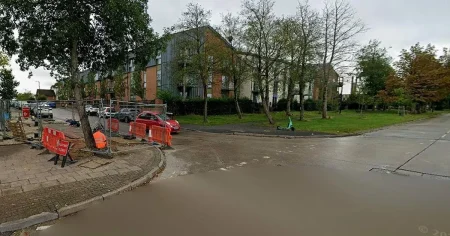


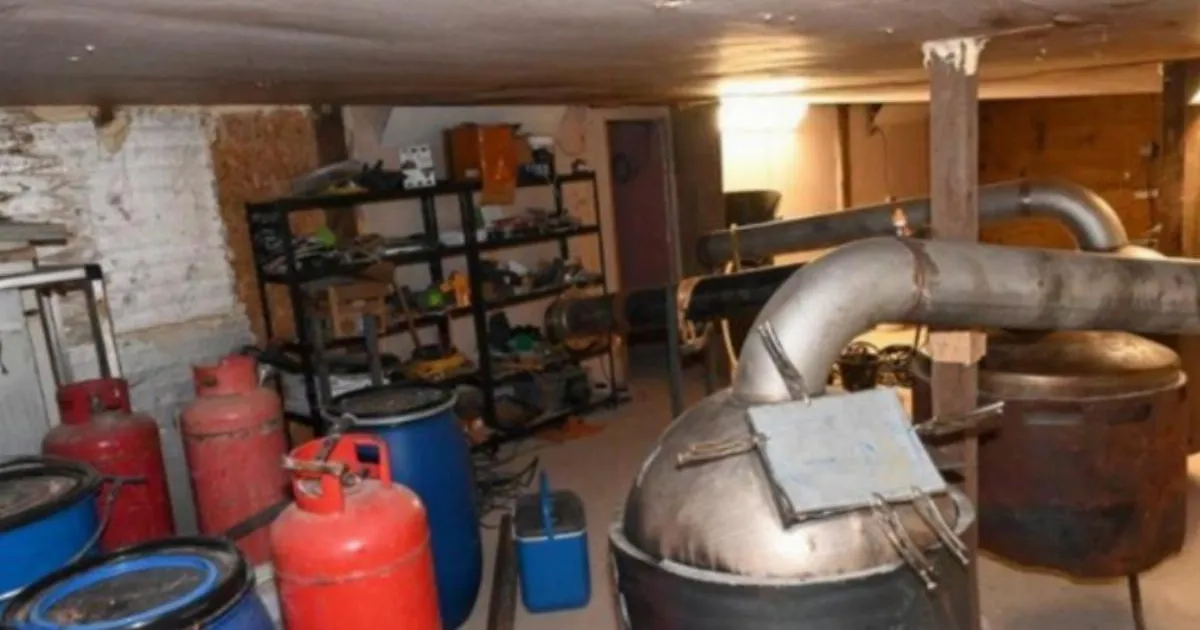
The rolling fields around Furnace End, a small farming hamlet in rural Warwickshire, are the kind of landscape that usually appears in postcards or Sunday afternoon drives. Cows graze behind hedgerows, narrow lanes link scattered stone houses, and the loudest noise is often the distant hum of a tractor. That is why the news that an industrial-scale methamphetamine laboratory was operating on farmland there landed with such shock. The National Crime Agency had discovered a sophisticated operation, hidden in plain sight, producing a class A drug that is as dangerous to make as it is to consume. Now the investigation has widened further, with four more men charged in connection with the alleged conspiracy to manufacture the drug. The men, arrested on Thursday as NCA officers carried out searches across Birmingham and the North East, have been brought into the growing legal net that already includes five Mexican nationals who appeared in court last month. The latest arrests are a powerful reminder that serious organized crime does not always announce itself in city streets; sometimes it takes root in the quietest corners of the countryside, behind barn doors and along farm tracks where no one thinks to look.
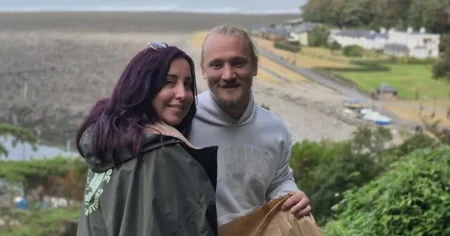
The four newly charged men are Kenneth Burton, from County Durham; Paul Harkness Mawby and Anthony Devine, both from Stockton-on-Tees; and Mohammed Khan, a 36-year-old from Birmingham. All three northern men are 34 years old. They have been accused of conspiracy to produce methamphetamine, a class A drug in the United Kingdom, in connection with the same investigation into an alleged criminal group manufacturing the narcotic at the meth lab near Furnace End. Burton, Harkness Mawby, and Devine were due to appear at Teesside Magistrates’ Court, while Khan, whose address was given as Lea Road in Sparkhill, was expected before Birmingham Magistrates’ Court. The fact that the defendants come from such different parts of England—County Durham, Teesside, and the West Midlands—illustrates the reach of the alleged operation. This was not a small, self-contained outfit; it appears to have involved coordination across regions, with people playing different roles perhaps connected with supply, transport, distribution, or the complex task of setting up and running a clandestine lab. The arrests also show how investigations of this kind unfold slowly, layer by layer, as evidence is gathered and as those at the edges of the network are identified and brought before the courts.
The case took an international turn in mid-August, when NCA officers arrested five Mexican nationals who have since been charged with conspiracy to produce methamphetamine. They appeared at Warwick Crown Court on September 10, where all five denied the charge. Alejandro Ambriz, 45, is from the Michoacan area of Mexico, while the other four—Victor Ramirez, 47, Fausto Beltran, 33, Lioncio Moso Borja, 37, and Jose Nunez Angolo, 44—hail from Culiacan in the Sinaloa region of northwest Mexico. That detail matters. Culiacan is the heart of Sinaloa, a region long associated with some of the most powerful and sophisticated drug trafficking organizations in the world. For decades, these groups have refined the production of methamphetamine on a massive scale, developing chemists and technicians who know how to cook the drug in labs hidden deep in the mountains or in urban safe houses. The presence of men from that part of Mexico in rural Warwickshire suggests that British crime groups have been importing not just chemicals but expertise, bringing in people with specialized knowledge to help establish a lab that could produce the drug in large quantities. At the hearing, the five were told they would face trial in February next year. The court will have to decide whether they were willing participants in a highly organized criminal enterprise or whether they were themselves caught up in something far bigger, perhaps lured by promises of money or trapped by debts and threats back home.
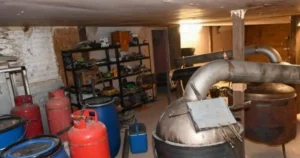
Methamphetamine, commonly known as crystal meth, has long been a devastating problem in places like the United States, Mexico, and parts of East Asia, but in the United Kingdom it has historically been less common than drugs such as heroin or cocaine. That may be changing. The discovery of a meth lab on a farm in Warwickshire points to an attempt to produce the drug locally, closer to British consumers, rather than relying on smuggling from abroad. Producing meth is not a simple process. It requires precursor chemicals, some of which are tightly controlled, and a great deal of skill. It also creates enormous dangers. The cooking process involves volatile substances, toxic fumes, and the risk of explosions and fires. A single mistake can burn down a building or poison everyone inside. Meth labs leave behind hazardous waste that contaminates soil and water, and the people who work in them often suffer from chemical burns, respiratory damage, and long-term health problems. This is not the kind of crime that happens neatly. It is messy, dangerous, and profoundly harmful to the environment and to human health. For the small community near Furnace End, the discovery of the lab must have been deeply unsettling. The farm may have seemed ordinary, but behind closed doors, something dangerous was happening. The NCA and other emergency services would have faced a major operation in safely dismantling the site, and local residents will have to live with the knowledge that their village was chosen as the location for such a hazardous enterprise.
Behind the legal language and the list of names and court dates, this is a story about people. There are the four men who now face serious charges, and there are the five Mexican nationals whose journey from Sinaloa and Michoacan ended in a courtroom in Warwick. It is easy to dismiss them as ruthless criminals, and they may well be exactly that, but it is also worth remembering that the international drug trade is built on exploitation. Many people from poor and violent regions of Mexico are recruited with promises of money, or are coerced by cartels that control every aspect of their lives. Some are skilled cooks or chemists; others are simply workers who know that refusing to cooperate could mean death for themselves or their families. That does not excuse their alleged actions, but it adds a layer of human complexity to the case. The same is true for the British defendants, whose involvement might have been driven by greed, desperation, debt, or a belief that they would not be caught. The production and sale of class A drugs ultimately leads to addiction, ruined families, and communities torn apart. Users suffer from paranoia, psychosis, and physical collapse; their children grow up in chaos; neighborhoods become more dangerous. The people affected by this alleged conspiracy are not abstract statistics. They are sons and daughters, mothers and fathers, someone’s neighbour, someone’s friend. Every dose of meth that reaches a street has a story of suffering behind it, and every lab that is dismantled likely prevents a great deal of pain.
As the case moves through the courts, the NCA investigation appears far from over. The searches in Birmingham and the North East suggest that officers are still gathering evidence, still trying to understand the full scale of the operation, and still looking for other people who may have played a part. The four new defendants will appear in court today, and the five Mexican nationals will return for trial in February. In the months ahead, lawyers will argue, evidence will be weighed, and juries will have to decide who is guilty and who is innocent. But regardless of the outcome, the discovery of this meth lab has already done something important: it has revealed how determined and creative organized crime groups can be, and it has reminded the public that these operations exist in places that seem far removed from the world of drugs and violence. A farm in Warwickshire is not so different from a farm anywhere else. It has fields and animals and people who work hard to make a living. That a place like this could be chosen as the site for something so dangerous is a sobering thought. Yet it is also a testament to the work of law enforcement, which continues to pursue these networks and to bring those responsible before the courts. For now, the residents of Furnace End and the wider community can only hope for justice, and for the peace of mind that comes from knowing the lab has been shut down. The case is a reminder that the fight against drugs is not just about street corners and city centres. Sometimes it is about the quiet countryside, where no one expects to find a secret, hidden in the heart of the rural landscape.