


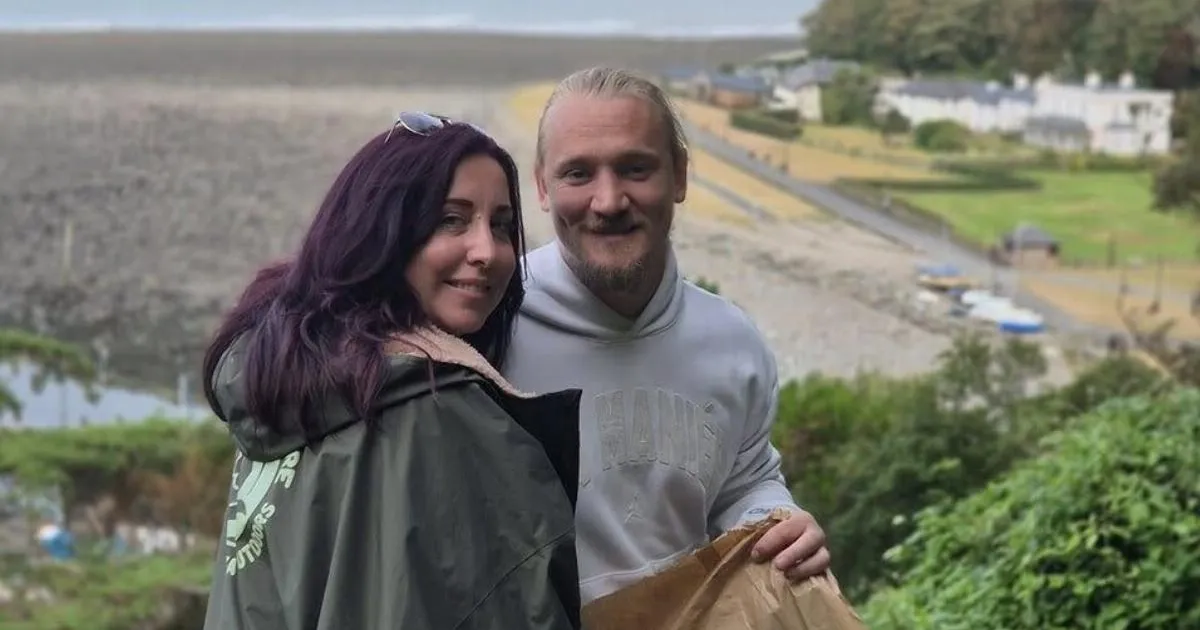
On the surface, it was meant to be the trip of a lifetime. A family from Stapleford, Nottinghamshire, had traveled thousands of miles to the sun-soaked shores of the Bahamas, escaping the grey half-term skies of home for the turquoise waters of Bimini. For Leanne Gregory, 36, a mother of two boys, every detail of the holiday was an opportunity to create lasting memories with the people she loved most. The islands were everything the travel brochures promised: palm trees swaying, white sand underfoot, and an ocean so clear it looked like a liquid jewel. On Tuesday, that paradise turned to heartbreak in a matter of moments. Leanne, a wife and mother described by witnesses as one of the most devoted parents they had ever seen, lost her life in the very water that was meant to bring her family joy. Her death, which unfolded in front of her husband and children, has left a community in mourning and a family shattered by a loss that seemed to come from nowhere. What began as an idyllic holiday adventure ended in an unthinkable tragedy, a stark reminder that even the most beautiful places on earth can harbor hidden dangers.
The details of the accident are as simple as they are devastating. Leanne’s two sons, eager to explore the underwater wonders of the Bahamas, had gone snorkeling in the shallows. Children being children, their excitement was infectious; the ocean was calm and inviting, and the boys wanted to see the fish and coral that made the region famous. But within seconds, a powerful current swept them away from the safety of the shore. In that moment, there was no time to think, no time to weigh the risks. Leanne dived into the water after them, driven purely by a mother’s instinct to protect her children at any cost. The tide, however, was merciless. It overpowered her, dragging her under as she fought to reach the boys. Meanwhile, her husband Nathan, who had stayed behind or was closer to the scene, rushed to help as well. The chaos unfolded quickly, with waves surging and the current pulling everything out to sea. Leanne was later pulled unconscious from the water by emergency services. Nathan, desperate and determined, immediately tried to resuscitate her, pouring every ounce of his strength and love into a frantic attempt to bring her back. But despite his efforts and the swift response of medics who rushed her to hospital, Leanne Gregory was pronounced dead. Her two sons, mercifully, were pulled safely from the water by emergency personnel, their lives spared even as their mother’s was taken.
The word “hero” is often overused, but in this case, it was the only word witnesses could find. As news of the tragedy spread, tributes began to pour in, and one eyewitness account in particular captured the horror and the bravery of the moment. Katie Rescinit, who was on the scene, wrote on Facebook that she was “there for all of it,” and called Leanne a hero. She described the conditions as truly terrible, noting that the tides were so ferocious that even the snorkeling expedition boats, crewed by people who knew the local waters intimately, were unable to reach the family in time. The current was simply too powerful, too fast, too unstoppable. Ms. Rescinit was careful to stress that this was nobody’s fault. “Just two boys who were eager to get in the water and then things went crazy fast,” she wrote. She also asked for prayers for Nathan, revealing that he himself had gone out to save one of the boys but had to be aided by a bystander. In her words, Leanne and Nathan were “two of the best parents I’ve ever seen in my entire life.” That testimony is a painful comfort: a confirmation that Leanne died doing exactly what she lived her life doing, putting her children first, without hesitation, and that her family was rooted in a love so visible it moved complete strangers.
Back home in Stapleford, a quiet community in Nottinghamshire, the news landed like a thunderbolt. The Gregory family was known locally, and the thought of a mother perishing on a family holiday, so far from home, was almost too much to process. Neighbors, friends, and acquaintances began to piece together the story from fragmented reports, their hearts aching for Nathan and the two young boys who would now have to navigate the rest of their lives without their mother. No parent ever imagines that a holiday in the sun will end with a phone call that changes everything. For the boys, who had been so excited to explore the ocean, what should have been a magical memory is now forever tangled with trauma and loss. The half-term break, a brief respite from school and routine, has become a permanent scar. In the days since the tragedy, the community has rallied in the way communities do, offering prayers, support, and a profound sense of shared grief. They speak of Leanne with warmth and admiration, remembering her as a devoted mother, a loving wife, and a woman who radiated life. But no words can fill the void left by a woman gone too soon, and no gesture can ease the agony of a husband who tried to save his wife with his own hands and had to let her go.
The official response was swift and compassionate. The Foreign, Commonwealth and Development Office confirmed the death of a British woman in the Bahamas, stating that their thoughts were with the family and that they were in contact with local authorities while providing support to those left behind. It is a stark reminder that tragedies like this are not abstract; they involve real people, real families, and international systems that must kick into gear to help loved ones navigate a nightmare in a foreign country. The FCDO’s role, in many ways, is a small mercy: offering practical assistance, coordinating with local officials, and ensuring that Leanne’s family is not alone in their grief. Yet for Nathan, and for Leanne’s two sons, no amount of official support can undo what happened. They must now arrange to bring her home, to say goodbye, to bury a woman who was the center of their world. The question of how to explain all this to young boys, how to help them process the image of their father trying to save their mother on a beach in the Bahamas, is one that no counselor or grief expert can fully answer. All they can do is take it one moment at a time, surrounded by a family and community that will do everything in their power to hold them up.
In the end, the story of Leanne Gregory is not just a warning about the power of the sea. It is a story about love, sacrifice, and the unbreakable bond between a mother and her children. She did not die because of a reckless choice or a lack of care. She died because a mother’s instinct is the most powerful force in the world, a force that overrides fear, logic, and even self-preservation. The same ocean that so cruelly took her life is the ocean that her sons will remember, but they will also remember that their mother fought to the very end to keep them safe. Witnesses saw her as a hero, and they were right. Her husband Nathan, in his desperate attempt to revive her, showed the depth of his love, a love that will now have to carry him and his sons through a future that feels impossible to imagine. The British community, the local community in Nottinghamshire, and even strangers across the world have been moved by her story, a testament to the way a single act of maternal bravery can touch the human heart. As the family mourns, Leanne Gregory’s legacy will live on not in the headlines, but in the lives of the two boys she gave everything for, and in the memory of a mother who, when faced with the unthinkable, did not hesitate for a single second. She is gone, but her courage will echo forever.