
Paragraph 1: The Day the Stage Went Dark
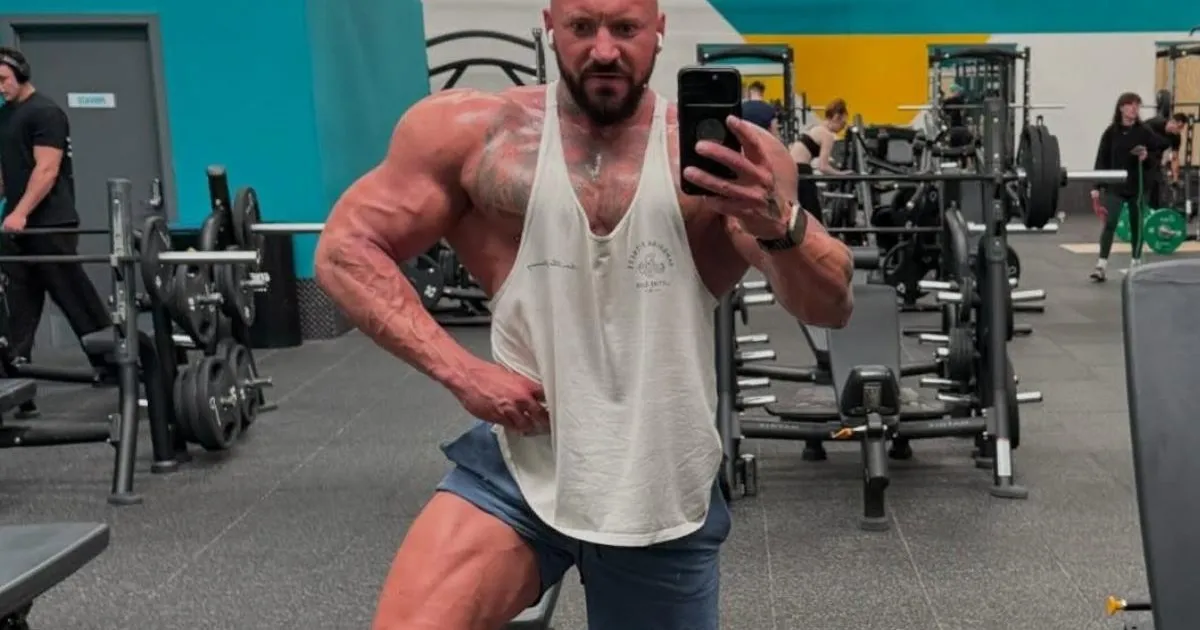
On a Sunday afternoon in Telford, a town that had gathered to celebrate strength, discipline, and the beauty of the human body, the lights on the competition stage suddenly took on a darker meaning. Mateusz Chmura, a thirty-three-year-old bodybuilder from Wakefield, had spent months—years, really—sculpting himself into the kind of physique that belongs on magazine covers and championship podiums. He had entered the Physical Culture Association’s British Finals as a competitor in the classic bodybuilding medium category, a division that rewards not just size but proportion, symmetry, and the careful balance between muscle and form. For him, this was not merely a hobby; it was a way of life. Every waking hour had been shaped by the demands of the sport: the precise meals, the early mornings, the relentless lifting, the sacrifice of ordinary pleasures in favor of an extraordinary goal. On that stage, with fans watching and judges assessing, he was meant to showcase the culmination of all that work. But the showcase turned into a nightmare. Midway through the final, Mateusz collapsed. It happened without warning, his body crumpling in front of the audience as if the strength that had carried him so far had suddenly abandoned him. For a moment, there was confusion, then panic, then the frantic rush of medics and doctors who happened to be in the crowd. He was treated on-site, his heart fought for, before the Midlands Air Ambulance swept him away to a hospital. Despite everything, Mateusz Chmura was pronounced dead. An investigation has been launched to determine the exact cause, but no medical report can fully explain the emotional whiplash of watching a man who seemed so healthy and so vital vanish in an instant. The image of his collapse has left a permanent scar on everyone who was there, and the bodybuilding world has been forced to confront a truth it often prefers to ignore: that the pursuit of physical perfection can come at a terrible, hidden cost.
Paragraph 2: A Husband Gone, a Life Unfinished
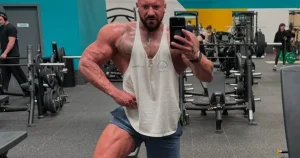
Mateusz Chmura was not just a competitor on a leaderboard; he was someone’s husband, someone’s friend, someone’s whole world. Back home in Wakefield, his wife Patrycja was preparing for his return, expecting to hear about the competition, the crowd, the feeling of stepping onto that stage. Instead, she received the news that no person is ever prepared for—that her husband was gone, suddenly and publicly, with no chance to say goodbye. The bodybuilder’s last social media post had been a clip of him showing off his physique, the kind of confident, hopeful update that athletes share before a big event. It was a snapshot of a man at the peak of his powers, unaware that his life was about to end. In the wake of Mateusz’s death, tributes and condolences began to flow, but so did something far more disturbing. A fundraiser appeared online, seemingly set up in his honor, claiming to support the family during their time of loss. It was the kind of gesture that good-hearted people want to believe in—a way to turn grief into practical help, to show a grieving widow that strangers care. But Patrycja, still raw with shock, recognized it for what it was: a scam. Rather than allow his memory to be exploited, she took to his Instagram account to warn the public. Her words were measured, but her pain was unmistakable. She wanted people to know that she had nothing to do with the campaign, that she had not authorized it, and that anyone collecting money in her husband’s name was doing so without her permission. It was an act of remarkable strength, coming from a woman who had just lost the person she loved most. Even in her darkest hour, she was thinking not about herself, but about the kind people who might be tricked into giving away their hard-earned money.
Paragraph 3: Patrycja’s Voice, a Warning in the Midst of Grief
In a statement that was both heartbreaking and fiercely protective, Patrycja Chmura made her position unmistakably clear. She wanted the world to know that the fundraiser that had appeared in connection with her husband’s death contained false information, and that she was in no way connected to it. “I did not create it, I did not give my permission for it to be created, and I have not authorised anyone to collect money on behalf of me or my family,” she wrote. Her words carried the weight of a grieving widow who had been forced, in the middle of her loss, to put out a fire she never started. The cruelty of such a scam is difficult to comprehend. When a person dies unexpectedly, especially someone young and beloved, the grief is chaotic enough without the added burden of worrying about strangers being deceived. Patrycja ended her warning with a simple, devastating sentence: “I would never want anyone to lose their hard-earned money because they are trying to help us during this difficult time.” That single line revealed her character—a person who, even while her own world was crumbling, could not bear the thought of someone else suffering because of her. She was not asking for money. She was not looking for attention. She was simply trying to protect the good intentions of others from being exploited by bad actors. In a digital age where GoFundMe pages and online appeals appear within hours of any tragedy, her warning serves as a painful reminder that not everyone who reaches out in a moment of crisis is sincere. But it also shows that the people closest to the tragedy are often the ones with the clearest vision, even when their hearts are broken.
Paragraph 4: The Community Responds, an Event Paused and Resumed
The Physical Culture Association, the organization behind the British Finals, was left to make impossible decisions in the aftermath of Mateusz’s collapse. The event had been halted when the emergency began, as medical teams worked frantically to save the young athlete. For the competitors and fans still in the venue, the atmosphere was thick with confusion and fear. Some may not have known the full severity of what had happened, only that the final had stopped and that a man was being attended to on stage. The association later explained that it took the decision to pause the final following the incident, but after speaking with the other athletes, it resumed the event. That decision may seem cold to some, but it reflects the strange reality of competitive sport—the show must go on, even when the heart of the community is breaking. The PCA issued a statement expressing heartfelt thanks to the on-site medics, the medical professionals from the audience who stepped forward to assist, the Midlands Air Ambulance, and the hospital staff who fought for Mateusz’s life. They also thanked everyone else who helped in any way, promising that their efforts would not be forgotten. These words, though formal, point to something profound: the ordinary people in the crowd who did not hesitate to try to save a stranger. The doctors who ran toward him instead of away. The medics who worked long after they must have known the odds were against them. The pilots and nurses who took him on his final journey. In the midst of tragedy, their collective humanity was a light in the darkness. The decision to resume the competition was no doubt controversial, but it was made out of respect for the athletes and their dedication, and perhaps in the hope that finishing the event would be a small way of honoring the spirit of competition that had brought them all together in the first place.
Paragraph 5: The Darker Question—What Is This Sport Doing to the Body?
Mateusz Chmura’s death has reignited a difficult conversation about the safety of bodybuilding, a sport that demands so much of the human body that the boundaries between health and harm begin to blur. He is not the first young athlete to die suddenly, and he will not be the last unless something changes. A study published in the European Heart Journal by the University of Padova found that at least 121 bodybuilding athletes died between 2005 and 2020, at an average age of just 44. The leading cause of death was cardiac—46 of those fatalities were attributed to heart problems. These numbers are staggering, especially when compared to the public perception of bodybuilders as the epitome of health and vitality. The extreme dieting, the relentless training, the pressure to maintain unnaturally low levels of body fat, and the widespread use of performance-enhancing substances all place enormous stress on the heart. The muscles a competitor shows on stage are the result of a fragile, temporary physical state that cannot be sustained for long. The same discipline that creates such impressive physiques can also create the conditions for catastrophic failure. It is not the act of lifting weights that kills; it is the culture that encourages people to push themselves to dangerous limits, often without adequate medical supervision, and the silence that surrounds those risks. Mateusz’s death is a reminder that the pursuit of greatness can sometimes blind even the most dedicated athletes to what their bodies are telling them. His heart, which should have had decades of life left, stopped in the middle of a competition. The question now is whether the sport will take this moment to examine itself honestly, or whether it will simply mourn, move on, and wait for the next tragedy.
Paragraph 6: A Legacy Beyond the Stage
In the end, Mateusz Chmura was a man who chased a dream and gave everything he had to it. He wanted to stand among the best, to have his dedication recognized, to inspire others with what the human body can achieve. His death on that stage in Telford is a tragedy of the most cruel kind, because it came at the very moment he was living his purpose. There is a tendency after such losses to search for meaning, to ask why someone so strong could be taken so soon, and to wonder whether it might have been prevented. Some of those answers may come from the investigation into his death; others may never come at all. What is certain is that Patrycja Chmura has lost her husband, that friends in Wakefield have lost someone they loved, and that the bodybuilding community has lost one of its own. In the coming months, there will be tributes, memorials, perhaps the establishment of safety protocols, and maybe even a shift in how the sport views the health of its athletes. But none of that can bring Mateusz back. What can be done is to remember him as more than a cautionary tale—as a person who worked hard, who loved deeply, and who died doing something that gave his life meaning. His wife’s warning about the scam fundraiser is a reminder that even in death, his name was being used by people with no conscience. But it also shows that those who loved him were paying attention, protecting him even after he was gone. The lights on that stage may have dimmed for Mateusz, but his story, and the questions his death has raised, will continue to echo. May he rest in peace, and may the sport he loved find a way to protect the hearts of those who give it everything.