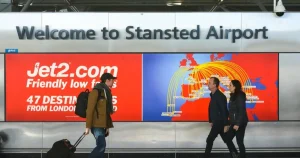


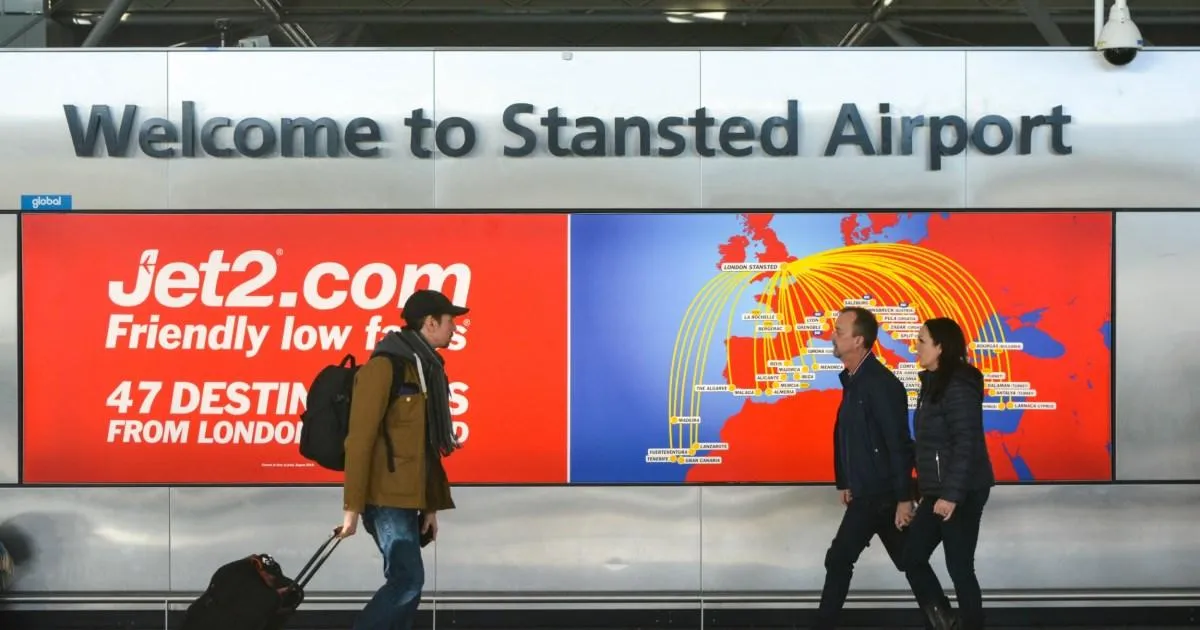
The scene at Stansted Airport on Friday night was one of exhaustion, confusion, and simmering anger. What should have been a routine journey through one of Britain’s busiest travel hubs turned into an ordeal that left hundreds of passengers stranded, some for longer than the flights that had brought them there. The cause: the airport’s track transit people mover system, the shuttle that ferries passengers between planes and the main terminals, had broken down. With no working shuttle, the airport was forced to rely on a fleet of coaches as an emergency replacement. But the buses simply could not cope. The queues grew longer by the hour, snaking through corridors and out into the cold, while anxious travellers waited for any scrap of information. More frustrating than the delay itself, according to those caught up in the chaos, was the sheer lack of basic human need. There was no water, no access to toilets, and no one giving regular updates. One traveller, posting on social media under the name GregTheGuide, captured the mood perfectly: “Absolute shambles at Stansted Airport. The shuttle from plane to terminals conked out this morning and there is no contingency other than a bus which can’t cope with the ever-growing backlog. We have spent longer in this queue than the flight. No water, no toilets, no updates.” It was a small snapshot of a much bigger failure, one that left families with crying children, elderly passengers struggling to stand, and exhausted holidaymakers wondering whether they would ever make it home.
The airport, for its part, acknowledged the problem and apologised, though for many the words rang hollow. A spokesperson confirmed that a technical issue had forced the shutdown of the people mover, and that a coaching contingency service had been put in place. But with demand remaining high during what the airport itself described as a “busy period,” the reality on the ground was that people were still waiting, still thirsty, and still completely in the dark. Engineers, the spokesperson said, were “working hard to restore the service as soon as possible,” and extra staff had been deployed to help keep passengers informed and manage the queues. Yet for those trapped in the backlog, the sight of a few extra staff members was cold comfort. They wanted solutions, not sympathy. They wanted a working system, not a bus that disappeared into the night only to return empty, again and again, while the crowds barely seemed to shrink. The apology, though sincere on paper, could not undo the hours of lost time or the lingering sense that an airport of Stansted’s size should have been better prepared. In any properly functioning travel infrastructure, a single mechanical failure should not be allowed to spiral into a humanitarian headache. But that night, it did. And the people caught in the middle were left to wonder why a system carrying thousands of passengers every day had no better backup plan than a handful of coaches and a vague promise to keep everyone updated.
Yet the misery at Stansted was never an isolated incident. It was, in many ways, a grim reflection of a day on which the entire transport network seemed to be unravelling at once. The same stormy weather that had battered southern England and Wales was also tearing through the railway lines that connect the airport to the rest of the country. Greater Anglia, the operator that runs vital services between London Liverpool Street and destinations like Cambridge North, Hertford East, Ely, and Bishop’s Stortford, had already issued a stark “do not travel” warning for the route between Broxbourne and Stansted Airport. A tree had fallen onto the tracks near Stansted Mountfitchet in Essex, damaging the overhead wires and bringing trains to a standstill. Network Rail response teams were sent to investigate, but the damage had been done. Services were cancelled, delayed, or revised, leaving passengers with few options. For those who had landed at Stansted only to discover they could not get a train home, the airport’s shuttle disaster was just the first in a chain of miseries. They emerged from the terminal into a grey, windswept evening, only to find that the railway was just as broken as the airport. Families carrying heavy suitcases were forced to hunt for taxis, or search for alternative routes on their phones, or simply stand in the cold and wonder what to do next. The promise of a smooth journey home had evaporated, replaced by a desperate scramble for any way out.
And while the airport and the railway were struggling with their own separate disasters, yet another part of the network was collapsing under the weight of the weather. Shortly after 1.10pm on Friday, a freight container train travelling from London Gateway partially derailed at Barking. The incident caused significant disruption, blocking platforms and forcing cancellations across the region. Fortunately, there were no passengers on board, and no injuries were reported. The Rail Accident Investigation Branch was notified and deployed to the scene, but for ordinary commuters, the derailment was just another reason to abandon their travel plans altogether. Meanwhile, the storms themselves were already leaving a trail of destruction across the country. More than 15,000 homes had lost power as Storm Austen unleashed 80mph gusts across southern England and Wales. Schools in Jersey and Guernsey had been closed for the day, as had some in Cornwall. Ferry services between the UK and France were cancelled, and fresh food shortages on the Channel Islands were expected in the coming days because of the lack of shipping. It was a day of cascading failures, in which every part of the travel ecosystem seemed to be turning against the people who depended on it. The weather, the infrastructure, the contingency plans, all of it was buckling under pressure. And for the unlucky passengers caught in the middle, there was no escape, only the slow, grinding wait for something to improve.
If the day’s disruptions were bad, the forecast for the coming hours looked even more ominous. Storm Austen was still clearing out, but another system, Storm Boelo, was already gathering strength. The Met Office had put an amber warning in place for parts of Scotland, northern England, and Northern Ireland, with strong winds and heavy rain expected to arrive overnight and intensify through Saturday. The worst of the winds would hit on Saturday evening, then extend eastwards through Sunday. The warning spoke of a “good chance” of power cuts, flying debris, and damage to buildings. For anyone planning to travel over the weekend, the message was clear: expect more chaos. National Rail had already warned that the back-to-back storms had the potential to affect journeys across the entire weekend, and passengers were urged to check their routes before setting out. The human impact of these forecasts cannot be overstated. Families with planned weekend trips, people returning to work after holidays, students heading back to university, all of them now faced the prospect of cancellations, delays, and missed connections. The anxiety was palpable. In an age of elaborate digital information systems, there was still no way to shield people from the brute force of nature. All the technology in the world could not stop a tree from falling on a railway line, or a freight train from derailing, or an airport shuttle from breaking down at the worst possible moment. What it could do, in theory, was offer better communication, more compassion, and a more robust backup plan. But on that chaotic Friday, for many passengers at Stansted and beyond, those simple comforts felt very far away.
For the people caught up in this chaotic day, the larger lesson is about the fragility of the systems we take for granted. We expect airports to function seamlessly, trains to run on time, and technology to hold firm against the elements. But when the weather turns, when the unexpected happens, the cracks quickly become visible. What made the Stansted experience so profoundly uncomfortable was not just the delay itself, but the sense of being abandoned in a limbo of bad information and scarce resources. No water, no toilets, no updates. Those words, written in frustration by one stranded passenger, summed up a deeper problem: a lack of dignity in the way people were treated during a moment of genuine difficulty. Travel is, at its best, a great human connector, a way of bringing people together across frontiers. But at its worst, in the middle of a storm, with a broken shuttle and a crowded terminal, it can feel deeply dehumanising. The best response from any airport, any railway, any authority in such moments is not merely to deploy extra staff or issue an apology, but to anticipate the exhaustion of the people in their care. A bottle of water, a working toilet, a clear and honest announcement every fifteen minutes, these are not luxuries. They are fundamental acts of humanity. And in the end, that is what the passengers at Stansted were really asking for. They understood that machines break and weather wreaks havoc. What they could not accept was being left in the dark, forgotten, tired, and thirsty, waiting for a night that seemed never to end. The hope, after such an ordeal, is that the airport and the wider transport network will learn something from the failure, not just about engineering, but about compassion. Because no amount of technology can replace the simple, human need to know that someone is looking out for you.