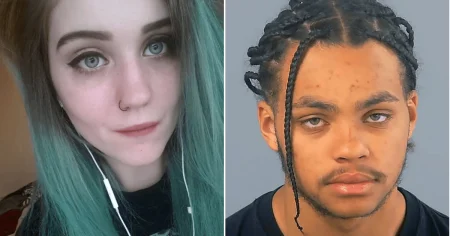
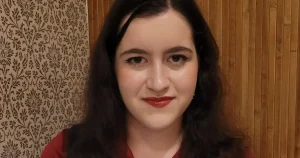

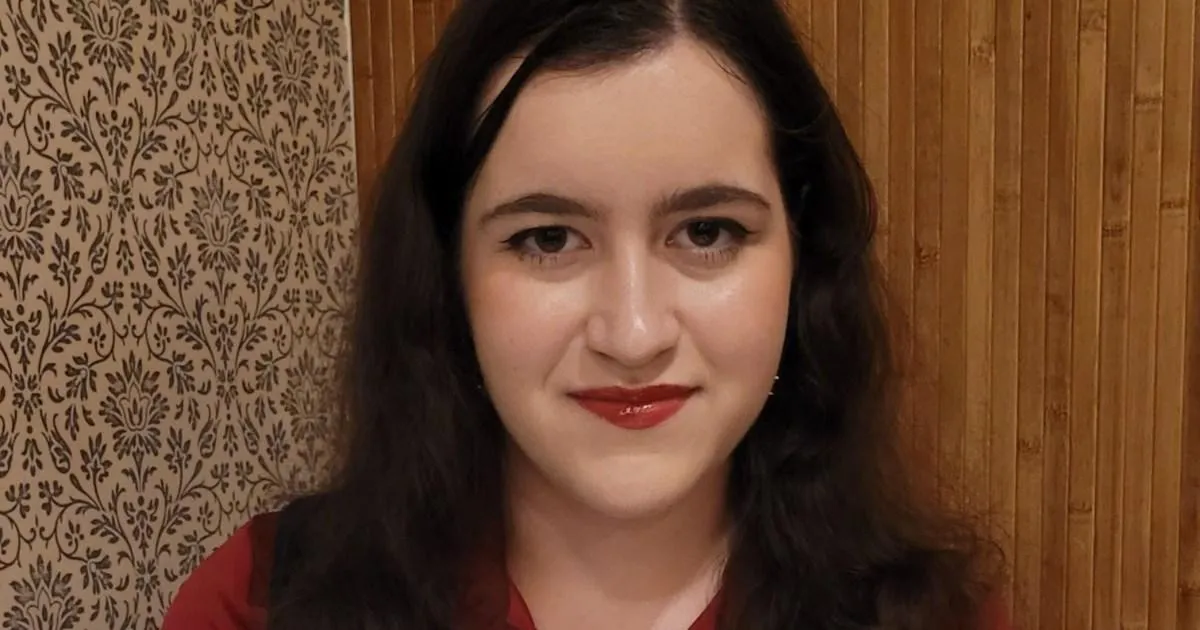
On the morning of what should have been a day of joy and celebration, the world for one family collapsed into an unfathomable silence. Carla Georgescu was found dead in her student accommodation in Preston, on her twentieth birthday. She was a psychology student, described by those who knew her as down to earth, warm, and full of a quiet, gentle humour that made people want to be around her. Her mother, Janina, had spent the day waiting for the kind of message that every parent longs for on a child’s birthday — a photo, a voice note, a simple “I love you, Mum.” But no message came. Instead, there was only a growing dread, a tightening in the chest, and finally a welfare check requested by a mother who knew, in that primal way mothers often do, that something was terribly wrong. Police and university staff went to Carla’s room and found her body. She had been brutally murdered. The life of a young woman with so much ahead of her had been cut short in the most violent and senseless way imaginable. And the person responsible was not a stranger lurking in the shadows, but someone who should have been her protector: her stepfather, Nathan Owens.
Owens, a 34-year-old man from Hartlepool, had been living with Carla’s mother Janina and had been welcomed into their family as a trusted partner and step-parent. But behind that ordinary facade, he had been harbouring a deeply disturbing and perverted obsession with Carla. Over time, that obsession curdled into something monstrous. The court heard that Owens had taken innocent childhood photographs of Carla and doctored them to make indecent images. He had secretly filmed himself committing sexual acts in her bedroom, a violation of the most private space a young woman could have. He had even made an effigy of Carla, clothing it in a nightdress, a chilling object that revealed the extent of his fixation. These were not the actions of a man who had simply lost control in a moment of madness; they were the calculated, sickening preparations of someone who had been nurturing a dark and violent fantasy for a long time. Owens had been trusted to love Carla as his own child, to protect her, to be a father figure. Instead, he turned that trust into a weapon, abusing his position in the most horrific way imaginable. The betrayal was not just a crime against Carla’s body; it was a betrayal of the entire family, and of every ordinary moment of domestic life that had been built around him.
On the night of February 4, Owens put his plan into action. He invented a plausible excuse to travel the roughly one hundred miles from Hartlepool to Preston, telling Janina that she had left her purse at Carla’s university halls during a visit the previous week. It was the kind of small, believable detail that would not raise suspicion. He drove through the night, and after 1 a.m., he sent a message to Janina assuring her that he loved her more than anything. Moments later, he was outside Carla’s accommodation. CCTV captured the heartbreaking final image of Carla alive: she let him into her building, trusting him, believing he was there to help with a lost purse. Instead, she was walking into a trap. Inside her own room, in the place where she should have felt safe, Owens subjected her to a violent, brutal attack. He strangled her, sexually assaulted her, and then fatally stabbed her. The judge later said that the last ninety minutes of Carla’s life were too horrendous to think about. And indeed, the details of that night are almost impossible to comprehend. Carla did not die quickly or painlessly. She fought for her life in a space filled with her books, her clothes, her dreams, while the man who was supposed to be her stepfather ended everything she was and everything she could have been.
What followed the attack was almost as chilling as the murder itself, because it showed a cold, calculating mind at work. Owens did not flee in panic. He staged the scene to make it look as though Carla had taken her own life, a grotesque attempt to deflect suspicion and manipulate the grieving. He left her room by a different route, wearing a face mask and carrying bags stuffed with evidence taken from the scene. He used Carla’s umbrella to shield himself from cameras, and even wore her shoes as he walked to a nearby bin. When he found the bin locked, he discarded the bags, then later retrieved them and placed them in his car, careful to stay out of view of surveillance. On his drive back to Hartlepool, he made several stops, scattering evidence across different locations, including a hard shoulder on the M6 motorway. He deleted a message Carla had sent to her mother asking about the lost purse, a message her mother had never seen because she was asleep. He wanted to erase every trace of his presence, every clue that might lead back to him. And then, when he returned home, he continued as if nothing had happened. He held his wife’s hand. He went shopping at the supermarket. He acted like a grieving partner, a concerned stepfather, a normal man. It was a performance that required an almost inhuman level of detachment, and it only deepened the horror of what he had done.
The truth, however, could not be buried or scattered along a motorway. When Janina received no word from her daughter on her birthday, she made the call that would unravel Owens’s web of lies. Police and university staff discovered Carla’s body, and the investigation quickly turned toward the stepfather. Owens eventually admitted to Janina that he had visited Preston that night, but he spun a ridiculous story, claiming Carla had asked for help tidying her room and that he had brought her incontinence pads. It was a lie so absurd that it collapsed under the weight of the evidence. He was arrested at his home. He denied murder and refused to provide evidence in court, offering no explanation for his actions. But the prosecution built a case that was overwhelming. CCTV placed him at the scene. Tracking data traced his journey and his suspicious stops. The scattered evidence was recovered. Owens was also charged with wounding with intent, and he admitted to two offences of making an indecent image of a child. The jury found him guilty on all charges, unanimously. When the judge sentenced him to life in prison, he did not hold back. He said Owens had subjected Carla to a horrific, brutal attack, and that the evidence of her mother, her friends, and her lecturers painted a portrait of a young woman who was down to earth, with a good sense of humour, someone who would have gone on to make a great deal of her life. He also noted that Owens had shown no remorse, and had taken victim blaming to the limit in trying to hide his crimes.
The pain of this case extends far beyond the courtroom. Detective Inspector Pete McDonald spoke for many when he said that Carla had her whole life ahead of her, a life that was ripped away by someone she should have been able to trust. Owens did not just take Carla’s life; he changed her mother’s life completely. He tore apart the family he was trusted to love. As Carla’s stepfather, he had a unique responsibility. He should have respected her and loved her as his own child. Instead, he abused that trust in the most fundamental way, harbouring a perverted infatuation that ultimately ended in murder. Perhaps one of the most heartbreaking aspects of the case is that Owens’s crimes did not begin on the night of the murder. They began long before, when he took innocent childhood photographs and turned them into something dark and indecent. Because of that, Carla’s mother has not only lost her daughter; she has also had some of her most precious memories of Carla’s childhood destroyed. Those photographs, once simple reminders of a little girl growing up, are now tainted forever. The loss is layered: grief for the future Carla never had, and grief for the past that can no longer be remembered without pain. Carla was a young woman with dreams, friends, a sense of humour, and a future full of possibility. She was someone’s daughter, someone’s friend, someone’s hope. And in the end, the person who should have been her guardian became her killer. There is no justice that can bring her back, no sentence that can undo the horror. But in telling her story, we remember that she was more than a victim. She was a human being, loved and missed, and her life mattered.