


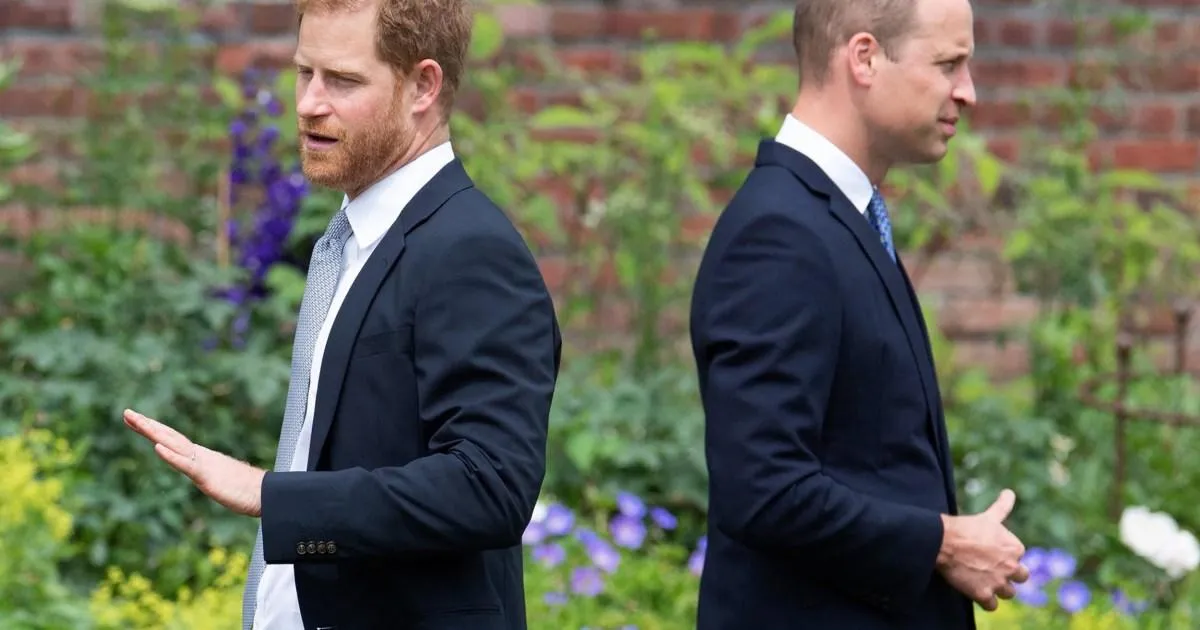
Prince Harry has spent years navigating a strange and often painful space between the person he is and the institution he was born into. After six years of living in the United States, he has now returned to the United Kingdom with his wife, Meghan Markle, and their two children, Prince Archie and Princess Lilibet. The move feels like a homecoming, but it is also a return to unresolved emotions, to a family that remains fractured, and to a brotherhood that once seemed unbreakable. In a recent candid interview with GQ, Harry spoke openly about the ache he still carries. He admitted that he grieves his relationship with his brother, Prince William, and with his father, King Charles. There was no anger in his voice, no desire to re-fight old battles. Instead, there was something far more vulnerable: a quiet, honest longing for the family that used to be his. He described the rift as a “massively relatable issue for so many people,” noting that sibling disagreements and broken relationships between children and parents are not unique to royalty. In fact, he said, these issues come up all the time in conversations with people he meets. It is that relatability, he believes, that explains why the public remains so fascinated by his story. Because deep down, we all understand what it feels like to love someone and not know how to reach them. We all know the ache of a relationship that once felt solid and now exists only in memory. Harry’s words are not just a royal confession; they are a human one. And in saying them out loud, he has done something that takes real courage: he has admitted that he wants to reconcile, even if reconciliation may never come.
The Duke of Sussex continued his remarks with a striking sense of clarity. He said that, with everything else going on in the world, the most important thing is to reconcile. That is the key point, he insisted, before confirming that “of course” he wants to rebuild a relationship with his family. There is something deeply moving about that statement, especially when placed against the backdrop of all the public drama, the interviews, the headlines, the accusations, and the counter-narratives. Harry is not asking for a crowd to cheer for him; he is asking for a seat at a table that has long felt closed. He wants to sit with his brother again, to laugh with his father again, to feel the warmth of a family that has been replaced by cold distance. He knows, perhaps better than anyone, that life is fleeting, that parents do not live forever, and that the pain of estrangement is often heavier than whatever hurt caused it in the first place. His words suggest a man who has done a great deal of emotional work, who has turned his pain into perspective, and who now understands that winning a public battle is not the same as finding peace. He spoke about the chaos of the wider world, the crises that touch every home, and how, in that context, personal reconciliation becomes even more urgent. It is a powerful reminder that some things are bigger than pride, bigger than even the British monarchy. Harry seems to understand this. He seems ready to put down the armor. But readiness is not enough if the other side is not willing to meet him there, and that is the heartbreaking truth at the center of this story.
Because according to a royal insider who spoke to The Mirror, Prince William is not ready to make amends. The source said that there isn’t a world right now where the Prince of Wales can imagine repairing the relationship with his brother. William, the insider explained, remains deeply hurt by the many things Harry has said publicly about him and other family members. This is the side of the story that often gets overlooked in the rush to sympathize with Harry. William has been wounded in his own way. He has watched his brother air private grievances on global platforms, has read sentences that felt like betrayals, and has had to process the pain of familial conflict while also carrying the weight of the crown. From William’s perspective, reconciliation is not merely a matter of saying the right words; it is a matter of trust. And trust, once broken, cannot be rebuilt overnight. The insider also claimed that the royals are currently focused on their work and are “certainly” not interested in watching the Duke of Sussex pop up in another interview. There is exhaustion in that sentiment, a sense that the endless cycle of public statements and surprises has worn down whatever patience remained. For William, moving forward may mean closing a door rather than reopening it. That does not mean he has stopped loving Harry. It means he does not know how to move past the pain, and perhaps does not believe Harry is ready to stop turning their private life into public content. It is a tragic standoff: two brothers who share blood, history, loss, and love, but who cannot find a bridge across the chasm of their own making. And as time passes, the chasm only grows wider, making the hope of reunion feel more distant with each passing season.
Adding to the sorrow is the state of King Charles’s health. Reports indicate that Harry has not seen his father since returning to the UK, and it remains unclear whether they will meet soon. In the GQ interview, Harry spoke softly about his father’s cancer diagnosis, calling it an ongoing battle with an undisclosed form of the illness. He acknowledged that having a sick parent now can be very triggering, especially for someone who has already suffered the traumatic death of a parent. Those words carry an unmistakable echo of Princess Diana, whose tragic passing has haunted Harry for as long as he can remember. To watch his father face something so serious, to be physically close yet emotionally distant, is a particular kind of grief. Harry did offer a glimmer of good news, confirming that Charles is “getting better,” but the tenderness behind his words is bittersweet. There is worry there, and love, and a sense of helplessness that comes when someone you care about is unwell and you cannot simply rush to their side because the doors are closed. Illness has a way of clarifying what matters. It strips away the petty grudges and forces us to confront what we might lose. Harry seems to be doing exactly that, wondering if the silence has gone on too long, if there is still time to make peace, if the man he barely knows as a father will be there to see his grandchildren grow older. And yet, despite all of that, the walls have not come down. The royal family, with all of its protocols, its pride, and its complicated history, has not found a way to bridge the gap even in the face of serious illness. It is a reminder that reconciliation requires more than one person’s desire. It requires two open hearts, and right now, only one seems to be reaching out.
To fully understand where they are now, it helps to remember how they arrived at this point. In January 2020, Harry and Meghan made the dramatic announcement that they would step back from their roles as senior royals. They spoke of wanting independence, privacy, and the ability to support themselves financially. The move was quickly labeled “Megxit” by the press, and it sparked a tidal wave of speculation, sympathy, and criticism. The couple completed their final official engagements in March 2020 and then relocated, eventually settling in the United States. For Harry, it was a life-changing decision, a chance to build a different future for his young family, away from the pressures of the institution that had both protected and suffocated him. For the rest of the royal family, it was seen by many as a rejection, a public abandonment of duty. After that, the distance grew. There were interviews, a memoir, difficult revelations, and more headlines than anyone could count. Every detail of the rift has been examined endlessly, but beneath all of the spectacle, there is a deeply human story about two brothers who responded to the same childhood trauma in very different ways. William stayed and found meaning within the system. Harry left and tried to create a new identity outside of it. Their choices placed them on opposite sides of a widening divide. And while the world has moved on to newer royal stories, the pain has not faded. It lingers in birthdays, in holidays, in quiet moments when a phone does not ring. Harry and Meghan’s return to the UK could have been a fresh start, a chance to write a different ending. But so far, it feels like more of the same: hope on one side, hurt on the other, and a chasm that remains unbridged.
Amid all of that tension, Meghan has been sharing a gentler, more intimate side of their life in the UK. On Instagram, she posted a series of sweet family videos that show her walking hand in hand with Harry through the rain in classic British weather, stepping into puddles while wearing Wellington boots, and laughing in a way that feels completely unguarded. The footage also offers glimpses of the children: Archie and Lilibet sitting together in front of a roaring fire, Lilibet riding a bike, and the whole family fishing on a quiet lake. At the end of the video, Meghan placed a Union Jack flag and a heart, a small but meaningful symbol of affection for the country they now call home again. It is a reminder that Harry and Meghan have built something real and beautiful together, a family full of love, warmth, and ordinary pleasures. The contrast with the royal rift is striking. On one side, there is the joy of a young family creating quiet memories. On the other, there is unresolved grief, anger, and estrangement. Perhaps that is the most human thing of all: none of us is just one thing. We can be happy and hurting at the same time. We can love our families and still feel frustrated with them. We can hope for reconciliation while also protecting ourselves from further disappointment. Harry and Meghan’s return to the UK may not lead to a fairy-tale reunion with the royal family. Prince William may continue to keep his distance. King Charles may remain unreachable. But the desire for peace that Harry expressed in his interview is real, and it speaks to something universal. We have all had relationships that slipped through our fingers. We have all wondered whether it was too late to mend them. And in that way, the story of the royal family becomes our story too. We are not just watching a spectacle; we are watching a family trying, imperfectly, to find a way back to each other. And sometimes, just sometimes, that process begins with a shared puddle, a heart emoji, and the quiet hope that home is still a place where love can find its way in.