

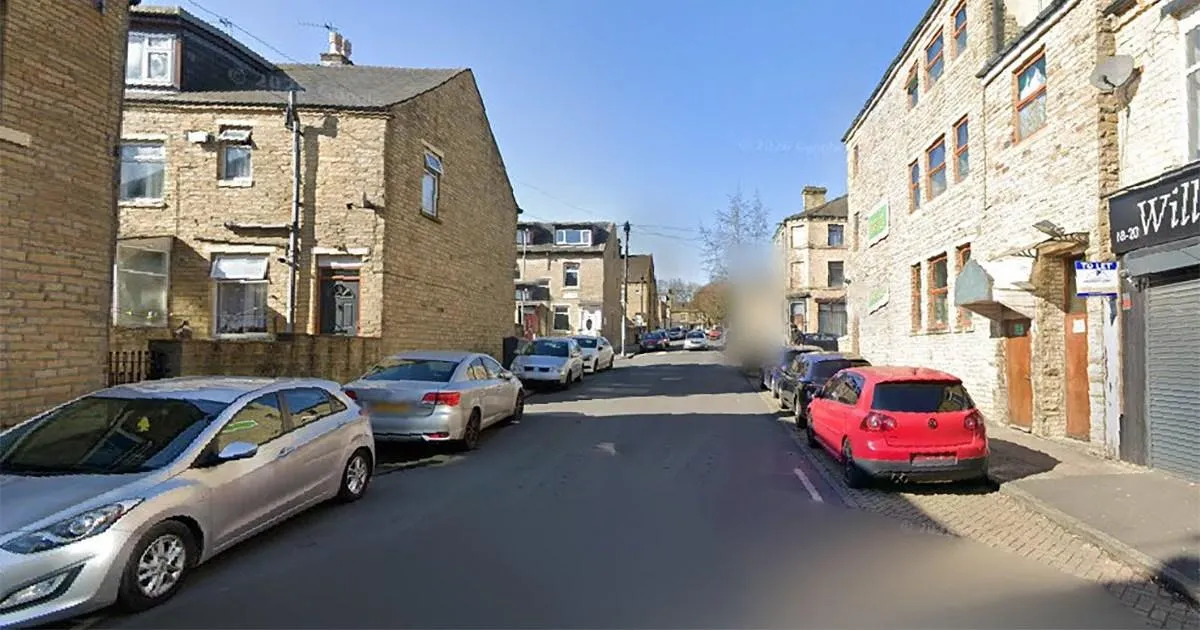
On an otherwise unremarkable Thursday morning, the quiet streets of Bradford became the setting for a moment that no child should ever have to experience. A 14-year-old boy, going about his day near Kensington Street, noticed something that many adults would have chosen to ignore: a grown man urinating in public. Instead of looking away, instead of convincing himself that it wasn’t his place to say something, the teenager made a decision that spoke volumes about his character. He approached the man and asked what he was doing. That single question, rooted in a sense of decency and communal respect, would turn his world upside down. What followed was not a shrug, an apology, or even an argument—it was a violent, unprovoked attack by an adult against a child. The boy’s simple act of courage was met with brutality, leaving him with severe facial injuries that required emergency surgery. As the news spread, it became clear that this was not just a random act of street violence; it was a disturbing reminder of how fragile public decency can be, and how dangerously unpredictable some people are when confronted with their own shameful behavior.
The details of the attack paint a harrowing picture. According to West Yorkshire Police, the boy challenged the man about urinating in the street, and instead of being embarrassed or apologetic, the man responded with savage violence. The victim was rushed to the hospital, where doctors discovered the full extent of the damage. His facial injuries were so serious that he needed emergency surgery, and medical staff indicated that he would continue to require treatment in the days ahead. For a 14-year-old, this means not only physical pain but also emotional scars that may take far longer to heal. It means missed school, sleepless nights, and a lingering sense of fear that someone he has never met could cause him so much harm over such a trivial matter. His family, too, are now living through every parent’s nightmare, sitting by his bedside, trying to understand how a child’s desire to do the right thing could result in such suffering. The boy’s description of his attacker—tall, fat, bald, with a beard—may help police find the man, but it will not erase the trauma of that morning. What should have been a minor moment of civic correction became a life-altering act of cruelty, and the teenager’s bravery has been repaid with pain.
West Yorkshire Police have launched an investigation, and Detective Constable Jenny Farrell of Bradford CID has issued an impassioned appeal to the public. She described the incident as “a particularly violent attack by an adult on a vulnerable 14-year-old boy,” and emphasized the severity of the injuries he sustained. Her words carry the weight of someone who has seen too many cases where ordinary people become victims of extraordinary violence. The police are asking anyone who witnessed the attack, or who saw suspicious activity in the area around Kensington Street on Thursday morning, to come forward. They are also keen to hear from residents who may have CCTV footage, doorbell cameras, or dashcam recordings that could help identify the suspect. In a world where so many crimes go unsolved, this appeal is a crucial step toward justice. But it also serves as a plea to the community: do not let this act of violence be forgotten. Do not let the identity of this attacker remain hidden. The police cannot do this alone; they need the eyes and ears of the public. And the boy, who showed so much courage in standing up for what is right, deserves a community that will stand up for him in return.
This incident raises uncomfortable questions about the society we live in. Why would a grown man, confronted by a child, choose violence instead of shame? What has happened to our collective sense of accountability? There is something deeply unsettling about the fact that a teenager felt compelled to correct an adult’s behavior, while the adult responded with enough force to require emergency surgery. It speaks to a breakdown in respect, a failure of basic decency, and a worrying trend of aggression in public spaces. Some might argue that the boy should not have intervened, that confronting a stranger is dangerous, and that personal safety should come first. That is a valid concern, and no one would blame a child for walking away. But we must also consider the alternative: if we teach young people to stay silent, to tolerate bad behavior, to ignore the erosion of public standards, then what kind of adults will they become? The boy was not looking for a fight; he was simply asking a question that any decent person might ask. His mistake was assuming that the man shared his basic sense of right and wrong. That assumption cost him dearly, and it is a painful lesson for all of us about the unpredictable nature of human beings.
In the aftermath of the attack, the community in Bradford has been left to grapple with a mix of shock, anger, and sorrow. This is a city that, like many across the United Kingdom, has seen its fair share of crime and hardship. But there is something particularly jarring about an attack on a child in broad daylight, over something as petty as public urination. It feels senseless, disproportionate, and deeply unjust. Residents in the area will now be looking at their own doorbell cameras, checking their own memories, wondering if they saw something that could help. Others may be reflecting on their own encounters with public rudeness, and how close they may have come to a similar fate. The boy’s story has resonated far beyond Bradford, appearing in national news and prompting reactions from people who have never met him but who feel a collective sense of outrage. That outrage is justified. But it must be channeled into something productive—into helping the police, into supporting the victim and his family, and into having honest conversations about how we can make our streets safer for everyone, especially for young people who still believe that standing up for what is right is worth the risk.
As the investigation continues, the hope is that the attacker will be found, brought to justice, and made to face the consequences of his actions. But even then, the story will not be over. The 14-year-old boy will have to live with the physical and emotional aftermath of this attack for a long time. His courage, however, should not be forgotten. In a world that often rewards apathy and self-interest, he chose to speak up. He chose to hold someone accountable for their actions. That takes a kind of moral strength that many adults lack. The least we can do, as a society, is to honor that strength by ensuring that his ordeal does not end in vain. We can start by sharing this story, by keeping our eyes open, by reporting what we see, and by refusing to normalize the kind of violence that this boy endured. We can also take a moment to check on the young people in our own lives, to remind them that doing the right thing is never wrong, even when the world responds cruelly. And we can hope—fervently, sincerely—that this brave teenager recovers fully, that he is not hardened by this experience, and that he continues to be the kind of person who stands up for what is right. Because if he can still believe in goodness after what happened to him, then we all have a duty to believe in it too.