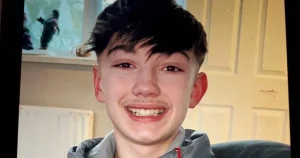


Ferne King, 25, from Fife, Scotland, was a young mother whose life ended far from home, leaving behind a two-year-old daughter and a community struggling to understand how a holiday could turn into such a devastating loss. She had travelled to Durrës, Albania, a coastal city known for its Adriatic beaches and lively summer atmosphere, with her little girl Sihana. It should have been a trip filled with sunshine, new sights, and the simple joy of time together. Instead, on October 8, a cleaner made a heartbreaking discovery in an Airbnb on Rruga Taulantia, in the south-west neighbourhood of Durrës 1. The booking had ended, the room needed to be tidied, and at 12.50pm the cleaner found Ferne dead in bed. She had only arrived two days before. The initial shock gave way to questions, but police sources said foul play was not suspected. Ferne had died of cardiac arrest, a sudden stopping of the heart that can strike anyone, at any age, without warning. For a 25-year-old mother, it was a cruel and unexpected end. The news reached her family in Fife, who were left with the impossible task of grieving her loss while also trying to bring her home. Friends remembered Ferne as “fun-loving,” and those who knew her described her as having a “beautiful soul.” That phrase would be repeated again and again in the days that followed, as her loved ones tried to make sense of a tragedy that seemed to have no sense at all. Durrës, with its sea views and holiday rhythm, became the backdrop to a story no one expected, and a family in Scotland began the long, painful process of saying goodbye.
The details of Ferne’s final days are spare, and that spareness only deepens the sorrow. She arrived in Durrës two days before she was found, accompanied by her young daughter. What she did in those hours remains private. Perhaps she walked along the promenade; perhaps she played with Sihana on the sand; perhaps she planned the next leg of their adventure. Such ordinary moments now carry an aching weight. The Airbnb where she stayed was in a busy resort area, but nothing about the scene suggested violence. According to police sources, her death was cardiac arrest — the heart simply stopped beating. At 25, with a young child and a future ahead of her, Ferne’s heart had gone silent. The cleaner who found her had arrived after the booking was completed, expecting to prepare the room for the next guests. Instead, she walked into a tragedy. Emergency steps were taken, but it was too late. For her family, the distance between Scotland and Albania suddenly became a cruel, unbridgeable gap. They were thousands of miles away when Ferne died, and they were thousands of miles away when the news came. The helplessness of that position is almost impossible to describe. There were phone calls to make, arrangements to understand, and a sister and mother left to navigate foreign procedures while trying to hold themselves together. Every detail was a fresh wound. The place where Ferne had hoped to make happy memories with her daughter had become the place where her life stopped, and the only thing left to do was find a way to bring her home.
Perhaps the most heartbreaking detail in this entire story is that Sihana was found alive next to her mother in bed. A two-year-old girl, too young to understand death, had been lying beside her mother’s body for some time. Authorities took the child to a social care centre in Tirana, the capital of Albania, to ensure she was safe and cared for. The image is almost unbearable: a small child, innocent and unaware, waiting beside her mother, unable to wake her, unable to understand why everything had changed. For Ferne’s family, that image must be impossible to escape. They were not only grieving Ferne; they were also worried about Sihana, a little girl whose entire world had been turned upside down. The social care centre was a necessary step, but it was also a painful reminder that Ferne was no longer there to hold her daughter’s hand. In the days that followed, family and friends in Scotland tried to piece together what would happen next. A child does not understand funeral arrangements or repatriation. A child only understands that her mother is missing. Sihana, who had crossed the sea with her mother for a holiday, suddenly found herself in the care of strangers in a foreign country. The cruelty of that situation is impossible to measure. While adults struggled with paperwork, phone calls, and the financial burden of death abroad, a little girl was trying to make sense of a world without her mother’s voice, her mother’s arms, her mother’s warmth. The family may have taken some comfort in knowing Sihana was alive and physically unharmed, but the emotional scars of such a loss will remain with her for a lifetime. She will grow up with stories of the mother she lost, the “beautiful soul” who loved her more than anything, and the holiday that turned into a farewell.
As if the grief were not enough, the practical realities of death in another country added another layer of pain. Ferne’s sister was reportedly asked by authorities to pay £10,000 to “bring a beautiful soul home.” That phrase, quoted in a GoFundMe page organised by Ferne’s friend Jade Wilson, captured the tone of a family desperate to do the last thing they could for the woman they loved. The cost of repatriation — flying a body home, handling legal documents, coordinating with funeral directors — can be staggering, and for a young family from Fife, it was a sudden and overwhelming burden. The GoFundMe page said: “This is such sadness and stress to the family and friends who have been affected. Ferne should be home! An angel God has gained, but her beautiful soul needs her home!” The words were raw and heartfelt, and they touched people far beyond Ferne’s immediate circle. Friends shared the appeal; neighbours donated; strangers who had never met Ferne felt moved by the story of a mother who died so far from home with her two-year-old beside her. The fundraiser was not just about money. It was a way for the community to hold Ferne’s family upright, to tell them they were not alone, to show that even in the darkest moments, people will reach out. The £10,000 figure was both a practical target and a symbolic one — the cost of bringing a loved one home, translated into a number that no family should ever have to confront. But the community responded, as communities do, with generosity and love. They understood that this could have been anyone’s daughter, sister, mother. They understood that Ferne deserved to be buried in the soil of her homeland, surrounded by the people who had loved her all her life. Every donation, every share, every message of support was a small flame in the darkness.
In the midst of the financial and emotional turmoil, a date was set for Ferne’s farewell. On Friday, the Lochgelly funeral directors John Gilfillan announced that Ferne’s funeral would be held on November 6. The announcement was accompanied by a tribute that painted a portrait of a young woman deeply loved and deeply missed. “Beloved and cherished mum of Sihana, loving daughter to Heather and the late Alan, fun-loving sister to Saffron, Alistair and Oscar, loving granddaughter to Jo, auntie and a very good friend to many more,” the tribute read. “You will be sorely missed, Ferne.” Each phrase carried weight. She was a mother first and most; Sihana was at the centre of her life. She was a loving daughter to her mother Heather, and she had already lost her father Alan, a fact that makes her own death even harder to bear. She was a sister to Saffron, Alistair and Oscar, a granddaughter to Jo, an auntie to young nieces or nephews, and a friend to many. The word “fun-loving” appears often in tributes, but in Ferne’s case it felt especially true to those who knew her. She was the kind of person who could light up a room, who made people laugh, who gave her time and heart generously. The funeral would be a time for family and friends to gather, to cry, to remember, and to begin the long process of living without her. It would also be a way to honour the mother who had loved Sihana so deeply. The funeral directors’ public message was simple, but it spoke to the profound impact Ferne had on the people around her. She was more than a tragedy; she was a woman with a life, a personality, and a web of relationships that now present a painful gap.
Ferne King’s death is one of those stories that stays with you. It is the story of a young mother who went on holiday with her daughter and never came home. It is the story of a two-year-old girl found beside her mother’s body, alive but forever changed. It is the story of a family in Scotland forced to raise money to bring their loved one back, and of a community that refused to let them do it alone. It is also a reminder of how fragile life can be, how quickly ordinary days can turn into grief, and how little control we truly have over the moments that define us. But alongside the sorrow, there is love. The GoFundMe page, the funeral announcement, the tributes, the memories shared by friends — all of these are acts of love. They are ways of saying that Ferne mattered, that her life was precious, that she will not be forgotten. Her family have described her as having a beautiful soul, and that is how she will be remembered. When her funeral took place on November 6, hearts across Fife were broken, but they were also full. Full of gratitude for the time they had with Ferne, full of determination to care for Sihana, full of hope that her daughter will grow up knowing how deeply her mother loved her. The snow, the sea, the distance, the paperwork, the tears — none of it can undo the tragedy. But the memory of Ferne King, the fun-loving sister, the cherished mum, the beautiful soul, will live on in the people who loved her. She is home now, in every way that matters, and she will be sorely missed.