

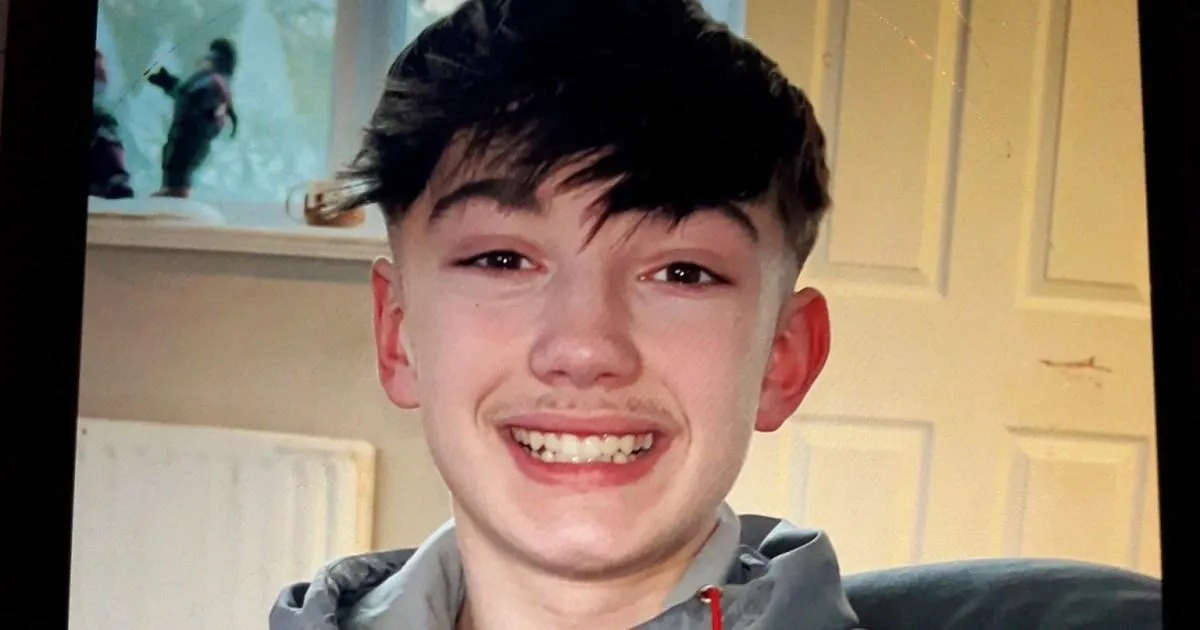
The Isle of Man is a place where people lock their doors without thinking, where children walk to school and parents don’t brace themselves for the worst. It has long been regarded as one of the safest corners of the world, a tiny island community with a rhythm that feels far removed from the violence that sometimes makes headlines in bigger cities. But that peace was shattered in May of last year when 14-year-old Christopher McBurnie was found dead in Ramsey, killed in what prosecutors would later describe as a deliberate and frenzied knife attack. The accused was another teenager, just as young, and his identity remains shielded by the law because of his age. For four weeks, a court listened to the grim details of how Christopher’s life ended, and the verdict that followed—guilty of murder—did not bring him back. It did not give his family another moment with him, another laugh, another ordinary evening. It simply confirmed what they already knew: that a boy they loved had been taken from them in a way that made no sense, in a place that had never expected to hold such a tragedy. There is a particular cruelty in the fact that Christopher was only just beginning his life. He was old enough to have friends, plans, dreams, and a future that stretched out before him, but young enough that none of it had been realized yet. His death leaves behind a family who must now live with the impossible weight of his absence, and a community that will never quite feel as safe as it once did.
The story behind the attack is one that many adults will find both chilling and painfully familiar, because it began in the kind of space that has become second nature to teenagers: social media. Christopher and his killer did not know each other, at least not in any meaningful way. But they had clashed online, trading messages on Snapchat that started with anger and escalated into threats. At some point, the argument turned into an arrangement to fight, and the words became more and more dangerous. According to reports, the boy who would go on to kill Christopher repeatedly threatened to end his life, saying it on eleven separate occasions, and taunting him with the promise that he would come to his home and kill him. For whatever reason, Christopher decided to meet the threat head-on. He made the journey from Castletown to the other boy’s home on May 29, accompanied by his friends, and encouraged the boy to come outside. It was the kind of confrontation that might have once resulted in nothing more than a fistfight, a bruised ego, a story to tell at school the next day. But this time, it ended in death. The fact that both boys were so young, and that their dispute had been fueled from start to finish by digital bravado, makes the tragedy feel even more senseless. A momentary feud, perhaps forgotten had it remained online, became a deadly reality in a matter of hours. No one—certainly not Christopher, and probably not the boy who killed him—fully understood where the threats and posturing would lead.
What actually happened outside that house was described in court with clinical precision, but the reality was chaotic, brutal, and over shockingly quickly. The defendant came out with a kitchen knife concealed in his pocket. He was punched in the head twice, and then he stabbed Christopher three times. The attack was so sudden and so violent that emergency services could do very little when they arrived at the scene, just after 3:40 in the afternoon. Within forty minutes, Christopher was pronounced dead. It is impossible to read those details without feeling a profound sense of horror, because this was a fourteen-year-old boy, a child by any measure, bleeding to death on a residential street while other teenagers looked on. The image stays with you: the chaos, the shouting, the desperate attempt to make sense of what was happening, and then the silence. The prosecution argued that Christopher had been lured to the address, that the knife was brought with intent, and that the attack was not some clumsy, desperate act of self-defense but a frenzied and deliberate killing. The defense tried to tell a different story, one in which the boy was afraid, threatened by the group outside his home, and acting to protect himself. They pointed to his low cognitive ability and suggested that he genuinely believed he was in danger. The jury ultimately rejected that explanation, finding him guilty of murder after listening to weeks of testimony. But the trial could not change the most fundamental fact: two boys faced each other outside a home, and only one walked away, while the other lay dying before the afternoon was over.
The legal proceedings inevitably raised uncomfortable questions about responsibility, fear, and guilt. The boy who killed Christopher will be sentenced in January, and he will likely spend a significant portion of his life in detention. Yet there is something deeply tragic about the fact that his life, too, has been shattered by the events of that day. He was only a teenager himself, with a limited capacity to understand the consequences of his actions, and he will now carry the burden of having taken a life. The court’s decision was not a triumph, but a somber act of justice, a recognition that Christopher’s life mattered and that his death was not excusable. The detectives who investigated the case spoke with a gentleness that reflects the sensitivity of the situation. Detective Chief Inspector Neil Craig said that his thoughts were first and foremost with Christopher’s family and everyone who loved him, and he acknowledged that at the heart of the investigation was a person whose life had been stolen, and a family who must live with that loss every single day. He spoke about wanting to recognize Christopher’s life, his relationships, and everything he meant to those closest to him. Those words matter, because in the midst of legal arguments and forensic evidence, it is easy to forget that the case is not just about a crime, but about a human being who was loved, who had favorite songs and inside jokes and a future that will never be.
For the island itself, the killing was a shocking anomaly. The police emphasized that this kind of violence is extremely rare on the Isle of Man, a place with low crime rates and a strong sense of community. But rarity does not dull the pain of the people who knew Christopher, and it does not make the streets feel safer for the teenagers who may have been friends with him. It also serves as a reminder that violence among young people is not limited to big cities or places where crime is common. It can happen anywhere, even in a small island community, when anger, fear, and access to a weapon converge in the wrong moment. In the aftermath, there will be grief, and there will be anger, and there will be a long process of healing for everyone touched by the tragedy. The sentencing in January will bring some closure, but closure is not the same as healing. No sentence can bring back the boy who was stabbed outside that house, and no verdict can erase the screams or the shock or the silence that followed. What the community can do, perhaps, is to hold Christopher in their memory, to support his family as they navigate a future without him, and to ask themselves hard questions about how such a tragedy might have been prevented.
There is a painful irony in the fact that Christopher may have felt compelled to respond to those threats, to stand his ground and prove that he was not afraid. Teenagers often lack the maturity to de-escalate a conflict, especially when their peers are watching and their reputation is on the line. The online world amplifies this pressure, turning private disagreements into public performances where backing down feels impossible. The deadly fight did not happen because Christopher deserved it, and it did not happen because the other boy was born to kill. It happened because a series of choices, made in fear and anger and foolishness, spiraled out of control in the worst possible way. Perhaps the most we can hope for is that Christopher’s story will cause young people to pause, to think twice before turning a feud into a meeting, to understand that words online have consequences in the real world, and that a knife is not a way to solve a problem—it is a way to end a life. Christopher McBurnie was a fourteen-year-old boy who should have had decades ahead of him. Instead, his name is now associated with a tragedy, and his family is left to grieve a future that was stolen from them. In that sense, the guilty verdict is not an ending, but a reminder that the promise of youth can be extinguished in an instant, and that everyone—parents, teachers, communities, and especially young people themselves—shares the responsibility to ensure that nothing like this ever happens again.