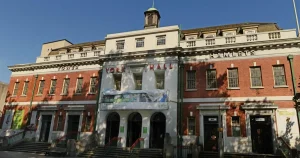


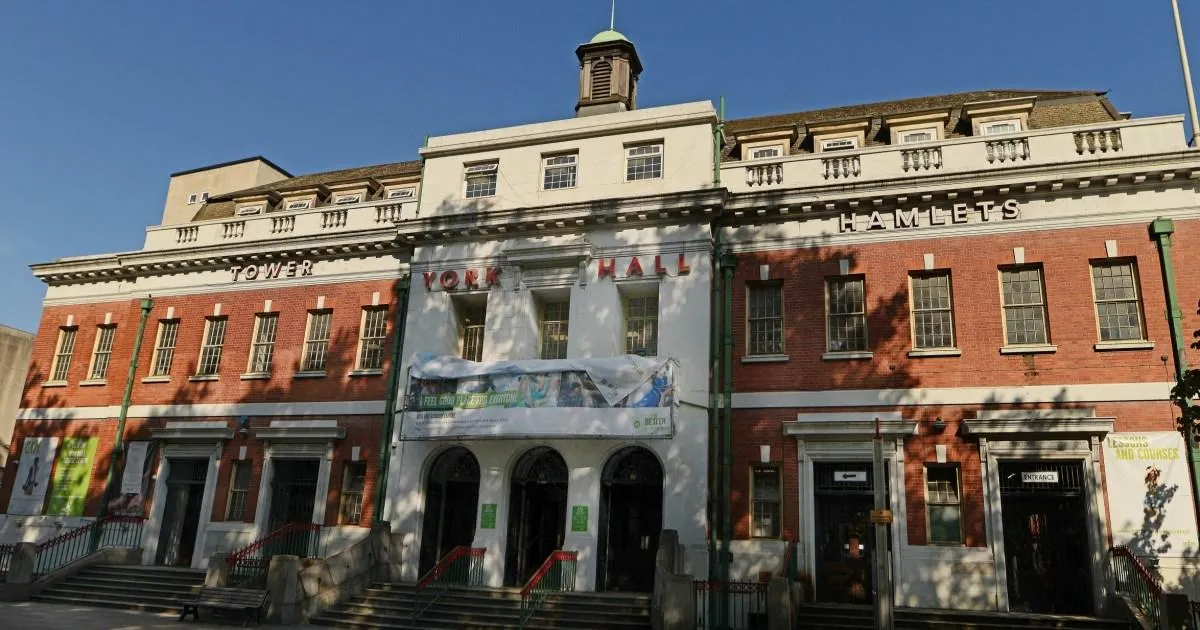
For more than ninety years, York Hall has stood at the heart of Bethnal Green, a familiar, slightly weathered landmark in a city that is constantly changing. The nearly hundred-year-old leisure centre, with its distinctive brick facade and tiled entrance, has welcomed generations of East Londoners through its doors. It has been the place where children first learned to swim, where teenagers discovered the discipline of boxing, where pensioners met for gentle exercise, and where countless families have found comfort in the simple ritual of a hot bath or a steam. So when the announcement came in July that traces of Legionella bacteria had been found in the cold water system, the news was more than just a routine health warning. It was a sudden, worrying interruption to a way of life. The centre was closed immediately, its doors locked, its pools empty, its changing rooms silent. For locals, the absence was felt at once: no early morning lap swimmers, no after-school clubs, no weekend boxing shows, no queue at the café. The building, usually humming with life, became a ghost of itself. Councillors initially hoped the closure would last only until January, but recent reports suggest that even that timetable may be too optimistic. There is now a real possibility that the repair work will take months longer, leaving the community to wait indefinitely for the reopening of one of its most cherished spaces. And the reason for the delay is not carelessness or lack of effort; it is the sheer complexity of trying to modernise a water system that is almost as old as the building itself, hidden behind walls that no living person fully understands. For now, York Hall remains closed, and every week it stays shut is a reminder of how much a single public building can matter.
The bacteria that forced this closure are not something to be taken lightly. Legionella is a naturally occurring microorganism that thrives in warm, stagnant water, and when it is disturbed, it can become aerosolised in tiny droplets that people breathe in. If those droplets enter the lungs, they can cause Legionnaires’ disease, a severe form of pneumonia that can leave even healthy adults struggling for breath. The symptoms can be brutal: high fever, chills, a persistent cough, muscle aches, headaches, and a profound exhaustion that can last for weeks. While most people who contract the illness are treated successfully with antibiotics and go on to make a full recovery, the disease can be particularly dangerous for older people, smokers, and those with weakened immune systems. In some cases, it can be fatal. This is why the discovery of the bacteria in York Hall’s cold water system triggered such an immediate and uncompromising response. The bacteria are often found in places where water is left to sit at the right temperature: air conditioning systems, humidifiers, hot tubs, infrequently used taps and showers, and the tangled maze of pipes that runs through older buildings. York Hall, with its complex network of original and updated plumbing, was vulnerable. Earlier this year, a small outbreak of Legionnaires’ disease hit London, and the UK Health Security Agency normally logs around 300 cases each year in England and Wales, so the threat is not hypothetical or rare. The health authorities acted quickly, but the very nature of the problem makes it difficult to solve. It is not enough simply to flush the system or add chemicals; every outlet, every valve, every dead leg of pipe has to be treated, tested, and retested before it can be declared safe. The human cost of a mistake is too high. So the building stays closed, and the water stays still, and the risk remains a silent, invisible presence behind the walls. For those who loved the old centre, the delay is frustrating, but no one wants to see a beloved institution become the source of an outbreak. The caution is not excessive; it is the price of caring for a public space in a responsible way.
The difficulty at York Hall lies deep within the building itself, in a network of pipes that has been growing and changing for almost a century. The centre first opened its doors in 1929, and while it has been renovated and updated over the years, some of the original infrastructure remains. That means the water system is not a simple, modern grid but a complicated, layered tangle of old and new pipes, some of which have been cut off, rerouted, or simply abandoned over time. It is, in many ways, the archaeological record of the building’s history, hidden behind walls and under floors. But it is also a nightmare for engineers. A report on the situation explained that York Hall has a complex water system, some of it original, and that there is no complete record of the pipework. Some pipes cannot be traced at all, which means that water can disappear into a dead end inside the building, providing the perfect breeding ground for Legionella. To make matters worse, some fixtures in the building support pipes made from asbestos, so those materials had to be handled and removed with extreme care, adding further delays to the work. Every time a contractor opens a wall, they are likely to discover something unexpected: a pipe that leads nowhere, a valve that no one knew existed, a forgotten connection to an old bath or fountain. The process of eradicating Legionella, therefore, is not a straightforward repair job. It is a slow, delicate investigation, involving specialists in water hygiene, asbestos removal, and historic building preservation. They have to test, treat, and monitor the system constantly, and they cannot rush. The council’s hope that the centre would reopen in January was based on an assumption that the problem could be contained quickly, but the reality is that any solution must be comprehensive. A single missed pipe could mean the bacteria returns, and the whole process would have to start again. This is why the reopening date is now uncertain, and why even the experts are reluctant to give a firm promise. York Hall is being asked to reveal its secrets, and the old building is not giving them up easily.
All of this comes at a significant financial cost, and for a local authority already stretched thin, the burden is heavy. The closure is estimated to cost around £924,000, a figure that includes both the necessary repairs and the income that the centre would have generated if it had remained open. That lost revenue matters enormously. Leisure centres are not simply services; they are businesses that help fund their own upkeep, and when doors are closed, money does not just stop coming in, it flows out in the form of contractors, consultants, and emergency measures. For a council, this is a painful equation. But the alternative, reopening too soon and risking the health of the community, is unthinkable. York Hall has faced financial threats before. In 2004, the venue was threatened with closure, and many people feared its history was coming to an end. But instead, it was saved, and three years later, after a huge renovation project, it reopened with expanded spa services and an upgraded gym. That project proved that the old building could be modernised, and it gave the community a degree of confidence in its future. This time, however, the challenge is not cosmetic. It is about the very infrastructure that keeps the building alive. The £924,000 estimate may grow if the closure continues beyond January, and no one can say with certainty how much the final bill will be. The financial pressure is real, but so is the emotional stake. For the people who depend on York Hall, the thought of it being closed indefinitely is deeply unsettling. There is a fear, voiced quietly in local conversations, that the building might never reopen, or that the cost of fixing it will be so high that some members of the council will begin to question whether it is worth it. But the community is fiercely attached to York Hall, and the history of the building suggests that it is not ready to give up. The renovations of 2007 were a promise, a statement that this centre mattered and would continue to matter. Now, that promise is being tested again.
To understand why York Hall matters so much, it is necessary to look at its history, which is woven deeply into the fabric of East London. The building opened in 1929 as a Victorian-style Turkish bath and sports centre, a place where people could come to wash, swim, and exercise in a city that was rapidly growing. In its early years, it offered an oasis of cleanliness and calm, a public luxury in an area that was crowded, noisy, and often poor. But it was boxing that made York Hall truly famous. From the 1940s onwards, the centre became a fixture on the British boxing scene, a venue where young fighters from the East End and beyond would go to test themselves, to learn their craft, and to dream of glory. Over the decades, it hosted countless bouts, some enormous, many small, but all of them filled with the sweat and hope of fighters who saw boxing as a way out and a way up. The list of legends who have stepped into the ring at York Hall reads like a roll call of British boxing royalty: Anthony Joshua, Tyson Fury, David Haye, Chris Eubank, and many others all sparred or fought within its walls. For those who love the sport, the building is almost sacred, a place where the old traditions of gritty, honest, working-class boxing are still alive. But York Hall is not just a boxing venue. It has been a swimming pool, a spa, a gym, a community centre, a refuge for children learning new skills and older people staying active. It has hosted birthday parties, school galas, exercise classes, and charity events. It has been a constant, reliable presence in a changing world, surviving war, economic decline, social upheaval, and more than one threat of closure. To walk into York Hall is to feel the weight of that history, to imagine the generations who have passed through its doors, each leaving a small trace of themselves behind. The old building is not beautiful in the way of modern glass towers, but it has a character that cannot be bought, and that is why so many people grieve its absence.
For now, the silence inside York Hall is a reminder of the uncertainty that accompanies every closure of a beloved public institution. The people who miss it are not abstract statistics; they are the swimmers who planned their week around an early morning dip, the retired men and women who met for a coffee after a gentle session in the warm pool, the young boxers who modelled themselves on the champions who once fought in the same ring, the families who came for a cheap day out, the teenagers who earned their first pay packets at the centre. Every day the building stays shut, those routines are broken, and for some, particularly the elderly and isolated, the loss is more than an inconvenience. It is a severing of connection to the outside world. The hope is that the experts will eventually win their battle against Legionella, that the delicate network of pipes will be cleaned and repaired, and that the water will once again flow safely. The building has survived for nearly a century, and it has earned the right to be saved. But whether it is saved depends on the willingness to spend money, to be patient, and to recognise that public spaces are not optional extras; they are the glue that holds communities together. If York Hall can be restored, it will not just be a victory for plumbing and public health; it will be a victory for the people who have always believed in the old centre’s importance. The next few months will be difficult, and there will be moments when it feels as though the problems are insurmountable. But the story of York Hall is a story of endurance. It has weathered every storm that London has thrown at it, and with careful work and genuine commitment, it can do so again. Until then, locals will wait, hope, and keep checking the council’s website for news. And when the doors finally reopen, when the water is declared safe and the first swimmer dives in, the old building will once again be alive. For Bethnal Green, that day cannot come soon enough.