

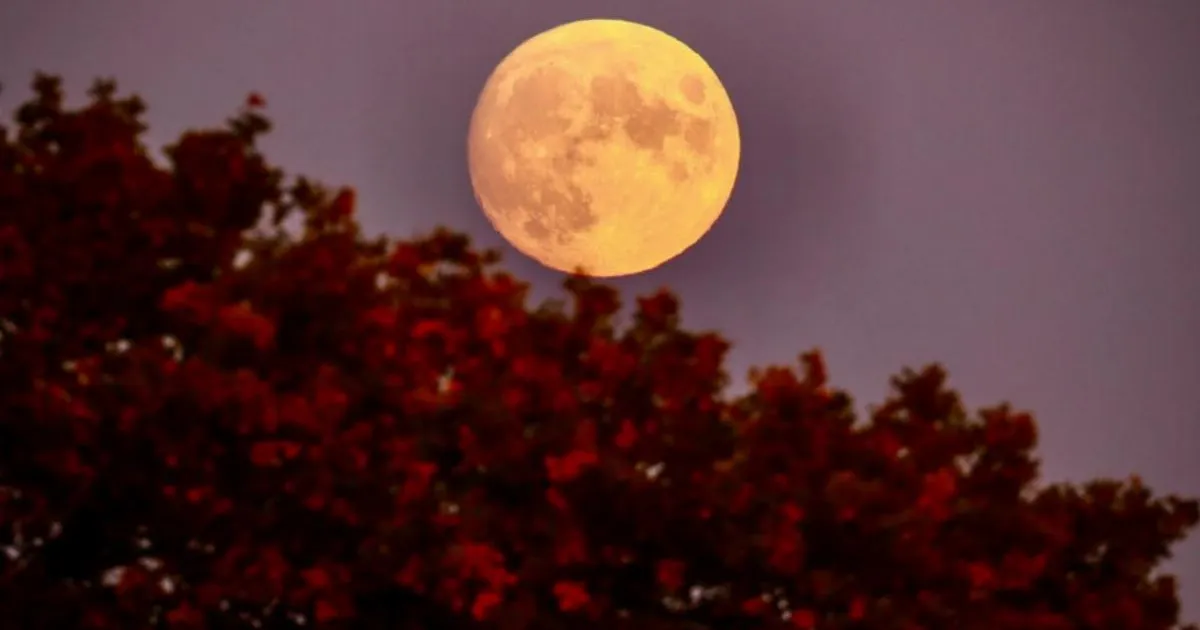
Tonight, if you step outside and glance upward, you might just catch something special: the Hunter’s Moon, the first full moon of autumn, hanging bright in the October sky. There is something quietly thrilling about a full moon, even in an age when we carry tiny screens that can tell us exactly when it will rise and set. But the Hunter’s Moon feels different, almost ancient in its rhythm, a celestial landmark that has guided people through the turning seasons for thousands of years. For stargazers across the UK, this year’s October full moon is a particularly meaningful sight, not only because it marks the arrival of autumn proper, but because it is the last “ordinary” full moon we will see for a while. Soon, we will be treated to a series of four supermoons, those dazzling full moons that occur when our lunar companion reaches the closest point in its orbit to Earth, making it appear noticeably larger and brighter than usual. And yet, before that parade of supermoons begins, the Hunter’s Moon demands its own moment in the spotlight. Of course, as with any outdoor spectacle in Britain, there is one unpredictable guest that might spoil the party: the weather. Storm Boleo has been making its presence felt across the country, bringing disruption, heavy rain, and strong winds. The heavens, it seems, have decided to add a little drama of their own. Still, if the clouds part, people across the UK should be able to enjoy a glorious view of the moon as it rises from around 4pm and hangs in the sky until tomorrow morning. There is something wonderfully forgiving about a full moon—it does not require a special trip to the countryside, nor a telescope, nor even a particularly clear sky. Sometimes all you need is a break in the clouds, a moment of stillness, and the willingness to look up.
Now, if you are hoping to catch the Hunter’s Moon yourself, you will be pleased to know that the timing is far friendlier than you might expect. There is no need to set a 3am alarm or stumble out into the cold in the dead of night, though you certainly can if you are devoted to the experience. In the UK, the moon is expected to begin its rise from around 4pm, which means you can watch it climb into the evening sky while the kettle is still warm and the day is slowly easing into dusk. For those who want to see the moon at its very fullest, the peak arrives in the early hours of tomorrow morning, at approximately 4.12am GMT. But do not let that discourage you; the moon will be visible from tonight until tomorrow morning, giving you plenty of opportunities to spot it. As the evening unfolds, you might see it low on the horizon, where it often appears larger and tinged with a warm, golden hue—an illusion caused by the atmosphere scattering light. Later, as it climbs higher, it will shift into a brighter, more silvery presence, casting soft shadows across gardens, pavements, and fields. If you live in a city, your view might be muted by streetlights and urban glow, but the moon has a way of asserting itself, shining through gaps between buildings and above rooftops. A pair of binoculars can make the experience even more magical, revealing the craters and ridges on the lunar surface, but honestly, the naked eye is enough. All you really need is a clear view of the sky, a warm coat, and perhaps a cup of tea to keep your hands warm. And even if the night is partially cloudy, a full moon has a remarkable ability to pierce through the mist and linger just long enough to remind you that the universe is still turning.
The name Hunter’s Moon, like so many of the full moon names we use today, comes from Native American tradition, where each moon served as a marker for the changing seasons. October’s full moon earned its title because it was the time when hunters took to the forests to stock up for the winter, tracking deer and fox by the light of the unusually bright, long-lasting moon. It is easy to imagine how important that must have been in a world without streetlights, electric torches, or central heating. When the days grew short and the cold crept in, the full moon was a lantern in the night sky, a practical tool that allowed people to prepare for the harsh months ahead. The Hunter’s Moon is not just a poetic name; it is a reflection of survival, community, and the deep connection between human life and the natural rhythms of the Earth. Interestingly, this particular full moon has also been known by other names, including the Travel Moon and the Dying Grass Moon, though neither has quite the same dramatic ring as Hunter’s Moon. The Travel Moon evokes a sense of restless movement, perhaps a final journey before winter closes in, while the Dying Grass Moon is a more sombre nod to the fading landscape, where fields and meadows begin to brown and wither. But it is the Hunter’s Moon that has endured in our collective imagination, perhaps because it speaks to something primal and self-sufficient, a reminder that the nights are lengthening and it is time to prepare. These names were not merely decorative; they were practical calendars, passed down through generations, connecting people to the world around them. In a way, when we say “Hunter’s Moon” today, we are honouring that ancient wisdom, even if we are simply checking the night sky from our own windows.
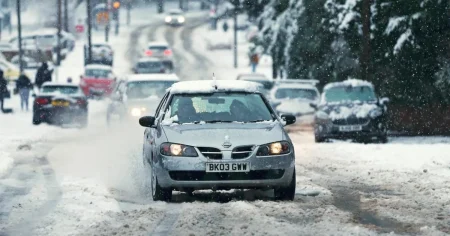
Of course, the great question for anyone in the UK tonight is whether the weather will actually cooperate. Sadly, Storm Boleo may have other ideas. According to the Met Office, those in the north of the country face the toughest conditions, with Scotland and Northern Ireland expected to experience long spells of rain and scattered showers. If you are up there, your chances of seeing the Hunter’s Moon tonight are, at best, a little uncertain. But weather forecasts, as we all know, are never a guarantee. Clouds can part, showers can pass, and there is always the possibility of a sudden clearing just as the moon reaches a particularly dramatic point in the sky. If you are in the south, your outlook is considerably brighter, with sunshine forecast for much of the day and a more realistic chance of an unobstructed view tonight. Still, the good news comes with a caveat: rain has been predicted for Monday as well, which means the chances of catching the moon tomorrow night will be slimmer. It is a little disappointing, especially after all the anticipation, but there is a comforting thought to hold onto. This is not the only full moon of the year, nor even the last. If the clouds refuse to part this evening, you will have plenty of other chances to gaze up in wonder before the year is out. In fact, two more full moons remain on the calendar, and both promise to be spectacular in their own right. On November 24, the Beaver Moon will light up the night sky, followed a month later by the Cold Moon on Christmas Eve. Both of these are set to be supermoons, meaning they will appear even larger and brighter than the Hunter’s Moon. So even if tonight is a washout, the celestial calendar is only getting more impressive. Sometimes the sky keeps its best gifts for later.
Looking further ahead, the upcoming full moons are worth marking in your diary, especially if you love the idea of a winter landscape bathed in silver light. The Beaver Moon on November 24 has a lovely, industrious name, traditionally associated with the time when beavers prepare their lodges for winter, and with the final preparations humans made before the snow arrived. Then comes the Cold Moon on December 24, which feels almost like a gift wrapped in starlight—a full moon on Christmas Eve, hanging over the rooftops as families gather together. That is a rare and beautiful coincidence, the kind of thing that makes the holiday season feel even more magical. Both of these moons will be supermoons, joining the ranks of the first full moon of autumn as part of a sequence of four that will continue into the new year. After the Beaver Moon and the Cold Moon finish their performances, two additional supermoons will follow in January and February 2027, meaning that anyone who loves astronomy will have plenty to anticipate over the coming months. It is almost as if the universe is making up for any cloud-covered disappointment tonight, offering a series of chances to step outside and be amazed. There is something deeply reassuring about the regularity of the lunar cycle; no matter what is happening in our busy, complicated lives, the moon keeps its appointments. It waxes and wanes, rises and sets, and every so often it reaches a point of perfect fullness that reminds us just how small, and yet how beautifully connected, we are. So if you miss the Hunter’s Moon, do not despair. The sky is not done with us yet. There are more bright nights ahead, more chances to look up and feel a sense of wonder.
In the end, the Hunter’s Moon is about more than just the chance to see a bright object in the sky. It is about the shared experience of looking up, the quiet pause in our busy day when we remember that the natural world is still there, still turning, still full of mystery. All across the UK tonight, people will glance out of their windows, step into their gardens, or stop on their way home to catch a glimpse of the moon. Some will see it; others will only see clouds. But even the act of hoping for a glimpse is a small kind of magic. The moon has been with humanity since the beginning, a constant companion in an ever-changing world. Ancient hunters relied on its light to find their way; travellers used its cycles to mark the passing months; poets have written about its beauty for centuries. Tonight, as the Hunter’s Moon rises over the UK, we are part of that long tradition, no matter how modern our lives may seem. So take a moment tonight, if you can. Step outside, breathe in the cool autumn air, and look up at the sky. If the moon is visible, let its quiet glow remind you of the vastness of the universe and the simple beauty of being alive. If the weather has other plans, take comfort in knowing there will be another night, another full moon, another chance to feel that connection. The Hunter’s Moon may be the last ordinary full moon before the supermoons, but in its own way, it is extraordinary. After all, every full moon is a reminder that we are all standing together beneath the same vast, luminous sky.