


Storm Boelo announced its presence with roaring winds and destructive gusts, but the true measure of its power came on Sunday morning when police confirmed the storm’s first victim. The man, aged 60, was struck and killed by a falling tree in Dumfries, Scotland, just after 10.30am. The incident happened on a minor road at Mid Kelton, near Castle Douglas, a quiet place where the sound of a Sunday morning should have been birdsong rather than the crack and crash of a broken tree. Police Scotland arrived to find the man already beyond help, and he was pronounced dead at the scene. The bare statement from the force—measured, professional, and heartbreaking—gave no name, only an age, but behind that age was a life: a family waiting at home, friends who never imagined a routine journey would end this way, a community that would spend the next few days in shock. Around the same time, a fallen tree was spotted on Cloch Road near Inverkip, another reminder that the landscape had become dangerous. In the space of a few furious hours, the storm turned familiar roads into places of risk, and ordinary people into casualties of the weather. The 60-year-old was not just a statistic in a national weather report; he was someone’s husband, father, brother, and friend, and his death should serve as a warning that storms like Boelo must never be underestimated. While the official language remained cautious, the grief was immediate and deeply human, spreading through the small towns and farms near Castle Douglas like ripples from a stone thrown into still water. There would be no easing of that pain simply because the wind eventually died down.
The storm that claimed this life was no ordinary bout of bad weather. The Met Office had issued an amber wind warning, which came into force at 9pm on Saturday night and was due to remain in place until 9pm on Sunday, with only Orkney staying under a lesser yellow warning. That warning was blunt and terrifying: it spoke of potential injuries and danger to life from flying debris, as well as the chance of damage to buildings, power cuts, and serious travel disruption. But even the most detailed forecasts could not capture the sheer noise and violence of what followed. Through the night, winds battered Scotland with stunning intensity: Islay, off the west coast in Argyll and Bute, recorded 80mph gusts, while Tiree saw 82mph at about 4am. In the Glasgow region, the Met Office logged gusts of up to 62mph at the same time. These were not just numbers on a screen—they were the sounds of chimneys cracking, roofs groaning, trees bending until they could bend no more. In Lancaster, a giant chestnut tree crashed into a house, its vast trunk smashing through the roof like a monstrous fist, captured in a photograph that showed how close a family could come to disaster. Elsewhere, two people were crushed by collapsing scaffolding, demonstrating that the storm’s fury was not confined to rural lanes but reached into built-up areas where everyday structures became deadly. Every branch, every loose tile, every overhanging bough was a potential weapon. The amber warning was not an overreaction; it was a glimpse of the truth that the whole country was about to experience.
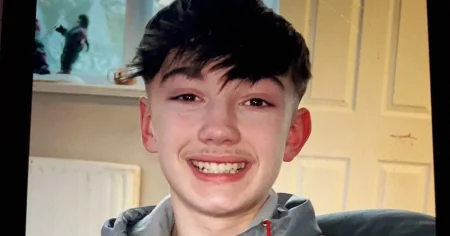
Amid this violent weather, another human tragedy was unfolding in South Lanarkshire. Tom Allan, 63, had been reported missing from Westmains Farm in Stonehouse after he was last seen by his family at around 8.15am on Friday. By the time Storm Boelo swept across the country, Tom had been gone for two days, and the worry was turning into a quiet kind of terror. Police made a public appeal, saying they were “very concerned” for his welfare, and asked people to check gardens, sheds, and outbuildings in case he had sought shelter from the storm. That detail—imagining Tom somewhere cold and hidden, perhaps curled in a corner of a dusty shed or behind a wall—was achingly human. His family knew the farmland well; they knew the places where a person might take refuge. But the storm made everything more complicated. Fields turned to mud, paths disappeared under water, and the howling wind made it hard to hear anything. The search had to continue anyway, because waiting was not an option. Police launched a major operation, with officers scouring the farmland and the wider local area, while the public was asked to remain vigilant. In a time when a missing person can be reduced to a few lines in a news bulletin, the appeal brought Tom back into focus as a man, not just a case: a person with a routine, a family who loved him, and a life that had somehow been blown off course.
The search for Tom Allan soon became an extraordinary effort, with specialist units deployed to cover as much ground as possible. Police helicopters fought against the gale-force winds, dogs worked with their noses to the soaked earth, and mountain rescue teams pushed deeper into the countryside, all while Boelo continued to rage. Inspector Colin Thapar made a direct and affecting plea: “We are very concerned for Tom’s welfare and we are keen to trace him as soon as possible. As our searches and enquiries continue, I would urge anyone living, walking or driving in the area to keep a look out for Tom. Please check gardens, sheds and outhouses in case he has sought shelter.” Those words carried a raw, personal weight, acknowledging that in weather like this, a missing person might seek the most ordinary of refuges—a garden shed, a barn, a doorway. The rescue teams were not just doing a job; they were searching for someone who belonged to a family that was living through a nightmare. Every hour that passed brought a fresh wave of anxiety, and every new gust of wind made the task more dangerous. Yet the police did not scale back. They knew that Tom was out there somewhere, and they were determined to find him. The wider community, too, was asked to become part of the search, to open gates and look behind hedges, to think about where they would hide if they were trapped in the storm. It was a moment of collective empathy, a reminder that in the midst of a weather disaster, the most important thing is not the speed of the wind but the strength of human concern.
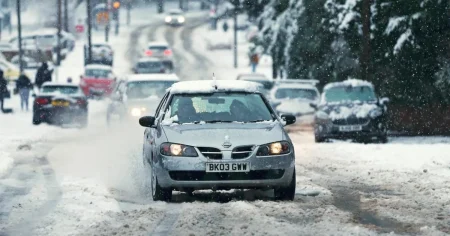
Storm Boelo was not only a Scottish tragedy but a national weather event that left a trail of destruction in its wake. The Met Office warnings had been issued days in advance, but no warning can truly prepare people for the reality of winds over 80mph. Power lines began to snap, leaving homes without electricity; roads were blocked by fallen trees; trains, ferries and flights suffered delays and cancellations, leaving travellers stranded far from home. In towns and villages, everyday landmarks became hazards: a roof tile turning into a missile, a fence panel flying across a street, a tree crashing into a living room. The two people crushed by collapsing scaffolding were a grim reminder that the storm did not discriminate between urban and rural areas; it attacked everything in its path. The day’s headlines also carried other dark stories, including a death linked to a car sale arranged over Facebook Marketplace and a separate report of mountain rescuers battling horrific storm conditions to search for a lost man. These were not just random news items; they were snapshots of a world where life can change in an instant, where a simple decision—to go outside, to drive a familiar road, to search for a missing person—can have catastrophic consequences. Yet within the destruction there were also acts of quiet courage. Neighbours checked on one another, council workers cleared roads with extraordinary speed, and emergency services answered hundreds of calls despite the risk to their own lives. The storm showed how fragile ordinary life can be, but it also revealed how people respond to crisis with patience, kindness, and a refusal to turn their backs on those who need help.
As the winds slowly began to ease and the amber warning eventually lifted, the true scale of the aftermath came into view. For the family of the 60-year-old man who died near Castle Douglas, the passing of the storm brought no consolation—only the beginning of grief, the endless practicalities, the empty chair at the table. For Tom Allan’s family, the uncertainty remained, with searches continuing and hope struggling against the fear of what the storm might have done. For everyone in the storm’s path, there were days of clearing up: cutting fallen branches, repairing roofs, collecting shattered possessions, filing insurance claims and trying to find a sense of normality. But after the chainsaws fall silent and the debris is removed, the memory of Storm Boelo will remain. People will remember the fear they felt when the windows rattled and the lights went out; they will remember the strange roar of the wind, like a train passing through the sky; they will remember the sight of trees bent like bows, and the sudden silence when the storm moved on. They will also remember something else: the way strangers helped strangers, the way police officers pushed through the storm to search for a missing man, the way a community gathered around a grieving family. Storm Boelo has left a mark on Scotland, but it has also shown the resilience that defines human beings. The first victim was more than a headline; Tom Allan is more than a missing-person appeal; the families affected are more than statistics. They are reminders that behind every weather warning is a fragile human life, and that in the end, the only way to face a storm is together.