
A Life Cut Short: The human tragedy behind a Leeds murder investigation
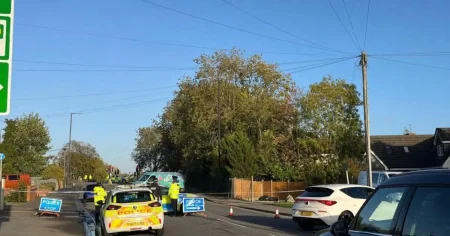
There are moments when the quiet routine of an ordinary Saturday is violently interrupted, and the streets where people live, walk their dogs and bring up their children suddenly become the scene of a tragedy. This is what happened in New Wortley, Leeds, on a Saturday evening, when police received reports at 10.23pm of a man being attacked with weapons outside a property in Hedley Chase. The victim, a 38-year-old man, had been the subject of what investigators would later describe as a sustained attack carried out by four armed individuals. Officers and paramedics arrived at the scene with urgency, driven by hope and the duty to save a life. They found the man seriously injured and immediately began emergency treatment. Paramedics fought to stabilise him, while officers did what they could to preserve the scene and gather initial evidence. But despite every effort, the man died a short time later. A murder investigation was launched, and the area was sealed off as forensic teams began the painstaking work of searching for clues. In the hours that followed, a family was left in shock, and a community was left to make sense of a violent event that seemed to come from nowhere. The 38-year-old was not just a name in a police report or a case number. He was someone’s loved one, someone’s friend, someone with a history, a personality and a future that was stolen away in a brutal manner. Though police have not released his identity, those who knew him are dealing with a loss that is raw and unrelenting. Every murder leaves behind a chain of grief that extends far beyond the immediate family, touching friends, coworkers, neighbours and even acquaintances who cannot quite believe what has happened. In the days ahead, tributes may be laid, memories shared and questions asked. But for now, there is only the terrible stillness that follows a sudden death, broken by the presence of police tape, forensic suits and the quiet determination of detectives who have made it their mission to find the truth.
Detective Chief Inspector Dan Bates, who is leading the murder investigation, offered a public statement that balanced sorrow with resolve. “A man has tragically lost his life,” he said, “and we are supporting his family at this tragic time.” The words are simple, but they carry the weight of a force that understands the gravity of what has occurred. Bates went on to explain that, from initial reports, four individuals who were armed with weapons had carried out a sustained attack on the victim. The phrase “sustained attack” is deeply troubling. It evokes images of violence that continued beyond the first strike, a focused and relentless assault that left the victim with injuries too severe to survive. Police are now working extremely hard to identify those individuals, as Bates put it, and there is a clear sense of urgency in his language. The investigation is being treated as a priority, with significant resources dedicated to tracing the suspects and building a case that can withstand scrutiny in court. At the same time, officers are supporting the victim’s family, who must now begin the painful process of grieving while also cooperating with investigators. For a family in such a situation, the presence of police can be both a comfort and a reminder of their loss. Specialist liaison officers will guide them through what comes next, from formal identification to the slow progress of the inquiry. But no process can prepare a family for the realisation that someone they love is gone forever, especially in such a violent and senseless way. The investigation is not just an exercise in procedure; it is an attempt to answer the simplest and hardest question a grieving family can ask: why did this happen, and who is responsible?
The attack has been described by police as both targeted and isolated. In many respects, that description is designed to calm public fears. It suggests that the victim was chosen for reasons known only to the attackers, and that there is no ongoing threat to the wider community. But the word “targeted” also raises difficult questions. What could have led four people to arm themselves and launch a sustained assault on a man outside his own property? Was this the culmination of a dispute, an act of revenge, or something even more disturbing? Investigators will be examining every aspect of the victim’s life and movements before the attack, looking for connections, conflicts, or suspicious behaviour. They will be speaking to family, friends, neighbours and anyone who may have seen the victim in his final hours. They will also be reviewing CCTV footage from the area, hoping to capture the moments leading up to the attack and perhaps identify the vehicles or routes used by the attackers before and after they struck. This is the painstaking work of a murder inquiry, and it takes time. But the public can be assured that behind the scenes, a large team is dedicated to this one case. Bates emphasised that the force has significant resources working to get answers for the family and to ensure that those responsible face justice. That promise is not empty. Detectives will work through the night, forensic analysts will examine every piece of evidence, and team after team will follow every lead until they are confident they have done everything possible to solve this crime. In the background, the victim’s family waits, caught between the need for answers and the understanding that those answers may bring even more pain. There is no way to prepare for such a loss, and no way to soften the reality that a man in his late thirties, with much of his life still ahead of him, has been taken away in a moment of violence.
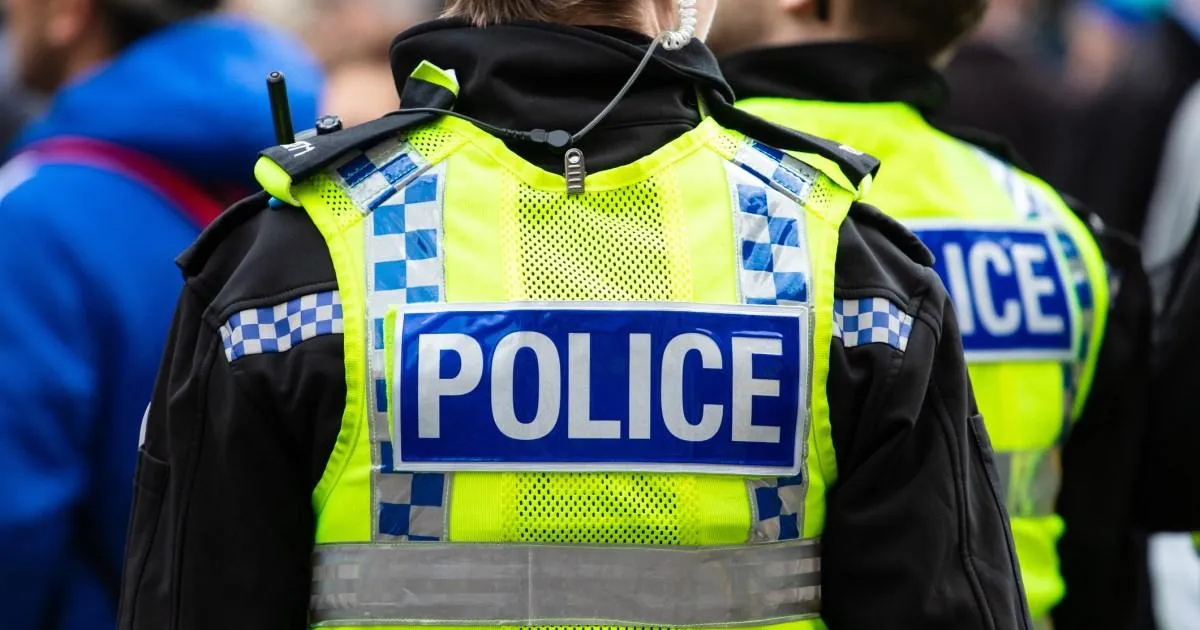
Now, the police are turning to the public for help. In an appeal that is both urgent and carefully worded, they are asking anyone with information about the attack to come forward. They want to hear from anyone who was in the area of Hedley Chase or New Wortley on Saturday evening and who may have seen something suspicious. They are particularly interested in the movements of four individuals, who were reportedly armed with weapons. Did anyone see them before the attack? Did anyone see them fleeing afterwards? Did anyone hear shouting, commotion or the sounds of a struggle around 10.23pm? Even the smallest detail, which might seem unimportant at the time, could prove vital in identifying those responsible. Witnesses may feel frightened or unsure about speaking to the police, especially if they fear retaliation. In such cases, officers will listen, take statements and offer support. But they cannot act without information. The community has a role to play in helping to bring closure to the victim’s family and to ensure that the streets of New Wortley do not remain under a shadow of fear and suspicion. Anyone with information has been urged to contact West Yorkshire Police directly. It is a call that could change the course of the investigation. It could provide the missing piece of the puzzle, the detail that leads officers to the suspects, or the evidence that secures a conviction. In a case like this, there is no such thing as too much information, and the police have made it clear that every call will be taken seriously. The appeal is not just a formality; it is a lifeline. Somewhere out there, someone knows something. Someone saw something that did not seem right at the time, or heard something that did not make sense until now. That person may be hesitant, uncertain or afraid. But the memory of a man who lost his life so violently should be enough to overcome that hesitation. The smallest gesture of bravery, the simple act of picking up the phone, could be the thing that brings a grieving family the justice they deserve.
Beyond the mechanics of the investigation, there is the deeper human cost of the attack. The death of one person is not just a statistic in the news; it is a permanent loss that will be felt by everyone who knew him. The victim may have been a father, a son, a brother, a partner, a colleague or a friend. He had a life with its own rhythms and routines, its own joys and struggles. He may have spent that Saturday doing mundane things, talking to friends, planning for the future or simply going about his day. All of that was ended in a sudden and violent attack. For his family, the coming weeks will be a blur of grief, police updates and formalities. They will have to bury someone they loved, and they will have to do so knowing that his death was not a natural accident or a medical tragedy, but a deliberate act of violence. The sense of injustice is likely to be overwhelming. They may struggle to sleep, to eat or to process what has happened. They may replay the same questions over and over: Why him? Who did this? Could anything have been done to prevent it? The police cannot answer all those questions, but they can offer support and pursue justice. DCI Bates has already made it clear that his thoughts — and the thoughts of his team — are with the family. There is a certain comfort in knowing that so many people are working hard on their behalf, but there is no comfort that can replace the person they have lost. Their lives have been irrevocably changed by the events of one evening. What was once a familiar street is now a place of dread. What was once a normal Saturday night is now the anniversary of a loss. And what was once a future full of possibility is now a future shaped by absence. This is the real cost of violence, and it is a cost that extends far beyond the immediate scene of the crime.
In the end, this is a story about the fragility of life and the need for justice. A 38-year-old man left his home, or returned to it, on a Saturday evening and was met by four armed attackers. Within a short space of time, he was dead. The investigation is ongoing, with officers still at the scene and extensive enquiries being carried out. The police have not yet named the victim, and they have not yet made any arrests. But the commitment to finding the truth is clear. The family deserves answers. The community deserves to feel safe. And the person or people responsible for the attack must be held accountable for their actions. In the meantime, the rest of us can take a moment to reflect on the human cost of violence, the grief that it leaves in its wake, and the responsibility we all share to support those who are suffering. If you know something, if you saw something, if you heard something, the police are asking you to come forward. It may not bring the man back, but it can help to ensure that his death is not in vain. It can help to bring his family the peace that comes from knowing that justice has been done. It can help to prevent another family from experiencing the same pain. The streets of New Wortley will eventually return to normal. The police tape will be removed, the forensic vans will drive away, and life will go on. But for those who loved the 38-year-old, the world will never be quite the same. The greatest respect they can be offered is a thorough, determined and compassionate investigation, and the full commitment of the police to finding the truth. In the face of such a tragedy, that commitment matters more than words can say.