

Paragraph 1: The Absence and the Excuse
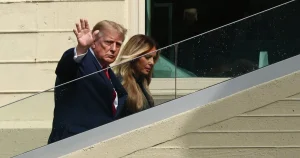
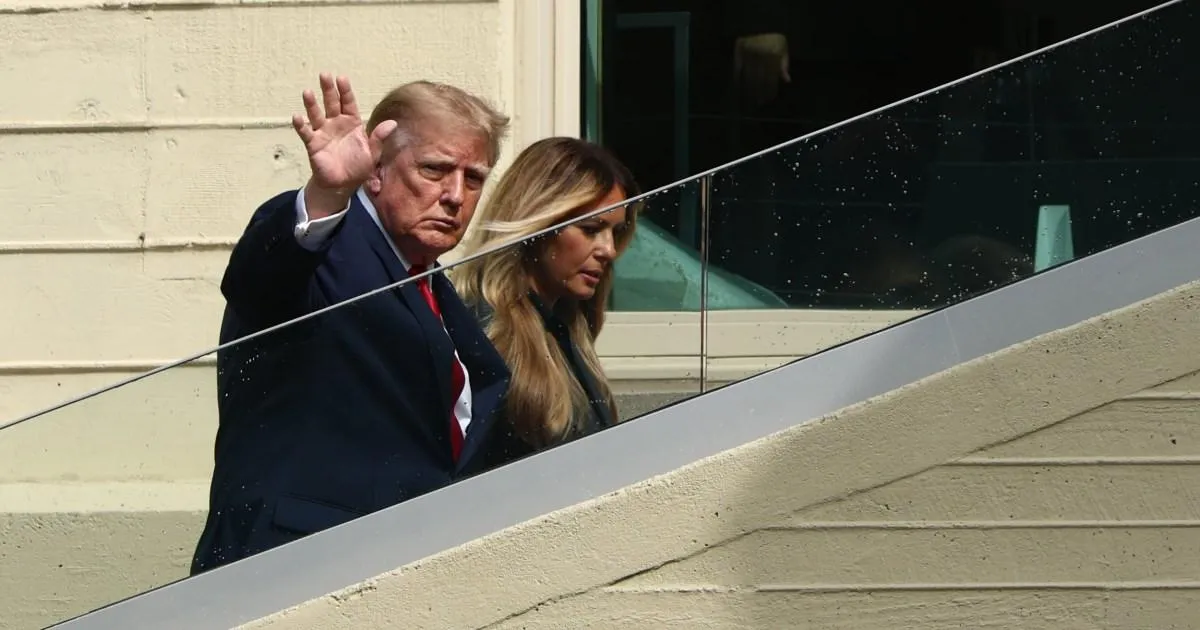
In the quiet, verdant landscape of Ireland, where the traditional pageantry of a state visit usually unfolds with rigid protocol and statements of diplomatic unity, a curious human drama was quietly simmering this weekend. President Donald Trump, fresh off a transatlantic flight, stood before the press corps in a mood that was jovial, defensive, and strikingly informal. The first question hanging in the air, unspoken but universally understood, concerned the conspicuous absence of the First Lady. Melania Trump, the enigmatic and famously private figure who has often appeared to orbit the presidency at a calculated distance, was nowhere to be seen. Trump, with his characteristic blend of deflection and theatrical charm, addressed the press with a quip that was both dismissive and revealing. “My wife is here in spirit,” he announced, gesturing to the air as if she were a benevolent ghost hovering over the Emerald Isle. “She’s watching right now.”
The President then painted a verbal picture of a domestic negotiation that felt less like the exchange between the leader of the free world and his spouse, and more like a conversation between any husband and wife debating a tedious travel schedule. He explained that he had invited her along, but she had declined, citing the grueling seven-hour flight as a reason for her lack of enthusiasm. “I said, ‘Well, why don’t you come with me?’ She said, ‘Well, it’s a seven-hour trip. Maybe I’m not that friendly,'” Trump recounted, seemingly pleased with the anecdote that framed Melania as a pragmatic woman unwilling to sacrifice a day of her life for a political photo opportunity. He even joked about persuading her to “put on a Make America Great Again hat and come on,” a suggestion that likely holds zero appeal for the famously image-conscious former model. Ultimately, he concluded with a resigned, “But, uh, she sends her regards.” In that single, brief interaction, the public was given a window into a marriage that operates on a unique frequency—one where the First Lady’s participation is conditional, negotiated, and frequently declined. While the optics of a First Lady skipping a state visit are unprecedented and speak volumes about the fractured nature of the Trump household, the President’s nonchalant explanation humanized the moment, transforming it from a political scandal into a relatable marital vignette about the sheer exhaustion of relentless travel.
Paragraph 2: The Arrival of the Human Printer
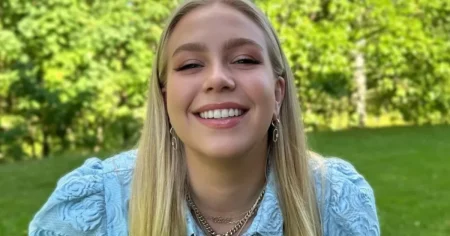
Standing just a few feet away from the President during his Irish engagements, absorbing the attention that a spouse would typically command, was a figure who has become an increasingly permanent fixture in the Trump Universe: Natalie Harp. To the casual observer, she might appear to be just another member of a massive entourage, a blonde staffer in a sensible coat. But her presence on this particular trip, substituting for the absent First Lady, underscored the extraordinary level of intimacy and trust she holds within the inner sanctum of the Oval Office. Nicknamed the “human printer,” the 35-year-old Harp has earned this unusual moniker due to her relentless habit of printing out articles, memos, and news segments for the President to consume. She is not merely an assistant; she is a physical extension of his information-gathering apparatus, a walking, breathing feed of the daily media cycle. Her role goes far beyond administrative support. She is reportedly the gatekeeper of his personal document flow, the one who ensures the President has a physical, tactile grasp of the news that shapes his worldview, a world he navigates largely through television screens and printed paper.
The image of Harp walking through the corridors of European castles and government buildings, likely clutching a stack of freshly printed papers, is a jarring juxtaposition of ancient diplomacy and Trump-era chaos. On a state visit meant to strengthen bonds with Ireland, the presence of a “human printer” at the President’s side rather than his wife highlights a stark reality: Trump’s professional world rarely pauses for personal emotion. His team is a small, fiercely loyal cadre of people who have proven their devotion, and Harp has become the ultimate embodiment of that fidelity. Her role as the bearer of printed news is deceptively simple, but it speaks to the President’s unique cognitive style. He prefers to read, to hold, to physically mark up documents rather than scroll through a tablet. Natalie Harp is the bridge between the digital age and Trump’s analog sensibilities. As she stood in the background while Trump spoke to the Taoiseach, it was clear that while Melania might be “in spirit,” Harp is the flesh-and-blood presence who is omnipresent, ensuring the President is never starved of the data he craves, a silent, efficient shadow shadowing his every move.
Paragraph 3: A Bond Forged in Suffering and Survival
To understand why Natalie Harp has earned a place so close to the throne, one must look back to a deeply personal story of despair and salvation. Before she was the “human printer,” Harp was a young woman battling a terrifying and relentless enemy: bone cancer. In 2019, long before she had any political clout, she shared her harrowing story—a narrative of agonizing treatments, uncertainty, and a desperate plea for hope. It was this story that caught the attention of then-President Trump. In the eyes of Harp and her supporters, Trump intervened in a way that transcended typical presidential duties. She has repeatedly and publicly stated that Trump “saved her life” by granting her access to experimental treatments that were not yet widely available. This is the foundational myth of her loyalty. It is not merely a political alignment or a career ambition; it is a profound sense of personal indebtedness that has forged an unbreakable bond.
When you believe someone has pulled you from the brink of death, a seven-hour flight seems trivial. When you owe your life to a commanding figure, printing out an endless stream of articles feels like a sacred duty rather than a mundane chore. Harp’s story is a powerful humanizing force in the often-cold calculus of White House politics. She represents the intensely personal nature of Trump’s sphere—a world where loyalty is absolute and frequently rooted in transactional salvation. Her journey from a cancer ward to the far-right media circuit (where she worked as a news anchor) and then to the West Wing is a remarkable testament to her resilience and her unwavering dedication to the man she credits with her existence. Watching her stand solemnly on the tarmac in Ireland, one cannot help but wonder about the weight of her backpack—not just the physical papers, but the emotional baggage of gratitude, survival, and the public scrutiny she faces for her proximity to power. She is a survivor in the truest sense of the word, and her proximity to Trump is a constant reminder of the life he granted her, a debt she spends her days repaying with every printed page.
Paragraph 4: The Fractured Family and the Moral Reckoning
While Natalie Harp’s devotion to Trump is unwavering, her career has come at a significant personal cost, starkly illustrated by the public comments of her own family. In a striking interview with the Daily Mail, her brother, Parker, voiced a blunt and damning critique of his sister’s professional choices. “I don’t understand why my sister, or anyone, could want to work for Trump,” he confessed. “Trump is like everything that my mom taught us to respect. I think that’s where her infatuation with Trump comes from, honestly.” This raw familial testimony serves as a jarring human counterpoint to the polished environs of the presidential entourage. Here is a brother watching his sister become a controversial figure, willingly subsuming her identity into the massive ego of a man who dominates the news cycle. Parker’s words are soaked in bewilderment and a sense of loss—a sibling witnessing a transformation he cannot reconcile with the values of their upbringing.
This dynamic highlights the isolating nature of proximity to Trump. The loyalty demanded by the President often necessitates a severing of outside connections, a radical submission to the cult of personality that surrounds him. For Harp, the intellectual and moral compromise is a daily reality. She has transformed from a cancer survivor into a political operative, and in doing so, she has alienated part of her own bloodline. The “infatuation” her brother mentions is a term dripping with psychological weight, suggesting a devotion that borders on the irrational, a replacement of familial bonds with a political father figure. The internal conflict within the Harp family is a microcosm of the larger American divide, where political allegiance can fracture even the most sacred of relationships. As she walks the halls of power in Dublin, one has to imagine the ghost of her mother’s teachings and her brother’s disapproval trailing behind her, a quiet, persistent whisper of “why?” that she has chosen to drown out with the roar of the presidential motorcade.
Paragraph 5: The Note, the Solemn Stand-In, and the Digital Voice
The depth of Natalie Harp’s dedication transcends mere professional obligation, veering into territory that blurs the lines between aide, confidante, and acolyte. Reports have surfaced that she left a personal note for the President in a “personal space,” a message that read: “You are all that matters to me.” This single sentence, whether a romantic gesture or an expression of total ideological surrender, is profoundly humanizing. It reveals a deep well of emotional need within the aide—a need to anchor her entire self-worth and purpose to a single, commanding figure. This is not just a job; it is a vocation of the soul. This devotion was put on display in the most solemn and tragic of circumstances last month. When the remains of soldiers killed in the Middle East arrived back on American soil, it is traditionally the First Lady who stands resolutely by the President’s side, offering a picture of shared national grief. Instead, Melania was absent, and Natalie Harp stood in her place, a silent, black-clad proxy absorbing the gravity of a moment reserved for family.
The optics of that moment were staggering—a civilian aide, not a spouse, witnessing the transfer of the fallen. It humanizes Harp as a figure willing to step into an excruciatingly painful role, but it also underscores the bizarre, almost theatrical nature of her rise. She stands where Melania declines to stand. Furthermore, her influence reaches into the digital realm. She is widely believed to be the hand behind Trump’s erratic and often cryptic Truth Social posts. If the President is the id of the movement, Harp may be the filter—or the amplifier—of that digital id. She translates his moods into text, managing his online persona with a precision that ensures his voice never falls silent. From the heartbreak of a cancer ward to the preserve of the Oval Office, Harp has become a multifaceted entity: a nurse, a printer, a stand-in wife, a digital ghost, and a note-writer declaring her sole devotion. She is the ultimate keeper of the flame, a human embodiment of the questions we ask about loyalty, power, and the personal sacrifices made in the pursuit of proximity to greatness—or infamy.
Paragraph 6: The New Geometry of Power
As Air Force One lifts off from Ireland, leaving behind the emerald fields and diplomatic pleasantries, the image of the presidential party lingers in the mind. We saw a President publicly jesting about his wife’s absence, mitigating the reality of a fractured personal life with a comedic deflection about flight times. But behind the jokes, a profound shift in the geometry of power is visible. The traditional image of the First Lady as the silent partner, the confidante, and the consort has been replaced, in this era, by a more chaotic and eclectic entourage. Natalie Harp, the “human printer,” is the physical manifestation of this new dynamic. She is the one who knows the daily briefing, who carries the weight of the news, who stands beside the President during the darkest moments of national mourning, and who tells him, in writing, that he is all that matters.
Her story is a deeply human one, riddled with conflicting urges: the desperate fight for survival, the profound gratitude that turns into blind loyalty, the estrangement from family, and the total submission of one’s own identity to a larger-than-life figure. In any other context, a young woman with a cancer survivor’s story might inspire pity or admiration. In the context of the Trump presidency, she inspires analysis, speculation, and judgment. She is a mirror reflecting the transactional nature of the era—a man who gives you life, and in return, receives your absolute allegiance. As Melania remains an enigma, largely absent and “in spirit,” Harp is the tangible reality. She is the one present for the handshakes, the meetings, and the flights. Her brother’s words, “I don’t understand why…”, hang in the air as a poignant reminder of the human toll this path takes.
Ultimately, the saga of this Irish trip is not just about a president and his missing wife. It is a story about the loneliness of power, the strange people who fill the vacuum left by conventional relationships, and the desperate lengths humans will go to for a sense of purpose and belonging. Natalie Harp finds her purpose in carrying paper and assuming the emotional burdens Melania rejects. Trump finds a relentless advocate who validates his worldview. While the world watches the spin of political alliances and trade deals, the most compelling drama remains the human one: a President walking the world stage with a devoted surrogate, surrounded by printed paper, trying to maintain his grip on reality as the physical symbols of a normal life—like a wife by his side—remain just a spirit on the wind.