

The Pacific Ocean is not just a body of water; it is the largest and loneliest space on Earth, an immense blue wilderness where the horizon repeats itself endlessly and where help can be a thousand miles away. For Wanis Weita, Wboy Weita, Akinis David, Paul Paul and Tedwin Paul, that wilderness became an unbearable home for three months after a simple boat trip went catastrophically wrong. The group of nine—including two children—set off from Murilo on July 30, expecting to reach the neighbouring island of Ruo in about an hour. It was a routine journey, the kind of short hop across the water that people in the Pacific have made for generations, a trip between two familiar places where everyone knew everyone else. But the sea is never entirely safe. A storm rose suddenly, turning the familiar route into a violent chaos of wind, rain and towering waves. The small boat was no match for the fury of the open ocean. It was blown far off course, and when the storm finally passed, there was no land in sight, no compass to guide them, no radio to call for help. For weeks and then months, the currents carried them westward, more than 3,400 miles from their starting point, until the battered vessel finally appeared near Fanning Island, a remote coral atoll in Kiribati. There, on Sunday, villagers looking out at the water spotted the drifting boat, a shape that did not belong against the familiar blue of the lagoon. Five people were still alive aboard: Wanis, Wboy, Akinis, Paul and Tedwin. Two of the survivors were children. The other four passengers were nowhere to be found, and what happened to them remains a mystery that will haunt the families until the day it is solved.
The rescue did not come easily, and it did not come through any central command. For weeks, the outside world had no idea where to look. After the boat was reported missing, the US Coast Guard launched one of the most extensive searches in the region, with support from the US Navy and Air Force. Planes and ships swept more than 25,000 nautical miles of ocean, a patch of water so vast that it could swallow entire countries without a trace. They searched for any sign of the missing nine: a life jacket, a piece of wreckage, a signal flare, a human voice. They found nothing. On August 9, the official search was called off, and for the families waiting in Chuuk, the silence became a kind of grief. They had no bodies to bury, no wreckage to mourn, only the great blue emptiness of the Pacific and the slow, crushing certainty that the people they loved were probably gone forever. Then, on Sunday, the impossible happened. A villager on Fanning Island looked out at the water and saw something that did not belong—a low, battered boat drifting near the reef. What followed was not a high-tech military operation but a deeply human one. Villagers waded into the shallows, pulled the survivors ashore, and began the slow work of bringing them back to life. The news travelled slowly, as news always does in remote parts of the Pacific, but when it reached Chuuk, it transformed despair into something close to euphoria. Governor Alexander Narruhn could barely contain his gratitude. “There were nine people aboard the boat that went missing,” he said. “Thanks be to God for his love and mercy that five of the nine people have been found. We continue to pray for their four companions.”
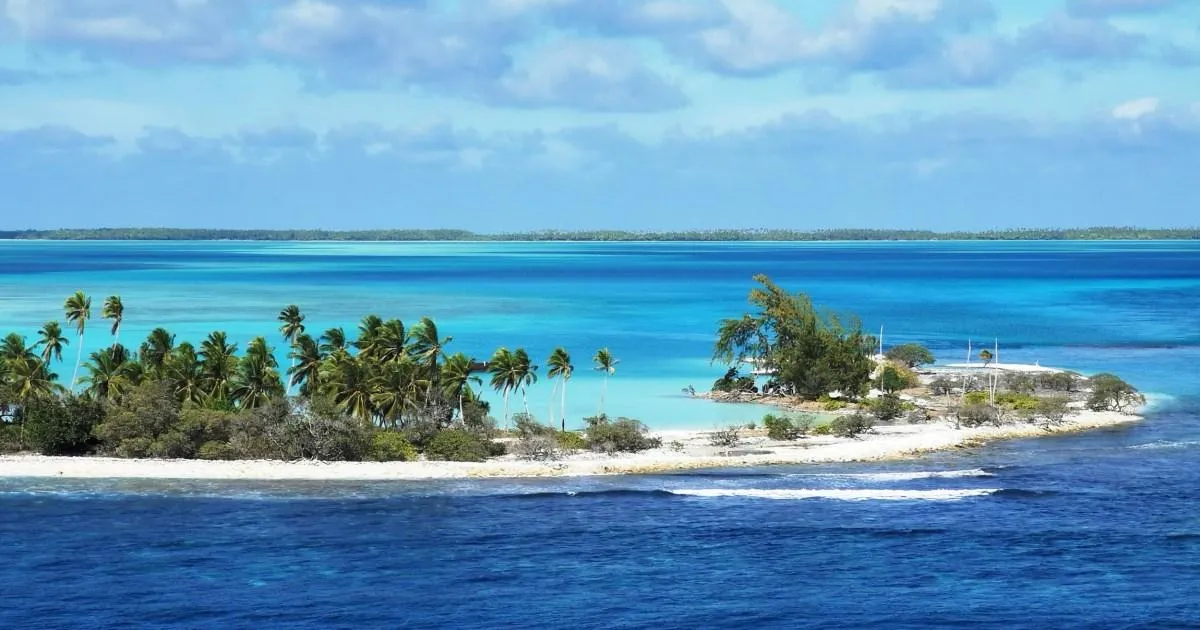
Fanning Island, also known as Tabuaeran, is the kind of place that exists far beyond the reach of most modern maps. It is a low coral atoll in the central Pacific, ringed by turquoise lagoons and coconut palms, with a small population that lives simply and self-sufficiently. There are no hospitals, no airports, no trauma centres, no way to summon a helicopter or call for a medevac team. There is, however, a strong sense of community, and that community has rallied around the five survivors with remarkable kindness. They were taken in by the pastor of a local Uniting Church, who opened his home and his heart to a group of exhausted strangers. The pastor and his congregation gave them food, clean water, dry clothes and the first safe sleep they had known in months. Local residents did what they could to provide medical attention, checking for injuries, dehydration and the wounds caused by salt and sun. But everyone understood that this was not enough. The nearest real urban centre is Kiritimati Island, about four hours away by boat or a short flight, and local MP Kaotitaake Rakoroa has urgently called for the survivors to be moved there for further treatment as soon as possible. Their exact condition is still not known in detail, but photographs and videos shared online show gaunt faces, sunburned skin, tired eyes, and the hollow look of people who have spent months staring death in the face. They have asked for privacy, and that request should be respected. They have already been through more than most human beings could bear; now they need time, quiet, and the presence of the families who never stopped hoping.
To survive three months adrift is to endure something that almost defies language. The body breaks down in slow stages: hunger, dehydration, exposure to salt and sun, the gnawing ache of muscles that no longer have enough fuel, the constant exhaustion of trying to keep a small boat from capsizing in rough seas. The mind does stranger things. It drifts into dreams and hallucinations. It loses track of days and nights. It may even create a strange numbness that is the only protection against overwhelming despair. The five survivors have not spoken publicly, and they may never fully describe what happened during those long weeks on the open ocean. What is known is that they were aboard the same small boat that left Murilo on July 30, and that they somehow kept themselves alive while the rest of the world gave them up for lost. The other four passengers are still missing, and for the families, this is the cruellest part of the miracle. They have their loved ones back, but the picture is incomplete. Did the missing fall overboard during a storm? Did they drift away on a piece of wreckage? Did they die of hunger or thirst, their bodies slipped silently into the sea? No one can answer these questions yet, and the silence of the survivors—whether because of trauma, exhaustion, or a need to process the unimaginable—leaves a hole in the story. Governor Narruhn has asked the president of the Federated States of Micronesia to begin negotiations with the Kiribati government to arrange for the survivors to be brought home. Those talks will involve transport, medical evacuation, and the delicate logistics of moving people from one remote island to another. For now, the five remain in the pastor’s care, surrounded by strangers who have become their protectors.
Their story is not unprecedented, but it is rare enough to remind us of the thin line between life and death in the Pacific. In 1813, a Japanese captain named Oguri Jukichi and a crewman were caught in a storm that shattered their vessel, leaving them adrift on the open ocean. They survived for 484 days, living on hundreds of bags of soybeans and water distilled from seawater, until they were finally rescued off the coast of what is now California in 1815. That story, like this one, shows that the human body can withstand extraordinary punishment when the will to live is strong enough. But it also shows that survival at sea is not only a matter of strength and endurance. It is a matter of luck, timing, weather, and the kindness of strangers. The original search for the nine covered more than 25,000 nautical miles—a number so large that it is difficult to visualise. That search failed. It failed not because the searchers were incompetent, but because the ocean is simply too big. It is a place where a boat can drift for months without anyone seeing it, where a signal can vanish without a trace, where a person can be alive and yet completely lost to the world. In the end, the rescue came from ordinary people who happened to look in the right direction at the right moment. A villager on Fanning Island saw a shape that did not belong. That small observation triggered a chain of events that saved five lives. Sometimes the sea gives back what it has taken, but it makes you wait until you have almost forgotten how to hope.
Now begins the longer journey. The five survivors will need far more than food and water to recover from their ordeal. They will need medical attention, psychological support, and the presence of the families who mourned them. They will need to tell their stories in their own time, or perhaps never tell them at all. They will need to learn how to trust the sea again, how to sleep through the night, how to silence the sound of wind and waves that must still echo in their ears. The four who remain missing will not be forgotten. Their families will continue to wait, pray, and wonder what happened in the vast blue wilderness that took them from view. Governor Narruhn’s words—“We continue to pray for their four companions”—carry the quiet sorrow of a community that knows the sea can take what it wants, and that some questions may never be answered. But the sea has also given back something precious. The names of the survivors are Wanis Weita, Wboy Weita, Akinis David, Paul Paul and Tedwin Paul. They are alive because a storm did not kill them, because an ocean did not swallow them, and because a few kind people on a remote atoll refused to look away. Their rescue is a reminder of the resilience of the human spirit, the kindness of strangers, and the fact that hope is not always irrational. In a world filled with bad news, this is a story of deliverance. It is also a story of unfinished grief, for the four who did not return. But for now, on Fanning Island, five people are breathing the air of freedom, feeling solid ground beneath their feet, and slowly beginning to believe that the nightmare is finally over.