


In the chill of a Polish November, the sprawling training grounds that have long echoed with the sound of artillery will transform into the staging ground for an immense, hopeful, and deeply complex endeavor. Beginning on November 9th and running for just over a week, Exercise Koalicja represents a profound shift in military thinking—a massive multinational wargame designed not to win a battlefield, but to secure the peace that must follow the guns falling silent in Ukraine. Spearheaded by the United Kingdom and France, this drill will bring together 2,800 service members from eleven different nations, all fused under the flag of the Multinational Force Ukraine (MNF-U), the military backbone of the so-called “Coalition of the Willing.” This is not a rehearsal for an incursion; it is a meticulous, high-stakes rehearsal for a future where Ukraine stands secure, sovereign, and stable, protected by a wall of international commitment that extends far beyond mere borders. Agreed upon at a coalition summit in July, the exercise arrives with a weight of purpose that transcends simple troop movements. It is the first major operation of its kind for the MNF-U, signaling to allies and adversaries alike that the Western coalition is not merely interested in seeing the conflict end, but is deeply invested in ensuring that the aftermath does not descend into a new, festering instability. For the soldiers participating, this means a fundamental reframing of their purpose. They are not preparing to fight; they are preparing to reassure, to rebuild, to facilitate the safe return of a nation to functional life. The meticulous planning, the coordination of supply lines, and the synchronization of air cover are all orchestrated with the singular goal of ensuring that when the day of peace finally arrives, the transition is seamless, secure, and sustainable against any future aggression.
At the heart of this intricate logistical ballet are hundreds of British troops, members of the storied 7 Brigade, famously known as the “Desert Rats.” Around 300 soldiers from this distinguished unit will deploy to Poland, trading their desert-tested instincts for the cold, muddy realities of Eastern European terrain, to rehearse the unglamorous yet absolutely critical art of supply chain management. War is often romanticized, but any veteran will tell you that wars—and peacekeeping alike—are won or lost on the humble stomach and the functional vehicle. The Desert Rats will practice moving colossal volumes of food, fuel, and ammunition, ensuring that no unit, whether Ukrainian or allied, is left wanting. They will rehearse the chaotic choreography of convoy protection, the delicate timing of resupply drops, and the pragmatic problem-solving required when a truck breaks down or a bridge is out. Underneath the encouraging roar of RAF Typhoons flying overhead, these men and women will be the unsung heroes of this entire proposition. They are the quiet guardians of the future, checking every crate, mapping every route, and testing every radio frequency. Their labor is the physical manifestation of a promise; a promise that support will not falter, that the logistics of hope will be as robust as the logistics of warfare. It is a deeply human endeavor, filled with fatigue, cold, and monotony, yet imbued with an extraordinary sense of duty. The Desert Rats are not merely moving boxes; they are moving the foundation of Ukraine’s reconstruction. While the jets scream across the sky, these soldiers are the connective tissue linking political promises to on-the-ground reality, ensuring that the Coalition of the Willing’s commitment is not just rhetoric, but a tangible, transportable, and reliable lifeline pulled taut across the continent.
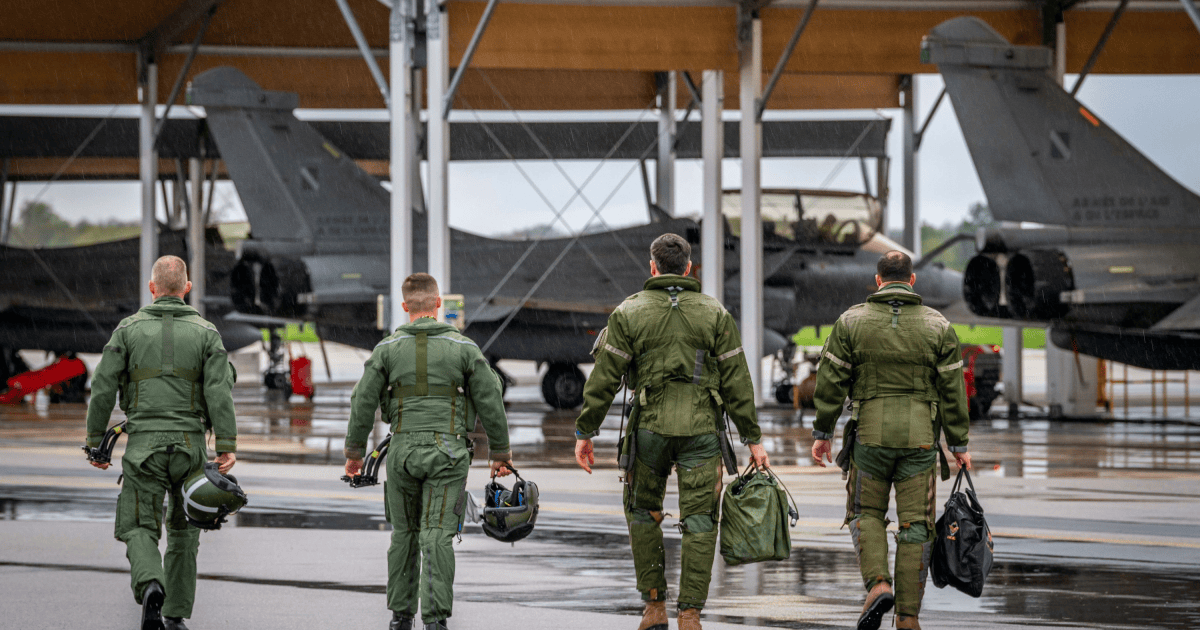
Above the ground troops, the skies will tell a story of a future reawakening. RAF Typhoons and a Voyager refuelling aircraft will fly sorties across the Polish exercise areas, performing a uniquely symbolic mission: simulating how to safely reassure and manage commercial aviation once Ukrainian airspace opens up again for civilian travel. Since the invasion, Ukrainian skies have been a no-fly zone for commercial airlines, cutting the nation off from the outside world in a visceral way. When peace comes, that blue expanse must be filled once more with passenger jets carrying families, businessmen, and aid workers. The exercise will perfect the protocols that allow military jets to safely escort, direct, or support these civilian flights, ensuring that the reopening of the sky is not chaotic, but calming. Likewise, far away on the shores of Istanbul, Turkish forces will engage in a delicate maritime mission—rehearsing naval mine clearance operations designed to restore commercial shipping lanes to Ukrainian ports. Odesa and other vital harbors, once choked with mines and naval blockades, must be reopened to let grain and goods flow out to the world, feeding millions and reviving a shattered economy. The human dimension here is immense. Imagine the first commercial airliner touching down at Boryspil International Airport in Kyiv, greeted by families reuniting after years of war. Picture the first cargo ship laden with wheat sailing out of the Black Sea, signifying the return of normalcy and nourishment. These rehearsals are more than military exercises; they are the meticulous preparation for the emotional and economic reattachment of Ukraine to the global community. The coordination between air and maritime operations highlights the comprehensive nature of the MNF-U’s strategy, covering every ingress point for a nation reclaiming its place in the world.
The sheer scale of unity on display is staggering. Exercise Koalicja brings together forces from Belgium, Estonia, France, Germany, Lithuania, the Netherlands, Poland, Spain, Sweden, Turkey, and the United Kingdom—a coalition of eleven distinct cultures, languages, and military doctrines, all synchronized under the MNF-U banner. Commanding this unprecedented force is British three-star General Lieutenant General Tom Bateman, whose words carry a weight of combined geopolitical gravity. In announcing the exercise, General Bateman articulated the core philosophy behind this massive undertaking, stating, “This exercise will show that the Multinational Force Ukraine is a real, capable, readily deployable force that represents a serious commitment from Coalition of the Willing nations to Ukraine’s long-term stability and security.” His declaration underscores that this is far more than a symbolic gesture; it is a demonstrable, tested capability designed to reassure Kyiv and deter Moscow. The diplomatic intricacies of such a coalition are staggering. These nations do not always agree on energy policy, trade, or even some military spending priorities, yet around this single table, they have found unanimous resolve. The act of bringing thousands of troops to the Polish border is a physical echo of a political promise. For the soldiers from Tallinn to Ankara, the exercise is an exercise in trust—trust in the logistics officer who supplies their rations, trust in the pilot who flies cover, and trust in the strategist who plots the routes. This melting pot of expertise allows for a cross-pollination of tactical knowledge, from the resilience of Baltic nations in the face of Russian proximity to the maritime expertise of Turkey and the UK’s cutting-edge aerial technology. The MNF-U is emerging not just as an occupying force for peace, but as a permanent security architecture, a living, breathing alliance poised to stand shoulder-to-shoulder with Ukraine long after the headlines fade.
The operational focus of Koalicja marks a decisive departure from previous large-scale NATO drills, such as the aggressive Exercise Rhino Titan, which emphasized rapid armored warfare and breach maneuvers. Koalicja is not about breaking through; it is about building up. This shift requires a profound psychological adjustment for the troops involved. Soldiers who have spent years training to neutralize threats and engage hostile armor must now train to ease tensions, manage supply chains, and provide a reassuring presence. The battlefield is exchanged for the fortified corridor; the firefight is replaced by the logistics hub. This new paradigm acknowledges that Ukraine’s long-term security is not solely reliant on defeating an enemy in open battle, but on creating an environment where aggression is simply not a viable option. By rehearsing the movement of troops, food, and fuel across vulnerable terrain, the exercise prepares the coalition for the incredibly difficult, frustrating, and often tedious work of nation-building. It tests the endurance of the supply lines against rain, sleet, and bureaucratic quagmires. It forces commanders to think about how to secure a checkpoint without escalating tensions, and how to communicate with civilian populations caught in the crossfire of geopolitics. The very name “Koalicja,” meaning coalition, emphasizes this shift from unilateral might to collective stability. It sends a clear, silent message to the Kremlin that any future aggression would face not just a Ukrainian army, but a fully integrated, pre-positioned, and logistically blessed network of Western forces. The readiness of the MNF-U is a deterrent in itself; the simple fact that these 2,800 troops are rehearsing such complex scenarios proves that the Coalition has the intent and the means to guarantee Ukrainian sovereignty for years to come.
Ultimately, Exercise Koalicja is about the people who will never wear a uniform. It is for the Ukrainian farmer who dreams of selling his wheat abroad without fear of falling mines. It is for the airline pilot who longs to fly a route back to his homeland. It is for the families torn apart by displacement, who yearn for the security that allows them to rebuild a home. General Bateman’s concluding remarks, that the MNF-U will be “more ready every day to support Ukraine when the fighting ends,” placing the Armed Forces of Ukraine “in the strongest possible position to deter future aggression,” speak to a holistic vision of stability. The wargame is the rehearsal, but the performance is the future of Europe. By embedding troops in Poland, flying sorties overhead, clearing simulated mines in the Bosphorus, and coordinating supply chains across the continent, the coalition is essentially writing the manual for how to pick up the pieces of a modern war. The exercise signifies a maturity in geopolitical strategy—a realization that the end of a war is not just an armistice, but a fragile beginning. Every hour spent drilling the mechanics of peace is an hour invested in preventing the next war. The UK’s significant contribution, from its experienced Desert Rats to the iconic jets of the RAF, serves as a testament to its continued global leadership. As the November chill descends upon Poland, the soldiers know they are part of something historically significant. They are the architects of a peaceful transition, the guardians of a re-emerging nation, and the embodiment of a promise that Ukraine will not be left alone to face the aftermath alone. The exercise will conclude on November 22, but its impact will resonate in the fields, ports, and skies of a stable, secure, and sovereign Ukraine for generations to come.