


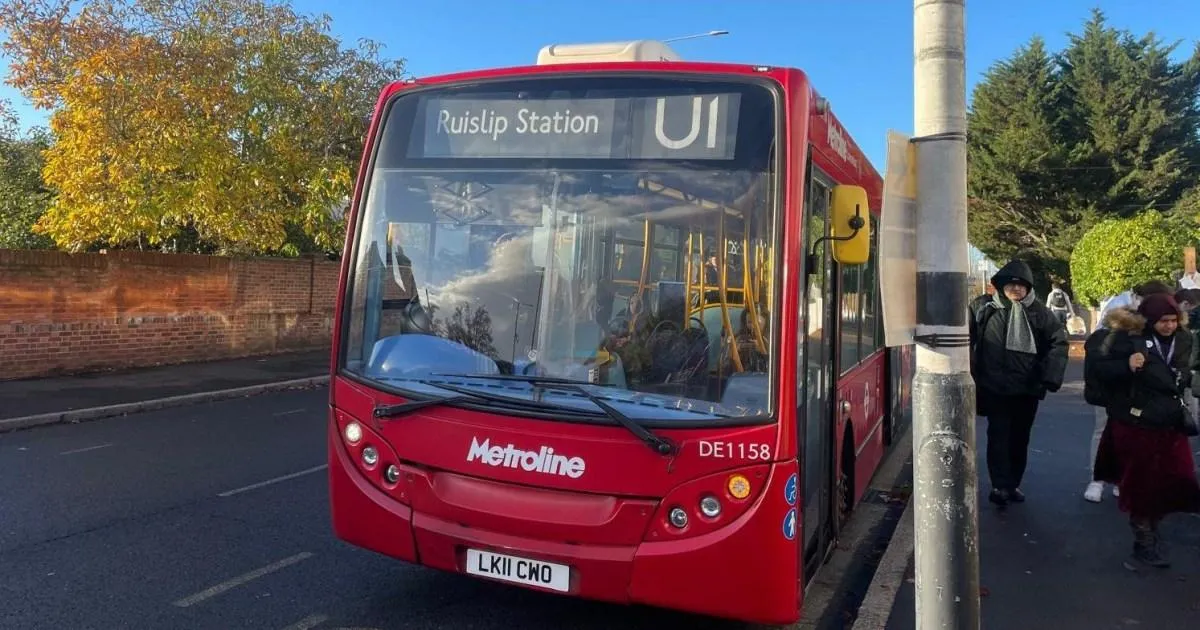
It began as an ordinary Monday afternoon on a busy London bus route, the kind of journey countless commuters make every day without a second thought. People were settling into their seats, checking phones, listening to music, or simply staring out the window as the U1 bus made its way through Uxbridge toward the familiar stops along Belmont Road. Then, in a matter of moments, that mundane routine was shattered by violence. Police were called to the scene at around 2pm after reports of a serious assault on board, and what followed left a community in shock and a family facing the terrifying possibility that their loved one’s life will never be the same. A 51-year-old man was attacked after an argument broke out between him and two young men, according to witnesses. By the time the bus pulled up at the stop on Belmont Road, the situation had escalated into something far more serious, and the victim was left bleeding heavily as horrified passengers watched in disbelief. Today, detectives are piecing together exactly what happened, and a manhunt is underway to trace the two suspects. But behind the police statements and crime scene tape lies a deeply human story of sudden, senseless violence that transformed an everyday trip into a nightmare no one aboard could have anticipated.
The aftermath of the attack was chaotic and deeply unsettling for everyone who witnessed it. A builder working nearby described how, very quickly, police surrounded the bus, and it seemed clear the driver had radioed for help. The scene must have been terrifying for those inside: families with children, pensioners, and ordinary passengers who had simply been trying to get from one place to another. When the passengers eventually got off the bus, they looked traumatized. The builder said everyone was very shocked, noting that it was the middle of the day, a time when such brutality feels especially unimaginable. One passenger told him that some boys had attacked a man after an argument on the bus. Another resident who lives near the scene of the attack described trying to jump on a bus only to find police everywhere, with officers speaking to the driver and setting up a tent outside the vehicle to treat the injured man. It was deeply upsetting, she said, to see passengers being spoken to by police; they looked genuinely shaken. For those who live in the area, the sight of emergency vehicles, forensic officers, and a cordon around a public bus stop turned a familiar neighborhood street into a crime scene, a stark reminder that danger can surface anywhere, even in broad daylight on a local bus.
For the victim, the consequences of this attack are almost impossible to fully comprehend. He was taken to hospital by the London Ambulance Service, and while his injuries were assessed as not life-threatening, they were potentially life-changing. That phrase, “life-changing,” carries enormous weight. It suggests a future altered in ways he never expected, perhaps permanent physical damage, lasting pain, or deep psychological trauma that will stay with him long after the physical wounds begin to heal. He is a 51-year-old man, likely with a family, friends, a job, and a life full of ordinary routines and responsibilities. One moment he was riding a bus, and the next he was fighting for his wellbeing in front of strangers, bleeding heavily as paramedics worked frantically to help him. The fact that the attack allegedly began with an argument makes it all the more senseless. Words turned to violence in a split second, and two young men, for reasons still unclear, made a decision that may have permanently altered this man’s life. As he lies in a hospital bed, surrounded by medical staff and worrying about what comes next, his attacker or attackers remain free, leaving a community on edge and a family desperate for answers.
The U1 bus route, which runs from Ruislip to West Drayton stations, is a vital artery for the local community. It is used by students, commuters, elderly residents, and families making their way to shops, schools, and appointments. The attack on this route has sent ripples of fear and unease through the area. A pensioner who regularly uses the bus told reporters that witnesses claimed the argument between the injured man and two young men had escalated as the bus approached the stop, meaning other passengers were forced to watch the violence unfold in real time, trapped in a confined space with nowhere to go. By Tuesday morning, the road and bus stop had reopened, and the physical signs of the incident had been cleared away. But the emotional impact lingers. Neighbors who saw the aftermath now look at the same stop with a different feeling, perhaps a knot of anxiety every time a bus approaches. Parents may think twice about letting their children travel alone. Elderly passengers may feel more vulnerable than ever. The reopening of the road is a practical step, but the psychological scar on the community is not so easily erased. People want to feel safe in their daily lives, and when violence erupts in such a public and unexpected place, that sense of safety is profoundly shaken.
Police have launched a full investigation and are appealing for anyone with information to come forward. A Met Police spokesperson confirmed that officers were called to Belmont Road, Uxbridge, on Monday, November 2, at around 2pm following a report of a serious assault on a bus. The London Ambulance Service attended, and the 51-year-old victim was taken to hospital. The statement reiterated that his injuries have been assessed as not life-threatening but potentially life-changing, and that no arrests have been made. Enquiries are ongoing, and forensic officers have examined the bus while detectives will trawl through CCTV images from on board, hoping to identify the two young men involved. In situations like this, every detail matters: what was said before the argument, how the fight started, who did what, and where the suspects went after the bus stopped. Investigators will be speaking to witnesses, reviewing footage, and following every possible lead. But they also need the public’s help. Anyone with information is asked to call police on 101, or to remain anonymous, Crimestoppers on 0800 555 111. The appeal is not just about catching criminals; it is about delivering justice for a man whose life has been turned upside by a senseless act of violence.
In the end, this is more than just a crime report or a police appeal. It is a story about human vulnerability, the fragility of ordinary life, and the randomness with which violence can strike. It is about a man who stepped onto a bus and did not make it home the same person. It is about passengers who witnessed something horrific and will carry that memory with them. It is about a community that has been forced to confront the reality that nowhere is entirely immune to danger. And it is about two young men whose actions, whatever led to them, have caused immeasurable harm and who now face the consequences of their choices. As the investigation continues, the hope is that they will be found and held accountable, but even then, the victim’s suffering will not simply disappear. Life-changing injuries mean life-changing consequences, not just for him but for everyone who loves him. In the days ahead, the people of Uxbridge will try to return to their normal routines, but the memory of that Monday afternoon will linger. Perhaps the most human response is to hold onto compassion for the victim, to support the witnesses, and to remember that behind every headline is a real person, a real family, and a real community trying to heal. We can only hope that justice is done, that the victim finds strength, and that such violence never shatters another ordinary day.