

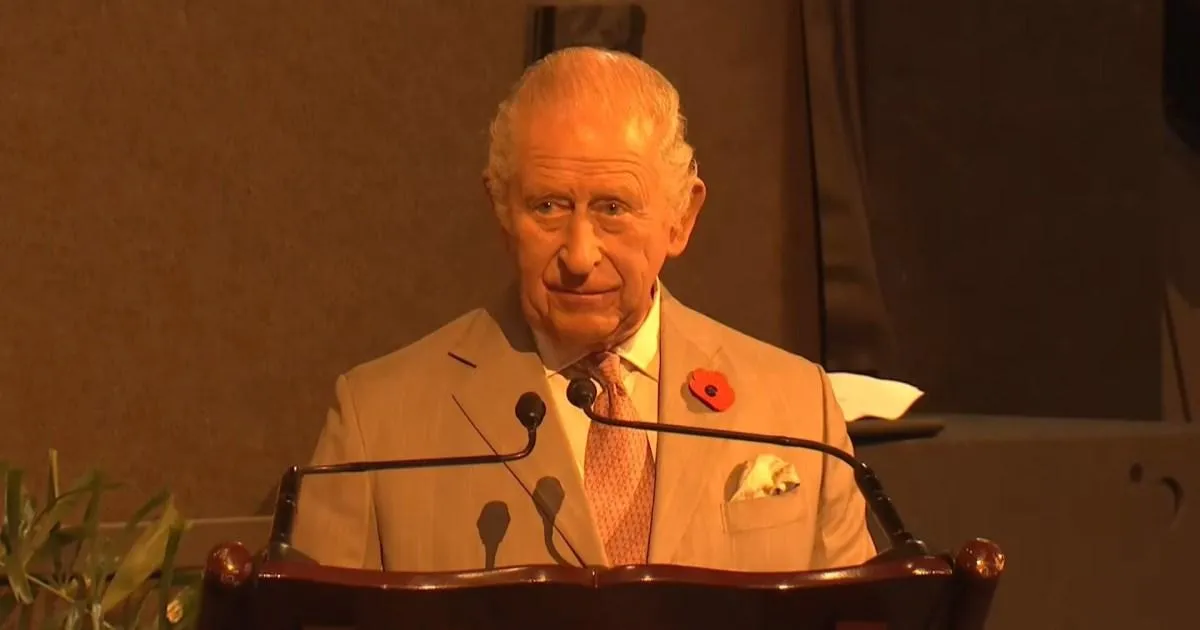
In the heart of the Caribbean, amidst the vibrant turquoise waters and lush landscapes of Antigua and Barbuda, a moment of profound historical reckoning and contemporary urgency unfolded. King Charles III, standing before the assembled leaders of the Commonwealth, delivered a speech that sought to navigate the treacherous waters of a colonial past while simultaneously issuing a stark warning about a world teetering on the brink of chaos. The air in the room was thick with expectation, for this was not just a ceremonial gathering; it was a summit where the ghosts of history were demanding an audience with the present. The Monarch, as the symbolic Head of the Commonwealth, was tasked with bridging a painful past and a precarious future, all while the murmur of demands for reparatory justice echoed from the halls of power. His address, steeped in sorrow yet resolute in its call for collective action, painted a picture of a world under siege, where the “brutal conflicts” of geopolitics and the insidious threat of climate change loom large over humanity’s shared destiny. It was a speech that aimed to satisfy the call for acknowledgment without offering a full apology, to recognize the wounds of history while pushing the conversation forward toward a collaborative future.
The King’s words on the transatlantic slave trade were meticulously crafted, reflecting the immense diplomatic pressure that had preceded the summit. For days, leaders from Caribbean nations and various African states had been vocal in their demand for a formal apology and a concrete commitment to financial reparations for the immense suffering and economic exploitation their nations had endured. In response, Charles spoke of the “shameful chapter of history” that “fills my heart with horror and my soul with the most profound personal sorrow.” This personal sentiment was significant, yet it stopped short of the unequivocal apology many had hoped for. He acknowledged that the legacy of this trade “still casts a shadow over these islands,” a recognition of the lasting socio-economic damage that continues to affect communities of African descent. By pivoting to mention the Royal Navy’s “leading role” in ending the slave trade, the King subtly framed the narrative around eventual abolition, a point that many critics see as an attempt to soften the brutality of the trade itself. The underlying message was clear: while the actions of ancestors cannot be changed, the responsibility to address their consequences lies with the living, bound by a commitment to “modern partnership” and “action for the future.”
This delicate diplomatic dance was set against a backdrop of intense political maneuvering in the UK. The recently appointed Prime Minister, Andy Burnham, had offered the prospect of talks regarding a slavery apology but had firmly ruled out the possibility of financial reparations. This stance was met with frustration from Caribbean leaders like Gaston Browne, the Prime Minister of Antigua and Barbuda, who asserted that the consequences of slavery “have not disappeared with the passage of time.” The British government, while approving a substantial £40bn aid package for infrastructure investment in the Caribbean, maintained that direct compensation for the slave trade was off the table. This position was echoed by the Conservative Party leader, Kemi Badenoch, who rejected the call for an apology or compensation, viewing it as a mechanism to “wedge open the door to ask for cash.” The King’s speech, therefore, was a masterclass in political neutrality; he could express horror and sorrow, thereby acknowledging the moral weight of the issue, but he could not venture into the realm of policy and financial commitment without overstepping his constitutional role as a politically impartial sovereign.
Beyond the shadows of the past, King Charles’s address was dominated by a chilling depiction of the present. He described a “desperately troubled world,” a phrase that encapsulated the growing anxiety of a global community facing unprecedented challenges. He warned that “trust between nations is under critical strain, as international norms and systems are tested to their limits.” This was a clear reference to the volatile geopolitical landscape, marked by the brutal conflict in Ukraine, escalating tensions in the Middle East, and the general erosion of multilateral cooperation. The King spoke of “brutal conflict” stalking the world, “destroying lives and casting long shadows across the globe,” a vivid imagery designed to convey the all-encompassing nature of modern warfare and instability. He did not name specific nations or conflicts, but his words served as a unifying cry against the forces of aggression and division, reminding the leaders of the Commonwealth that the architecture of peace built after the world wars was fragile and required constant maintenance and political will to preserve.
In the same breath, Charles delivered a powerful address on what he termed the “catastrophic reality” of climate change, framing it not as a peripheral environmental issue but as a core component of the “crisis of our time.” For the Commonwealth, a grouping of 56 nations that includes many small island developing states and low-lying coastal countries, climate change is not an abstract concept but an existential threat. Rising sea levels threaten to submerge entire communities, while increasingly violent storms devastate economies and infrastructure. The King’s call to treat climate change with the urgency of a crisis was a direct appeal to the leaders in the room to prioritize action over rhetoric. He reminded them that these challenges—geopolitical instability, economic transformation through technology, and climate change—are not isolated but interconnected. “Together,” he said, “they comprise the crisis of our time,” demanding a cohesive and unified response. This portion of the speech solidified his role not just as a traditional head of state, but as a leading global voice on environmental stewardship, a cause he has championed for decades.
Adding a layer of human color to the formality of the proceedings was a moment that captured the world’s attention for its sheer relatability. Footage emerged of King Charles being caught in a sudden torrential downpour without an umbrella. As the heavens opened, the Monarch was seen getting soaked, a scene that provided a brief, lighthearted diversion from the heavy subject matter of the summit. The image of a king, typically insulated by protocol and royal aides, standing in the rain, was a starkly human moment. It served as a poignant metaphor for the exposure of the UK to the very climate pressures he was discussing, and a reminder that despite his title, he is not immune to the elements. This incident quickly became a talking point, humanizing the King and offering a glimpse of vulnerability that endeared him to the public.
Ultimately, King Charles’s speech to the Commonwealth leaders was a balancing act of monumental proportion. He managed to express profound sorrow for the historical wrongs of slavery, acknowledging the pain that still lingers, while strategically avoiding a direct apology that would have opened the floodgates to demands for reparations. He simultaneously issued a stern warning about the state of the world, from brutal wars to the climate emergency, positioning the Commonwealth as a vital forum for addressing these shared global challenges. The speech did not resolve the contentious issue of reparations, nor did it offer concrete solutions to the conflicts he described. Instead, it served as a moral compass, pointing towards the need for partnership, action, and a collective acknowledgment of our shared history as the only way to build a resilient future. The summit, therefore, began not with a solution, but with a shared reflection on the shadows of the past and the storms of the present, leaving the gathered leaders to find the political will to navigate the way forward.