


The Jackdaw Gas Field Controversy: A Tale of Promises Versus Reality
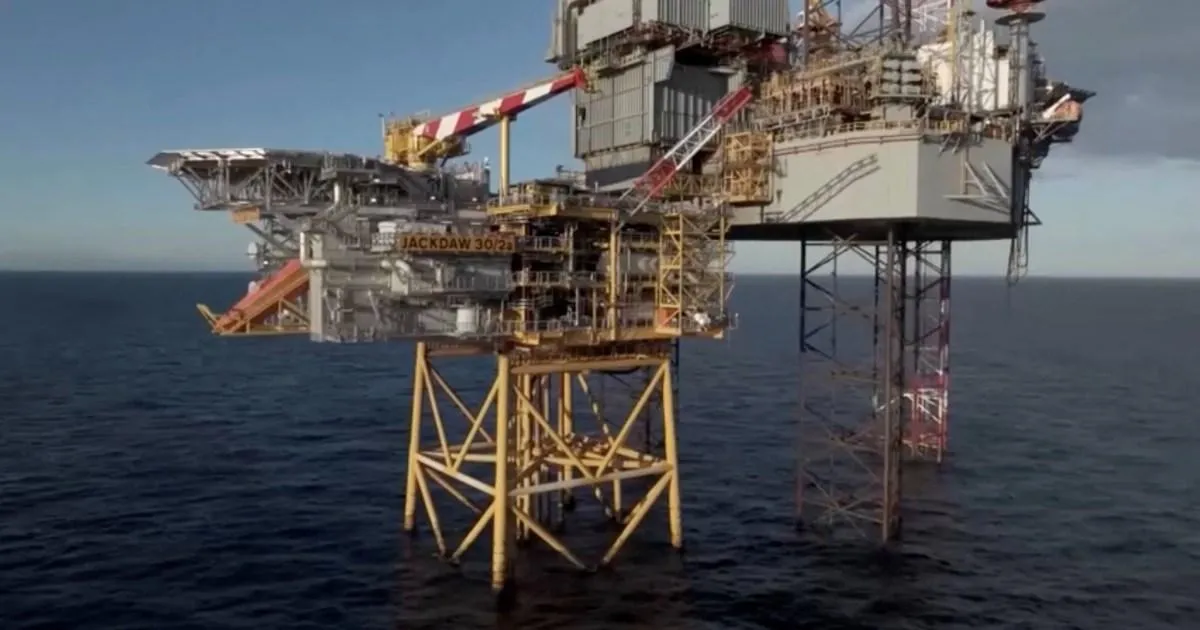
The recent government approval of drilling operations at the Jackdaw gas field in the North Sea has ignited a firestorm of controversy, with new data suggesting that the much-vaunted project will deliver remarkably little benefit to British consumers this winter. According to analysis provided exclusively to Metro, this contentious development will produce merely two days’ worth of additional gas supply for the upcoming winter season, a figure that stands in stark contrast to the government’s bold claims about enhancing national energy security. The research, drawn from the gas company’s own official estimates, reveals an even more sobering picture when looking further ahead; the entire project is expected to generate only half a day’s worth of extra gas before 2027 arrives. These revelations have prompted widespread derision from campaigners and opposition figures, who argue that the government has fundamentally misrepresented the value of this project to the British public while simultaneously claiming it will help households struggling with the ongoing cost-of-living crisis.
The political saga surrounding Jackdaw has been lengthy and contentious, with Prime Minister Andy Burnham finally backing the drilling operations in October following months of intense speculation and lobbying from various quarters. The project, operated by Adura, a joint venture between energy giants Shell and Equinor, is projected to begin supplying gas to the UK by the end of October, with Energy Secretary Miatta Fahnbulleh pledging that the site would support the country’s energy security with homegrown gas this winter and help minimize the UK’s reliance on imported higher-emission fuels. However, the analysis conducted by the anti-oil campaign group Uplift has systematically dismantled these claims, with their researchers taking figures directly from official assessments provided by Adura and comparing them against official projections for gas demand this winter. The resulting picture paints a dramatically different story from the government’s narrative, revealing the project to be far less significant than ministers have suggested. The campaigners’ findings suggest that Jackdaw will pump out enough extra gas to cover only half a day’s worth of demand in 2026, a figure that hardly constitutes the significant strengthening of energy security that government officials have repeatedly claimed.
The economic context adds another layer of complexity to this controversy, as the companies behind Jackdaw have posted staggering profits in recent months. Shell announced £8bn in profits for the third quarter of 2026 alone, while Equinor reported £2bn in profits for the same period, figures that have sparked outrage among campaigners who argue that these corporations are profiteering at the expense of ordinary British citizens struggling with soaring energy costs. Tessa Khan, executive director of Uplift, delivered a scathing assessment of the government’s decision, stating that Andy Burnham is completely overselling Jackdaw and that it will barely be heating homes this winter, let alone significantly strengthening energy security as claimed. She went further, suggesting that if the Chancellor truly cared about putting more money in people’s pockets and boosting the economy, he would need to stop the profiteering of companies like Shell that are getting obscenely rich at public expense. The criticism carries particular weight given that Labour had promised a ban on new drilling licences in the North Sea during the 2024 election campaign, although this commitment did not apply to Jackdaw because it was first granted a licence in 2022. The government has also admitted that the project will create only 27 new jobs, a figure that hardly justifies the environmental and political costs associated with the development.
The human impact of these decisions has been powerfully articulated by prominent figures, with naturalist and television presenter Chris Packham delivering particularly pointed commentary on the situation. Packham told Metro that the new data demonstrated that British citizens will all burn while the oil and gas giants get fatter and ordinary people get colder and poorer. He emphasized that there would be no energy price reductions, security, or sustainability from this project, expressing bitter disappointment with the government’s priorities. Labour backbencher Richard Burgon MP added his voice to the growing chorus of criticism, telling Metro that these new figures underline how the decision to approve Jackdaw flies in the face of all the evidence, doing nothing to lower people’s energy bills or deliver the energy security the nation needs. He urged the government not to approve the Rosebank oil field, Britain’s largest untapped oil field, which officials have yet to make a decision on. This project, granted a licence by the government in 2023, has been slowed down by legal challenges from environmental campaigners, and its potential approval would represent an even more significant controversial development than Jackdaw itself.
The broader context of energy poverty and government support measures adds yet another dimension to this controversy, with the UK Energy Research Centre having already stated that Jackdaw will not cut energy bills, and the Ofgem price cap forecast to surge to £2,100 a year for typical households this January. In last week’s Autumn Budget, the Chancellor promised a £100 payment to families in Council Tax bands A to D to help with energy costs, but the End Fuel Poverty Coalition dismissed this gesture as an abject failure. Their coordinator Simon Francis explained that the decision to provide a £100 rebate via Council Tax is badly targeted, insufficient, and will be swallowed up by credit card debt, rising supermarket prices, and the cost of living. Lang Banks, director at WWF Scotland, added further weight to these criticisms, stating that claims about Jackdaw being about security of supply have been shown to be false, and the decision won’t take a penny off the cost of soaring energy bills. Carla Denyer, Green MP for Bristol Central, summed up the feelings of many when she described Jackdaw as an irresponsible decision from a government that seems to care more about protecting the profits of fossil fuel companies than the money in people’s pockets or the safety of the planet.
In response to these criticisms, Adura and government officials have mounted a defense of the project, though their responses have done little to quell the controversy. An Adura spokesperson said that Jackdaw will provide an estimated six percent of projected UK North Sea gas production, enough to heat the equivalent of 1.4 million homes at peak production, describing this as a material contribution to Britain’s domestic energy supply and UK energy security. A DESNZ spokesperson defended the decision, saying that examining the issue in terms of days of supply represents a misleading way of looking at security of supply, which is diverse and resilient. They emphasized that Jackdaw is expected to increase domestic gas production by around six percent at its peak, boosting energy security, protecting hundreds of jobs, and adding an estimated £2.9 billion to the UK economy, while insisting that the decision is compatible with legally binding climate commitments and the goal of achieving net zero by 2050. However, these official responses have failed to convince critics, who point to the stark contrast between the promised benefits and the actual delivery, highlighting a fundamental disconnect between government claims and the reality faced by British consumers struggling with the highest energy prices in generations, all while the nation’s environmental commitments hang in the balance.