


Paragraph 1: The Chaotic, Joyful Opening
For decades, the arrival of a supermarket Christmas advert has become a cultural ritual in Britain, often marked by sweeping piano scores, animated penguins, and tear-jerking narratives about the true spirit of giving. However, this year, Asda has decided to detonate the expectations of that genre with a spectacular, high-voltage firework of an advertisement. Gone are the slow-motion shots of snow falling on idyllic cottages; instead, the campaign kicks off with a cacophony of vibrant color, pounding beats, and an unmistakable sense of unhinged festive glee. The launch explicitly promises that you can have all the hallmarks of a traditional Christmas—the tree, the turkey, the twinkling lights—but wrapped in an atmosphere of unapologetic, life-affirming chaos. The theme is clear: Christmas doesn’t have to be a serene, hushed affair; it can be a raucous, messy, and utterly brilliant party. This shift in tone feels like a breath of fresh air, a cheeky rebellion against the polished perfection that often dictates the holiday season, reflecting the reality that for many families, the “perfect Christmas” is less about quiet elegance and more about the loud, joyful pandemonium of family members letting loose together.
Paragraph 2: The Whimsical Visuals and High-Energy Concept
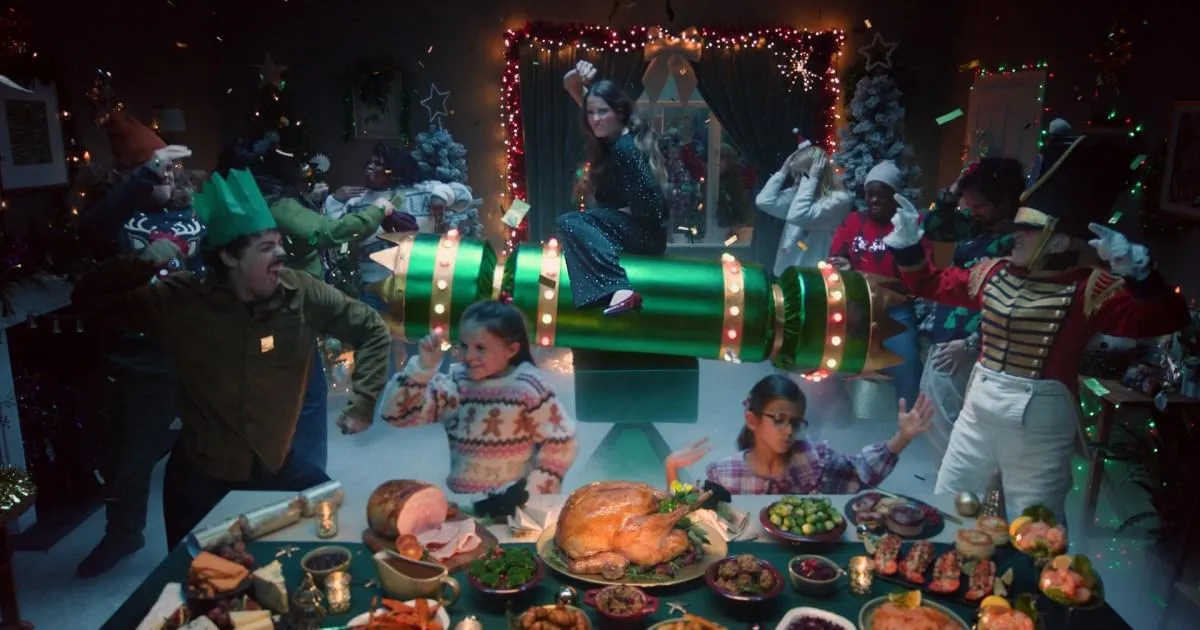
Visually, the advertising campaign is a glorious panoply of absurdist, larger-than-life moments that are designed to make you do a double-take. One of the standout vignettes features a mum, not calmly basking in the glow of candles, but rather straddling a giant, sizzling pyro-cracker, rocketing through the kitchen in a blaze of fireworks. Elsewhere, a father undergoes a bizarre but wonderful transformation, appearing as a giant, inflatable green-and-white striped bauble bouncing around the living room, while a grandad is hilariously transported from his armchair to the middle of a rave, surrounded by swirling lights and ecstatic dancers. Even the food gets in on the act, with gingerbread men breaking out of their static, decorative roles to bust a move. The structure of each of the four 30-second films is cleverly designed to lull the viewer into a sense of calm; they begin with classic, domestic scenes like carefully laying the table for dinner or meticulously hanging streamers, only to suddenly explode into a frenetic dance party when the music drops. This juxtaposition of the sacred and the secular perfectly captures the dual nature of the season—the nostalgic traditions that ground us, and the pent-up energy that releases when families finally gather to celebrate.
Paragraph 3: The Economic Reality and the “Less” Conundrum
Beneath the dazzling pyrotechnics and dancing ravers lies a deeply grounded and empathetic message that speaks directly to the economic anxieties of the average British household this year. Asda’s group marketing director, Tom Hampson, articulated a sentiment that will resonate profoundly with families across the nation: “The reality is that our customers don’t want less Christmas, they just want Christmas for less.” This single sentence encapsulates the immense pressure that many people feel as December approaches—the gnawing fear that they might have to trim the fat off their celebrations, scrimp on the gift-giving, or dial back the festive hospitality to keep the bank balance solvent. The campaign poignantly acknowledges that the emotional weight of the season shouldn’t be measured in the size of the bill. It understands that parents still desperately want to see the sparkle in their children’s eyes when they see the lights, and they still want to host the dinner with all the trimmings. By stating this openly, Asda positions itself not just as a retailer, but as a confidant and ally, easing the silent panic that often accompanies the run-up to the holidays by promising that joy and affordability can coexist.
Paragraph 4: Delivering Value with Tangible Products
To bolster this promise of affordable joy, the campaign isn’t just about abstract vibes; it is carefully rooted in tangible, attainable products with clear price points. The advertisements showcase a range of “hero” items designed to cover the entire spectrum of festive needs without forcing customers to compromise on quality or size. For instance, the centerpiece of the living room—the Christmas tree—is featured as a substantial 7-foot pre-lit tree available for a surprisingly accessible £50, ensuring that the heart of the home can look spectacular without breaking the week’s budget. For the social events, the campaign highlights matching George Christmas jumpers starting at just £10, allowing the entire family to coordinate their outfits for a festive photo without the fashion guilt. And of course, raising a toast to the season is covered, with an Exceptional Prosecco priced at £7.75, proving that you can still have a touch of glamour and sparkle for a modest price. These specific price tags serve as a reassuring anchor in the midst of the visual chaos, telling the consumer that this isn’t a phishing advertisement for luxury goods—it’s a real, practical solution. The accompanying slogan, “All of Christmas at Asda Price. BOOM!”, effectively marries the explosive visual energy of the commercial with the satisfying impact of getting a great deal.
Paragraph 5: Engaging the Community Through Giving Back
In addition to the broadcast spectacle, Asda has extended the campaign’s generosity into the digital social sphere, offering a tangible lifeline to seven lucky families. Through their official Facebook and Instagram pages, the supermarket is hosting a competition to give away £500 vouchers, with one winner being selected each weekend from Friday until December 18th. This initiative is a masterstroke of humanizing the advertising campaign; it moves beyond passive viewership into active community participation. A £500 voucher can represent a monumental difference to a family struggling to afford the combined cost of a grocery shop, presents, and decorations. It isn’t just a marketing gimmick—it is a direct, practical injection of help that recognizes the real struggles of their customer base. By encouraging people to engage with their social channels, Asda is fostering a sense of shared anticipation and luck, making the campaign a topic of conversation around the dinner table and in group chats. It transforms the television advert from a one-way broadcast message into a two-way interaction, inviting customers to participate in the narrative that a big, bountiful Christmas is not out of reach.
Paragraph 6: The Strategy, Timing, and Broader Impact
The strategic rollout of the campaign has been meticulously planned to maximize reach during peak family viewing hours. The first two films are being aired on ITV1 during the nation’s beloved soap, “Emmerdale,” and on Channel 4 during the final, tense stages of “The Great British Bake Off”—two culturally significant slots where families are likely gathered around the screen together, engaged and receptive. This placement ensures that the high-energy messaging hits its target audience at the very moment they are thinking about their own holiday plans. In the broader retail landscape, this campaign deliberately sets itself apart from the emotional, often melancholic narratives of competitors like John Lewis, which frequently rely on nostalgia and sentimentality. Instead, Asda has opted for pure, unadulterated fun and realism. By pairing the soundtrack of Martin Garrix’s “Animals” with the visual gag of a grandad at a rave, they are speaking to the modern, multi-generational reality of Christmas—where the playlist is just as likely to feature dance hits as it is carols. Ultimately, this campaign succeeds because it refuses to treat Christmas with kid gloves. It acknowledges the stress, laughs in the face of the expense, and celebrates the magnificent, chaotic, and wonderfully loud joy of family. It assures us that we can all have the “trimming” without the financial trimming down of our aspirations.