


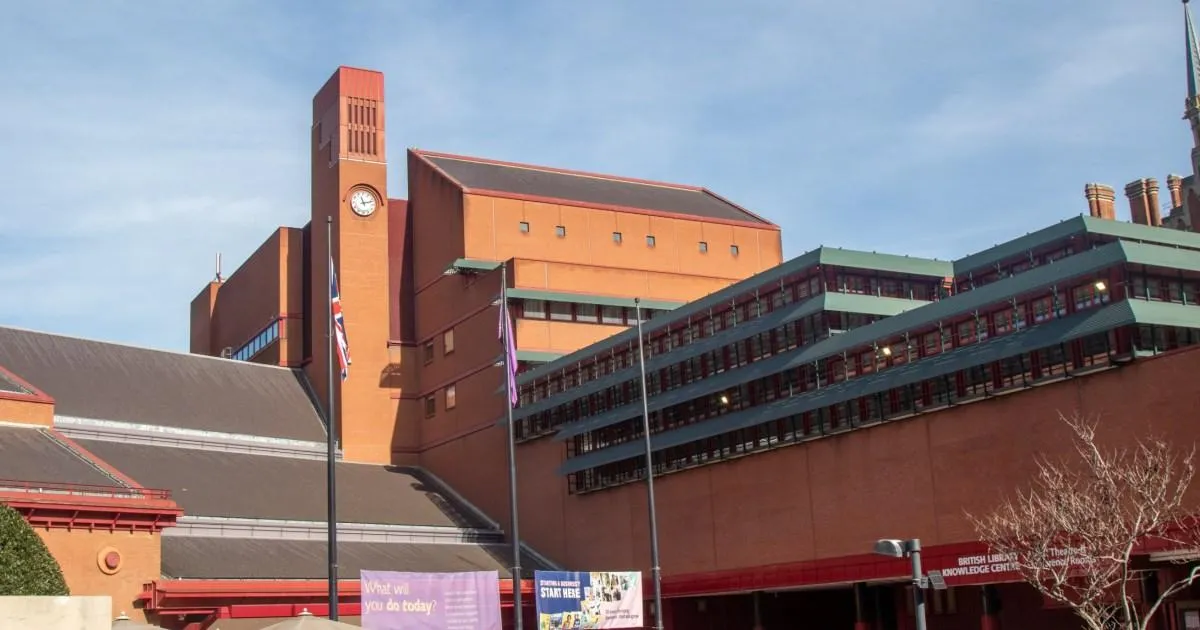
The British Library has long been one of those rare, hallowed places where anyone can walk in off the street and sit among centuries of knowledge without spending a penny. Tucked away in London’s King’s Cross, it is not just a building full of books; it is a sanctuary for the curious, the studious and the scholarly. That is why the announcement that the library plans to turn its science and social sciences reading rooms into pay-to-use co-working spaces has landed with such force. On October 21, an email was sent out confirming the change, explaining that the decision was a response to the shifting ways people use the library today. The message tried to soothe anxieties, promising that the institution’s commitment to science and social sciences “remains as strong as ever” and that the move would help “generate the necessary revenue to keep our core services free.” Currently, entry to the library and all of its reading rooms is free, with an optional paid annual membership that opens the door to exhibitions and a private members’ room. For many, the idea of turning those free public reading rooms into commercial desks and meeting spaces feels like an erosion of something precious, a quiet betrayal of the library’s democratic soul.
At the heart of this controversy is the library’s own explanation, which is both rational and, to some, deeply worrying. According to a spokesperson, the library is not abandoning its science and social sciences research services; instead, these services will be “preserved and relocated within the Library’s other eight reading rooms,” with the same level of specialist support and access to collections maintained. The library argues that daily usage levels across its reading rooms have been carefully analysed, and that demand can still be accommodated within a reduced footprint, even allowing for an anticipated increase once full services are restored. There is an undeniable logic to this: institutions must adapt to survive, and book-lined reading rooms that sit half-empty are not always the best use of expensive real estate. The library also points to a broader financial reality. Public funding is tight, running a national institution in the heart of London is costly, and the aftermath of a major cyber-attack that disrupted operations only made things harder. By transforming underused spaces into flexible workspaces, the library hopes to bring in private money that can be reinvested into keeping its core services free for everyone. In a world where public institutions are increasingly asked to do more with less, this kind of commercial pragmatism is becoming common, but that does not make it any less uncomfortable for those who see the library as a public good rather than a business.
The vision behind the new co-working space is, in many ways, an exciting one. The British Library is located within the Knowledge Quarter, an area that is already home to universities, research institutions, cultural venues and tech companies. A flexible workspace designed to bring together businesses, researchers, entrepreneurs and innovators sounds, on paper, like a dream collaboration hub. Imagine a scientist from a biotech start-up discussing research with a historian, while a social entrepreneur sketches out a new project on a whiteboard nearby. The library says the new space will foster this kind of cross-pollination, helping to “generate income that can be reinvested in the Library” and ensuring that it remains “accessible, relevant and world-leading for everyone.” Detailed designs and access arrangements are promised in due course, and an external partner will be brought in to deliver and run the day-to-day operations. This is also happening alongside a major extension project that began this summer and is expected to open in 2032. That new building will expand the library’s capacity and, presumably, give it more room to breathe. The idea is that the library is not just shrinking; it is evolving. It is becoming a more dynamic, multi-purpose institution for the twenty-first century, where reading rooms, exhibition spaces, and collaborative work areas coexist under the same roof. For supporters, this is not a loss but a transformation, a way to keep a beloved institution alive and relevant in a fast-changing world.
But for many who use the library and work there, the plan feels less like evolution and more like erosion. The Public and Commercial Services Union, which represents British Library staff, has been blunt about its concerns. A spokesperson described the proposal as “deeply concerning,” saying that repurposing a space designated for public research for commercial gain is a dangerous precedent. Union members worry not only about the loss of public space but about the impact on the people who work in it. Jobs, terms and conditions could be affected, and staff who have dedicated their careers to supporting researchers may find their roles transformed or diminished. There is also a broader principle at stake here: libraries are meant to be great equalisers. They are places where a Nobel laureate and a first-year undergraduate can sit side by side, each entitled to the same access to knowledge. Turning parts of the library into a pay-to-use workspace introduces a different kind of logic, one where the value of a space is measured in the money it generates rather than the ideas it makes possible. The union’s worry is not just about square footage but about what the change represents. If public spaces become private services, if research rooms become commercial lounges, what does that say about our values? It suggests that not all visitors are equal, and that the ability to pay can buy a better, more flexible experience. That is a deeply uncomfortable message coming from a national library.
Academics and scholars, the people who often know the library best, have also raised their voices. Dr Harvey G Cohen, a senior lecturer in cultural and creative industries at King’s College London, speaks about the British Library not as a facility but as a place that has shaped his life. He has spent months there, wandering its corridors, losing himself in its collections, and he now encourages his own students to do the same. For him, the decision to remove reading rooms for business purposes is baffling. As he points out, central London is already full of co-working spaces. If businesses, freelancers, and entrepreneurs need somewhere to collaborate and network, they have countless options. What they do not have is another British Library. It holds qualities and resources that cannot be found anywhere else in Europe, and Cohen worries that once you start taking away reading rooms, they are not coming back. He respects the financial pressures the library faces, but he believes that funding the institution’s future should not come at the expense of the very spaces that make it special. His frustration is echoed by Professor Georgy Kantor, an associate professor of ancient history at the University of Oxford, who wrote on X that the plan is “utterly horrible” and placed the blame squarely on the government for, in his words, effectively bankrupting a national institution over a hack. That may be a strong statement, but it captures a feeling shared by many: that the library is being forced into decisions it would not otherwise make, and that the public is losing something valuable because of failures at a higher level.
The British Library’s official response is careful and measured, but it does not try to hide the reality of the situation. Spokespeople have framed the changes as part of the “Growing Knowledge strategy,” a six-year programme designed to put the library on a more sustainable financial footing and ensure it remains accessible, relevant and world-leading for everyone. They emphasise that core services will remain free to use, and that the new flexible workspace will be a way to support those free services in an age of tight budgets. It is an argument that is hard to dismiss entirely. No institution can run forever on goodwill and nostalgia, and the British Library is not immune to the economic pressures that affect every public body in the country. The real question is not whether the library should adapt, but whether it is adapting in the right way. Turning reading rooms into co-working spaces may bring in revenue, but it also changes the atmosphere of the place. The quiet, focused energy of the reading rooms is something that cannot be easily replicated in a hive of start-up activity. The library is not just a workspace; it is a cultural monument, a symbol of the idea that knowledge belongs to everyone. As the plans move forward, those who love the library will be watching closely, hoping that the institution they cherish can find a way to survive without losing its soul. The tension between financial survival and public service is not new, but it feels particularly acute here. We are being asked to trust that this grand experiment will work, that the library can be a place for both quiet scholars and networked entrepreneurs. Maybe it can. But as the reading rooms begin to fill with laptops and meetings and the hum of commerce, it is impossible not to wonder what is being lost, and whether some things should not be put up for sale at all.