


1
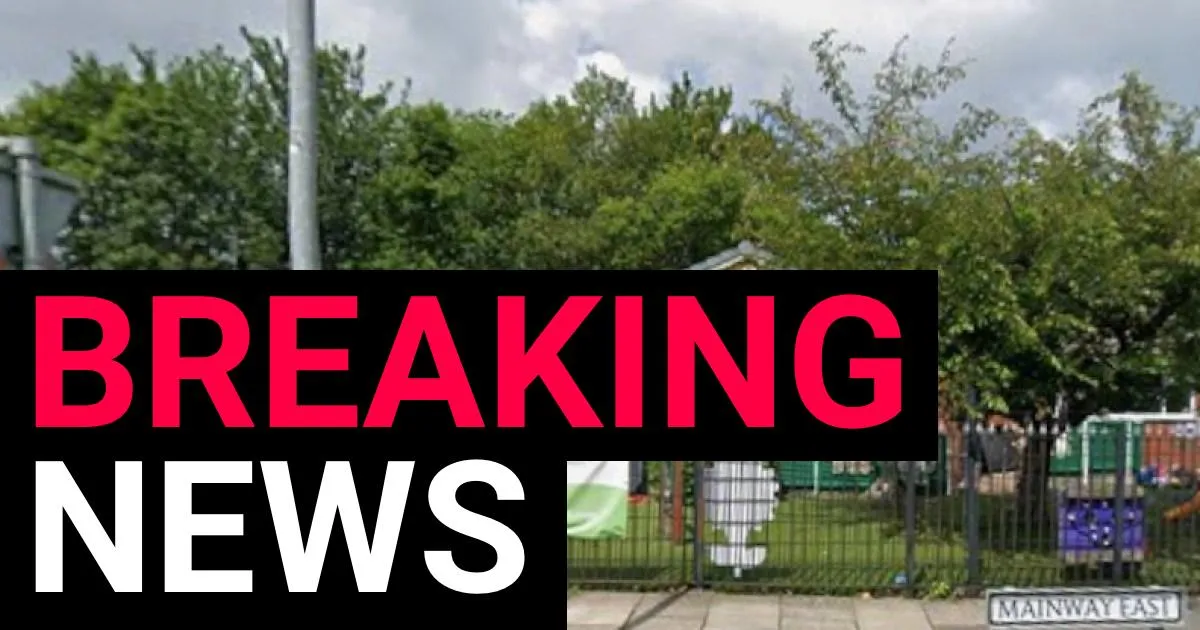
There are moments in a community that stop time. This is one of them. A three-year-old boy, a child still learning to form sentences, still discovering the world with wonder, is now fighting for his life in a hospital bed after a medical emergency unfolded at his nursery. The incident took place at Cosy Toes Nursery on Mainway East in Middleton, an ordinary setting where small children spend their days playing, painting, singing nursery rhymes and napping in the soft afternoon light. But on Monday, November 2, that ordinary rhythm was shattered. Emergency services were scrambled to the address at around 3.50pm, and before long the scene had become one of intense medical urgency. The little boy was rushed away in an ambulance, his life hanging in the balance, leaving behind a trail of anxious questions, devastated staff, and a community struggling to comprehend how a standard day at nursery could turn so suddenly into a parent’s worst nightmare. By the time the news began to spread, the child was already in critical condition. Names have not been released, and the details of what happened remain unclear. But the human weight of the situation is unmistakable. Behind every official statement, behind every police inquiry, there is a tiny child whose future is uncertain, and a family sitting beside a hospital bed, clinging to hope, waiting for news that cannot come quickly enough. This is not just another news story. It is a reminder that life can change in an instant, and that the most tender members of our communities, our children, are also the most fragile.
The scene that unfolded on Mainway East was swift and intense, a sharp contrast to the usual tranquillity of a suburban afternoon. Police arrived in significant numbers, with three police vehicles dispatched to the nursery, alongside a standard ambulance and a rapid response paramedic car. A paramedic in a fast-response vehicle is often dispatched when every second counts, and its presence suggested the situation was serious from the very beginning. The severity was further underscored when an air ambulance also landed nearby, a development that would have sent a jolt of fear through anyone who witnessed it. Air ambulances are not called for minor incidents. Their presence signifies clinical urgency, a life that needs the highest level of care delivered at speed. The sight of the helicopter descending on the Middleton neighbourhood, its rotor blades cutting through the air, would have been enough to make hearts sink. Neighbours, parents, and passers-by were left standing helplessly behind, watching as emergency teams worked. Within a short time, the decision was made to transport the child to the hospital. The journey, whether by road or air, would have been a blur of sirens, lights, and focused medical professionals doing everything in their power to stabilise the boy. For the staff at Cosy Toes Nursery, the experience must have been overwhelming. Their role is to provide comfort, safety, and care for the children entrusted to them. Suddenly, they were caught in a crisis for which no amount of training could fully prepare them. The sound of the air ambulance landing nearby, the sight of uniformed officers entering the building, the flurry of urgent communication, all of it would have been deeply disturbing for everyone present, particularly the other children, who are too young to understand what was happening. And yet, in the midst of the chaos, the focus remained clear: one little boy needed urgent help, and a team of strangers was doing everything they could to get him to it.
Official responses have been measured and careful, as they always are in such sensitive circumstances. Greater Manchester Police first confirmed that a child had been taken to hospital following a medical emergency, adding that the family had been made aware. The phrasing was clinical, but the implications were profound. When police say that a family is aware, it means that parents, or whoever was responsible for the child, were told immediately that something terrible had happened to their little one. For any parent, such a phone call is the most devastating moment imaginable. By Tuesday, police had confirmed further details about their involvement, explaining that they had been called at 3.49pm to reports of a concern for a child at an address on Mainway East in Middleton. Emergency services attended, the child was taken to hospital, and enquiries are ongoing. The word “concern” is deliberately broad, leaving much to the imagination. It does not, by itself, indicate what went wrong. It does not tell us whether the child collapsed suddenly, whether there was an accident, or whether some underlying condition surfaced without warning. At this stage, those answers remain out of reach. The investigation is likely to focus on establishing the full circumstances of the incident, reviewing what happened in the moments before the emergency, and determining whether there is anything that could have been done differently. But such inquiries take time, and for the family at the centre of this ordeal, each passing hour will feel like an eternity. While the authorities work quietly behind the scenes, the rest of us are left to wait, with little more to hold onto than the knowledge that a child is critically ill and that his family is enduring every parent’s worst fear.
Cosy Toes Nursery is not an unfamiliar name to residents of Middleton. It forms part of a small chain that runs four nurseries across the area, providing daycare for children up to five years old. For many families, nurseries like this are more than just drop-off points. They are places of trust, where parents leave their most precious possessions in the hands of educators and caregivers. They are spaces filled with learning, laughter, and the chaos of childhood. There are tiny chairs, walls covered in finger paintings, shelves stacked with storybooks, and staff members who know each child’s little quirks and preferences. The name “Cosy Toes” itself evokes warmth, comfort, and safety. That such a place should now be associated with a critical medical emergency feels deeply at odds with everything it is supposed to represent. In the wake of the incident, the nursery community will be reeling. Staff members who were on shift during the emergency will be struggling to process what they witnessed. Fellow parents, who may have heard the news through social media or word of mouth, will be hugging their children a little tighter at pickup and drop-off. There may be questions about safety protocols, about hidden health conditions, about chance and fate. But there will also be an outpouring of sympathy and solidarity. Local communities are often at their best in moments like this, and Middleton is no exception. Parents who have never met the family will feel an immediate, visceral connection to their pain. They will imagine themselves in that hospital room, watching over their own child, and feel the same chill of fear. The nursery itself, meanwhile, is caught in an impossible position, trying to maintain a sense of normalcy for the children in its care while simultaneously grappling with the gravity of what has happened. Its doors may still be open, its routines may continue, but the shadow of Monday afternoon will not lift easily.
Beyond the immediate circle of the nursery, the wider Middleton community has been affected by the news. A child in critical condition is something that no town can ignore. Word spreads quickly in local neighbourhoods, through school gates, workplace conversations, and neighbourhood groups. The facts are sparse: a boy, a nursery, an emergency, a hospital. But the absence of detail allows the imagination to run wild, and with that comes anxiety. Parents across the region will, inevitably, look at their own children and wonder how they would cope in such a situation. They will think about the trust they place in childcare settings, and about the fragility of life itself. There is no comfort to be offered in platitudes, no easy explanation for why a healthy-looking three-year-old should suddenly need the intervention of an air ambulance and a critical care team. What matters now is restraint and compassion. In the absence of official information, it is all too easy for speculation to take hold. People may whisper about negligence, about undiagnosed conditions, about any number of possibilities, but none of that helps the child or his family. What helps, at this stage, is privacy. The family is living through a nightmare, and the last thing they need is public scrutiny, judgement, or invasive attention. They need space to be with their little boy, to hold his hand, to speak to him in soft voices, and to hope that he can feel their presence. They need the medical team to be able to work without pressure or distraction. And they need the community to understand that some moments require silence rather than noise, patience rather than conclusions, kindness rather than curiosity. The investigation will reveal what it reveals. In the meantime, the only appropriate response is to acknowledge the gravity of the situation and to extend genuine, heartfelt sympathy to all those affected.
For now, the story remains unfinished. A little boy lies in a hospital bed, and the only people who truly know the extent of his struggle are his doctors, his nurses, and his family. The phrase “fighting for his life” is used often in news reports, but behind those words is a real fight, a small body battling against an unforgiving condition, a medical team rallying around him with every resource available, and a family praying, hoping, and waiting in a state of agonising suspense. There is no way to know what the coming days will bring. There is no way to guarantee the outcome. But there is something deeply human in the response that such an event evokes. Strangers care. Paramedics care. Police officers care. Neighbours care. The collective heart of a community reaches out toward a child it has never met, willing him to be strong, willing him to wake, willing him to return to the ordinary days of toys, snacks, and bedtime stories. In the end, this is what humanises a news report: the understanding that every statistic, every police confirmation, every line of coverage, is built around a real family that will never be the same. The best thing that anyone can offer them right now is not speculation, not explanation, but steady, quiet support. To the child, a tiny fighter in a large hospital ward, and to everyone who loves him, the hope is simple: that he pulls through, that he goes on to have a long and ordinary life, and that one day this terrifying chapter becomes a memory, distant and faded. Until then, the community holds its breath, sends love into the unknown, and hopes with every ounce of its collective being that the next update brings better news.