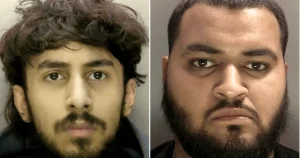


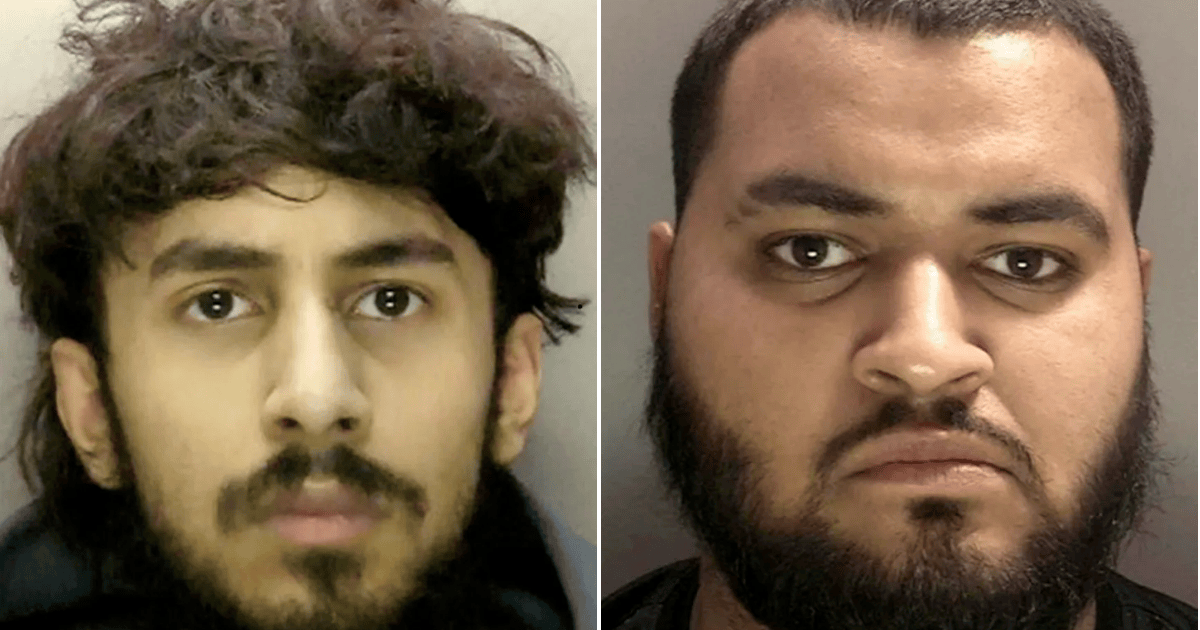
**1. In the pre-dawn stillness of St Paul’s Road, Smethwick, at around 4.30am on November 23 last year, two men sat in a stolen Mitsubishi Outlander with a loaded gun and a plan to end someone’s life. On the surface, Adam Liaqat, 19, and Asad Khan, 22, had every reason to believe they were prepared. They had the vehicle, the false number plates, the firearm, the ammunition, and what police later described as a considerable amount of pre-planning. But as the 4×4 sat parked in the darkness, something went catastrophically wrong. The weapon discharged before they ever reached their intended target, sending a bullet into Khan’s leg and tearing through the interior of the car. In a split second, the entire operation collapsed. There would be no shooting, no victim, no dramatic escape. Instead, the two would-be hitmen found themselves dealing with a sudden medical emergency, a wounded accomplice, and a growing pile of evidence that would soon lead to their downfall. Khan, bleeding and seriously injured, had no choice but to abandon the plot and make his own way to the hospital. His partner, meanwhile, was left to confront the grim reality that the gun had done more damage to their own side than they had ever managed to do to anyone else. The intended victim, whoever they were, likely never knew how close they had come that night — or how the conspiracy was undone not by police intervention, but by the reckless incompetence of its own architects.
The chaos of that night did not happen in isolation. According to West Midlands Police, the pair had invested significant time and effort into preparing for the shooting. The Mitsubishi Outlander they were sitting in had been stolen the night before and fitted with false registration plates, a textbook move designed to avoid detection and make it harder for investigators to trace the vehicle back to them. They had also acquired a gun and ammunition, presumably for a single, violent purpose. When detectives later examined Khan’s phone, they discovered messages that made the pair’s intentions unmistakably clear: they were on their way to shoot someone themselves. Exactly who was meant to be the target remains unknown, and police have never been able to identify the intended victim. But the evidence was sufficient to convince investigators that this was no spontaneous street fight or moment of heat-of-the-moment rage. It was a premeditated attempt to carry out a hit, complete with stolen transport, disguised identity, and a loaded weapon. The plan had all the hallmarks of a deliberate, organised crime. Yet all that careful preparation was undone in an instant when the gun went off inside the car, wounding Khan and damaging the vehicle. It is a bitter irony that two men who were apparently willing to take someone else’s life were undone by their own weapon before they ever reached their destination. Their meticulous planning gave way to a desperate, messy scramble to survive the consequences of their own mistake.
For Khan, the immediate priority was survival. Despite his injury, he managed to get himself to hospital, where he was treated for a serious gunshot wound to the leg. When medical staff and police began asking questions, his first instinct was to lie. He initially claimed that he had no idea what had happened, a flimsy story that did not withstand the weight of evidence. Detectives from West Midlands Police’s Major Crime Team launched a full investigation, and it quickly became clear that Khan’s ignorance was far from genuine. A search of his phone revealed the damning messages that suggested the pair were on their way to carry out a shooting. The target remained unknown, but the intent was no longer in doubt. At some point, while the car was parked, the gun had fired, striking Khan in the leg and damaging the interior of the vehicle. The physical evidence, combined with the digital trail, painted a vivid picture of what had really happened. Acting Detective Constable Emily Fowler, who led the investigation, later explained that through their enquiries they established Khan and Liaqat were in a stolen vehicle with a gun, and that messages on the phone indicated they were on their way to shoot someone. The pair had clearly put in a lot of pre-planning and preparation, Fowler noted, but it all went wrong when Liaqat appeared to have accidentally shot his own accomplice. The image of a would-be hitman injuring his partner in crime before they could even carry out their attack became the defining detail of the case. In one terrible flash, the gun transformed from a tool of intimidation and violence into the instrument of their own undoing.
While Khan recovered from his wound and faced mounting legal pressure, his co-conspirator was still at large. But Liaqat’s freedom was short-lived. Days after the failed shooting, he was spotted by police driving a Honda Accord. When officers attempted to stop him, he refused to pull over and instead led them on a pursuit across the West Midlands, weaving through streets and putting innocent members of the public at risk. The chase only came to an end when the vehicle was finally stopped in Oldbury. It was a fittingly chaotic end to a chaotic series of events. Liaqat had been driving without a full licence, only a provisional permit, and his decision to flee showed a complete disregard for safety. In the car with him was 19-year-old Yakuba Sawaneh, a passenger from Perry Common, Birmingham. As the pursuit unfolded, officers saw Class A drugs and a burner phone being tossed from the vehicle in an apparent attempt to dispose of evidence before the car came to a halt. When the dust settled, both men were arrested. The discovery of the drugs and the phone reinforced what investigators had already begun to suspect: that all three men were linked to the criminal underground of drug dealing and gang violence. The pursuit added another layer to the case, transforming an already tangled story into a wider web of criminality. Fowler later remarked that it was clear Liaqat, Khan, and Sawaneh were all linked to drugs, and that the illegal activity had to be met with serious consequences. The arrests were not merely the end of a bungled hit; they were the beginning of a deeper reckoning with the world of guns, drugs, and desperation that had brought the young men together.
In May, all three men stood trial at Wolverhampton Crown Court, where a jury heard the full, strange story of the planned shooting and the accidental gunshot that derailed it. The verdicts came back with little room for doubt. Adam Liaqat, of Sandwell, was found guilty of possessing a firearm with intent to endanger life and of Class A drug dealing offences. He was sentenced to 15 years in prison, a substantial term for a young man who had not yet turned twenty when the plot was hatched. Asad Khan, of West Bromwich, was convicted of possessing a firearm with intent to endanger life and possession of Class A drugs. He was jailed for 13 years. Khan’s punishment came with a cruel irony: he had already been shot by his own accomplice, suffering a serious physical injury that would likely leave lasting scars. Now he faced more than a decade behind bars, his body, his freedom, and his future all damaged by the same reckless enterprise. Yakuba Sawaneh, of Perry Common, Birmingham, was found guilty of possession of Class A drugs with intent to supply and jailed for 42 months. Though his involvement in the shooting plot was less central, he was caught in the same dragnet and punished for his part in the drug trade that helped fuel the violence. The sentences were met with relief by the police, who had worked methodically to untangle a case that could so easily have ended in murder. Speaking after the convictions, Fowler delivered a stark warning: lives could have been lost as a result of Liaqat and Khan arming themselves with a gun, including Khan’s own. That phrase — including Khan’s own — captured the sheer recklessness of the entire venture. The two men had been prepared to risk their own lives, the lives of their intended target, and the lives of anyone else in the vicinity, all for the sake of carrying out a hit.
At first glance, this story reads like a dark comedy. Two would-be hitmen, a loaded gun, a parked car, and an accidental shooting that left the shooter’s accomplice wounded and the plan in ruins. There is something almost laughable about the image of a criminal mastermind fumbling his weapon and turning his own partner into a casualty. But the human reality is far less funny. Behind the absurdity are three young men, none older than twenty-two, whose lives are now defined by prison sentences, missed opportunities, and the grief of families who watched them choose a deadly path. There is also the unnamed intended victim, the person they were on their way to shoot, who may never know how close they came to death or how fate intervened in the form of a misfired gun. The botched plan was not justice; it was luck. And luck cannot be relied upon to keep communities safe. The case also highlights the broader epidemic of gun violence and drug crime that continues to haunt towns like Smethwick, West Bromwich, and Birmingham. It is all too easy to laugh at incompetent criminals, but the reality is that illegal weapons in the wrong hands are extremely dangerous. These men were not laughing when the gun went off; they were bleeding, fleeing, and telling lies. Their victims were not spared by any sense of mercy, but by a chance accident that happened to occur before they could act. The police, meanwhile, continue to work year-round to tackle gun crime and find offenders, hoping to remove dangerous weapons from the streets before another plan can be set in motion. In the end, the story of Adam Liaqat and Asad Khan is a reminder that violence is never as controlled or as clever as the people planning it believe. It is unpredictable, chaotic, and all too often comes back to harm the person who thought they were in charge. And sometimes, the only thing standing between a would-be killer and a completed crime is the sheer, ridiculous bad luck of a gun going off too soon.