
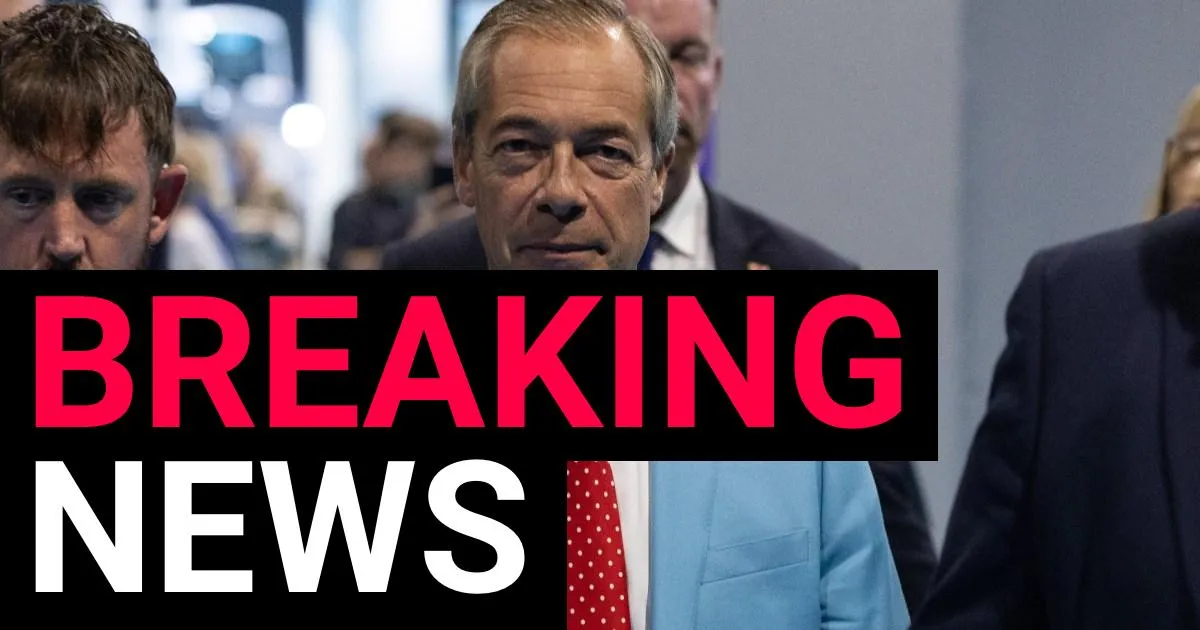
British politics has a habit of serving up a story that stops you in your tracks, and this is very much one of those moments. The Metropolitan Police has opened an investigation into Reform UK, the party led by Nigel Farage, after an undercover Channel 4 investigation allegedly captured senior party figures discussing how to disguise donations from foreign sources. The footage, broadcast on Channel 4 News on Thursday, 3 September, is said to show insiders talking candidly about the mechanics of routing overseas money into party funds in a way that could break the law. Scotland Yard has confirmed that it received a number of reports following the broadcast, and that detectives have assessed the information and determined that there are “potential offences requiring investigation.” Reform UK has responded with a firm denial, insisting that the party has done nothing wrong and that it will “fully co-operate” with the Met. But the timing could hardly be more awkward for a party that has spent its entire existence positioning itself as the anti-establishment outsider, the scourge of Westminster, and the only genuinely honest voice in a political system supposedly rotten with self-interest. To now find itself under official investigation by the same establishment it so loves to attack is not just uncomfortable; it is the kind of irony that would be darkly funny if the stakes were not so serious. The allegations go to the heart of how British elections are funded, and they raise uncomfortable questions about whether the rules designed to protect democracy have been followed by a party that claims to speak for ordinary people.
At the centre of the storm is a set of conversations that Channel 4 says its undercover reporters recorded with people close to Reform UK. The programme reported that party figures discussed how to disguise donations coming from abroad. Under British law, foreign donations to political parties are strictly forbidden. The Political Parties, Elections and Referendums Act 2000 lays down very clear rules: parties may only accept money from permissible sources, most importantly registered UK voters or UK-based companies and organisations. The idea behind this is straightforward. A country’s elections should be decided by its own people, not by wealthy individuals or foreign powers with an interest in the outcome. If a donation is secretly funnelled from overseas, it allows money that has no business in a British campaign to slip through the back door and influence the political landscape. The Metropolitan Police’s statement specifically mentioned “donations and polling” in connection with the same political party, which suggests that the inquiry is looking not only at money but also at how information or data may have been gathered and used. None of this has been proven, and Reform UK has made it clear that it rejects the claims outright. Yet the fact that detectives have decided to investigate, rather than dismiss the reports as baseless, means there is enough material to take seriously. The footage itself is now the key piece of evidence, and the Met has confirmed that detectives are seeking to obtain the full broadcast material to examine it in detail alongside other information already in their possession.
The statement released by Scotland Yard was careful, measured and full of the cautious language that police use when they want to avoid prejudicing a live inquiry. But beneath the dry official vocabulary, the gravity was unmistakable. The force said that following the Channel 4 News broadcast, it received a series of reports relating to donations and polling involving a political party. Detectives then assessed the information and concluded that there were potential offences requiring investigation. Perhaps the most significant detail was the disclosure that these potential offences are “similar in nature to matters already under investigation by the Met’s Special Enquiry Team relating to donations made to the same political party.” In other words, this is not necessarily a brand new investigation; it appears to be an expansion of something that officers were already looking at. The Special Enquiry Team is a specialist unit that deals with sensitive and complex cases, often involving those in public life, and its involvement signals that this is being treated with seriousness. The force went on to say that all the allegations under investigation relate to potential offences under the Political Parties, Elections and Referendums Act 2000, the very legislation that governs how parties raise and spend money. Detectives are also continuing to liaise closely with the Electoral Commission and the Crown Prosecution Service, which strongly suggests that this is a matter with possible criminal implications. For now, no charges have been brought, and Reform UK has not been found guilty of anything. But the official confirmation that there are “potential offences requiring investigation” is a significant moment in a story that has been bubbling under the surface for some time.
Reform UK’s response has been quick, defiant and almost entirely consistent with the way the party has always handled criticism. In a statement, the party denied any wrongdoing and confirmed that it would cooperate fully with the Met. It did not, however, offer any detailed explanation of the conversations captured on the Channel 4 footage, and that gap between denial and explanation is likely to keep the story alive. For Farage personally, the investigation lands at a particularly delicate moment. He has spent decades accusing other politicians of being dishonest, untrustworthy and out of touch, and has built a mass following on the promise of telling hard truths. To be filmed in the middle of an undercover sting and then drawn into a police inquiry about foreign donations is exactly the kind of story that his fiercest critics have long predicted. When the reporting first emerged, social media was flooded with comments from supporters pointing out what they saw as the hypocrisy of a party that so often claims to champion freedom of speech now having to answer questions about its own conduct. Others noted that Farage had, in the same news cycle, been calling for a ban on face coverings in public after recent protests, a man never far from controversy even on the calmest of days. The human dimension is difficult to ignore: Farage is a seasoned political survivor who has weathered countless storms, but this one touches the legal foundations of his party. Regardless of how the investigation ends, the reputational damage may already be done, at least in the eyes of voters who value transparency and integrity in how political campaigns are financed.
The wider implications of this investigation extend far beyond Reform UK. Trust in politics is fragile, and the public is already deeply sceptical about who funds political parties and what they might expect in return. When a party that campaigned loudly against the establishment is accused of taking foreign money through questionable means, it feeds a broader sense of cynicism about the whole system. The Electoral Commission and the Crown Prosecution Service will now be watching closely as the Met’s detectives gather evidence. If the investigation uncovers evidence of deliberate attempts to hide the true origin of donations, the possible consequences are serious. Political parties found to have broken funding laws can face fines, be ordered to repay money, and in some cases may see individuals referred for prosecution. The reputational fallout could also be severe, affecting public donations, membership numbers and the party’s chances at future elections. For a party like Reform UK, which has styled itself as a popular uprising against the old political class, a finding of wrongdoing would do more than damage its finances; it would undermine the very story it tells about itself. Even if the investigation ultimately clears the party, the episode has already forced uncomfortable questions into the open. Why were those conversations happening at all? Why does the party need to disguise anything? And why has the police decided that these allegations are serious enough to warrant an official investigation? None of those questions are going to disappear simply because a statement of denial has been issued.
For now, the next move belongs to the detectives. They will be reviewing the Channel 4 footage frame by frame, looking for corroborating documents and bank records, and speaking to anyone who may have witnessed the relevant events. The Met has already confirmed that it is seeking to obtain the relevant footage and that it remains in close contact with the Electoral Commission and the Crown Prosecution Service. Reform UK, meanwhile, has promised to cooperate, and its supporters will no doubt demand that the party be treated fairly and allowed to respond to the allegations in detail. This is, after all, a democratic process in its own right: everyone is entitled to a presumption of innocence, and no one has been charged with anything. But in politics, perception can be as powerful as legal reality, and the image of Nigel Farage’s party facing a police investigation over foreign funding is now fixed in the public imagination. The coming weeks will reveal whether the footage shows a genuine attempt to break the law or whether the parties involved have a reasonable explanation for the words caught on camera. Until then, the drama continues, and the country will be watching. It is a story about money, power, trust and the lengths some people may go to in order to get what they want. Whatever the eventual outcome, the fact that such an investigation has been launched is itself a remarkable moment in modern British politics, and one that will be talked about long after the headlines shift to the next scandal.