



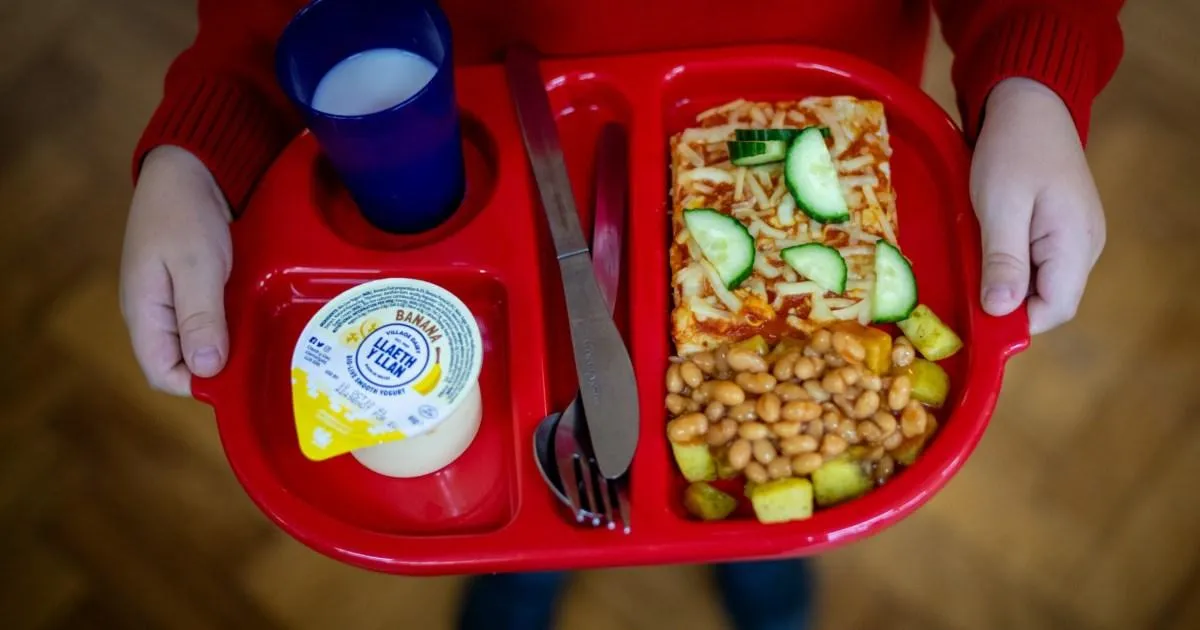
Picture the school lunch queue: the clatter of trays, the smell of chips drifting down the corridor, and the inevitable scramble for something sweet before the bell. For generations of children, that has been the reality of school food, and it has not always been a healthy one. Now, after more than a decade without meaningful change, the Department for Education has announced a sweeping overhaul of school food standards, and the message is clear: the canteen plate is about to look very different. Sweetened baked desserts will no longer be allowed to stand alone. Any dessert of that kind must now contain fruit or be served alongside it, which means a lonely flapjack, brownie, or slice of cake without a hint of fruit will no longer pass muster. Sugary drinks, ice cream, waffles, and similar treats are also being restricted, while deep-fried foods are being scaled back. Foods that are high in fat and salt, such as pizzas and sausages, will still have a place in school menus, but they will have to be limited rather than treated as the default. In their place, schools will need to build menus around more fibrous wholegrains and pulses like lentils and chickpeas, and these must appear alongside main meal options at least once a week. Every main meal should also include a portion of vegetables or salad, either served on the side or cooked into the dish itself. The reasons behind this are stark: around one in three children leaves primary school overweight or obese, and tooth decay is the leading cause of hospital admissions for children aged five to nine. This is not just a debate about pudding; it is a serious attempt to reshape what children eat at one of the most influential moments of their day.
For school cooks and kitchen teams, the practical changes will be significant, but the direction is clear. The new standards do not ban every treat or turn lunch into a punishment. Instead, they force a rethink about what counts as a balanced meal. A portion of chips can still appear, but it cannot be the foundation of everything. A pizza or sausage can still be served, but not so often that it becomes the whole story. Desserts, if they are sweetened and baked, have to justify their place by bringing fruit into the equation. That might mean an apple crumble, a fruit-packed muffin, or a baked pear with a drizzle of something modest. The same logic applies to the wider menu. Lentils, chickpeas, and other pulses become more prominent, not as a niche afterthought but as a regular feature alongside main dishes at least once a week, helping to increase fibre and improve digestive health. Vegetables and salad are no longer optional extras that can sit untouched at the side of a plate; they must be included with, or incorporated into, every main meal. There is also a new emphasis on transparency. Each school is expected to publish its menus and food policies online, giving parents the chance to see exactly what their children are being offered on any given day. Schools will also be asked to nominate a school food governor, someone whose role is to hold the school to account for the quality of the meals being served. The Department for Education is working with the Food Standards Agency on a practical monitoring plan, with details expected in the coming months. In other words, this is not a set of suggestions to be filed away and forgotten. It is a framework designed to make healthy eating visible, measurable, and much harder to ignore.
Of course, rules are only ever as good as the people who enforce them, and the question of compliance is already central to the conversation. In September, a survey conducted by Teacher Tapp on behalf of the charity School Food Matters asked more than 1,400 headteachers and senior leaders in state primary and secondary schools across England for their views on the new standards. The response was telling: 68% said the standards would be more effective if compliance were independently checked. In other words, many of the very people running schools do not want this to become a paper exercise. They know how easily an ambitious menu can be replaced by something cheaper, quicker, and less healthy when nobody is watching. They also know that the pressures on school budgets, staff time, and children’s tastes are real. The rollout is being phased to give schools time to adapt. Most of the changes come into effect next September, while secondary schools have been given until September 2028 to make some of the adjustments. That extra time is not a sign of weakness; it is a recognition that changing the food culture of a busy school kitchen takes more than a memo. It takes training, funding, and the willingness of children themselves to try something new. But the appetite for change appears genuine. Headteachers are not pushing back against the idea of healthier meals; they are asking for more scrutiny, not less. That is a powerful signal that the days of schools being left to guess what good food looks like may finally be coming to an end.
At the centre of all this are not policies but people. Education Secretary Lucy Powell put it in human terms, describing the changes as once-in-a-generation. She spoke of the expansion of free school meals, the rollout of free breakfast clubs, and the new school food standards as part of a wider mission to make sure every child has access to the healthy food they need to learn, grow, and succeed. Her words carried a weight that many parents will recognise: no child should spend the school day hungry, and no family should have to struggle to put food on the table. For a parent who has watched their child push broccoli around a plate, or a child who has relied on school meals as the most substantial food they get all day, these are not abstract ideas. Hunger affects concentration, mood, behaviour, and the simple ability to enjoy being at school. The ambition behind these changes is not just to reduce obesity statistics or dental waiting lists, though those are urgent. It is to create a system where the most vulnerable children are not let down by the food they are offered. When Powell talks about healthier food, fuller stomachs, and a fairer start, she is describing something that every adult can understand: the belief that what a child eats should not depend on luck, postcode, or parents’ ability to navigate a complex system. It should be good, by default, because the state has the power and the responsibility to make it so.
The changes have also revived a sense of vindication among campaigners who have spent years fighting for exactly this kind of ambition. Jamie Oliver, who first took on school dinners more than twenty years ago, said he could not believe that standards existed for dog food but not for what children are served at school. He has never stopped banging that drum, and his reaction to the new standards is one of cautious celebration. He described the new rules as being based on the latest science, ensuring that school food actually supports children’s health and helps them thrive. That is a long way from the days when a chicken nugget and a sugary drink were seen as an acceptable lunch. Dame Emma Thompson, who campaigns for the Food Foundation charity, added her voice to the chorus, calling the moment a milestone worth celebrating and an investment in a healthier future for the next generation. The support of familiar public figures matters more than simple celebrity endorsement. It keeps the issue in the mainstream, reminds parents and politicians alike that school food has always been about more than convenience, and gives the changes a sense of momentum. For those who have spent years raising the alarm about tooth decay, obesity, and the slow creep of ultra-processed food into children’s lives, the new standards feel like proof that their persistence was worth it. They are not pretending that a single policy will fix everything. But they are allowing themselves to believe that the direction of travel has finally shifted.
None of this will happen overnight, and there are real challenges ahead. School kitchens are already under pressure, and the expectation to serve more vegetables, pulses, and wholegrains while limiting the foods children often crave will require creativity and patience. Monitoring details are still being worked out, and the success of the entire scheme may depend on how seriously that oversight is taken. The extra time given to secondary schools suggests an awareness that teenagers can be the hardest audience to win over, especially when vending machines and local shops are offering easier alternatives. Yet there is reason to be hopeful. The new standards are not about punishing children or making lunchtimes feel like a health clinic. They are about redefining what a normal school meal looks like. Slowly, a new generation can grow up expecting fruit with dessert, vegetables with every main course, and lentils or chickpeas as a familiar part of the weekly menu. They may not cheer for it today, but their bodies will thank them tomorrow. For parents, the promise of published menus and a named food governor offers something simple and powerful: transparency. For children, it offers a chance to develop tastes that will follow them into adulthood. And for society, it offers a reminder that the way we feed our children says everything about what we value. Healthier food, fuller stomachs, and a fairer start for every child is not just a political slogan. It is a vision of what school could be, and for the first time in a long time, that vision has the strength of law behind it.