

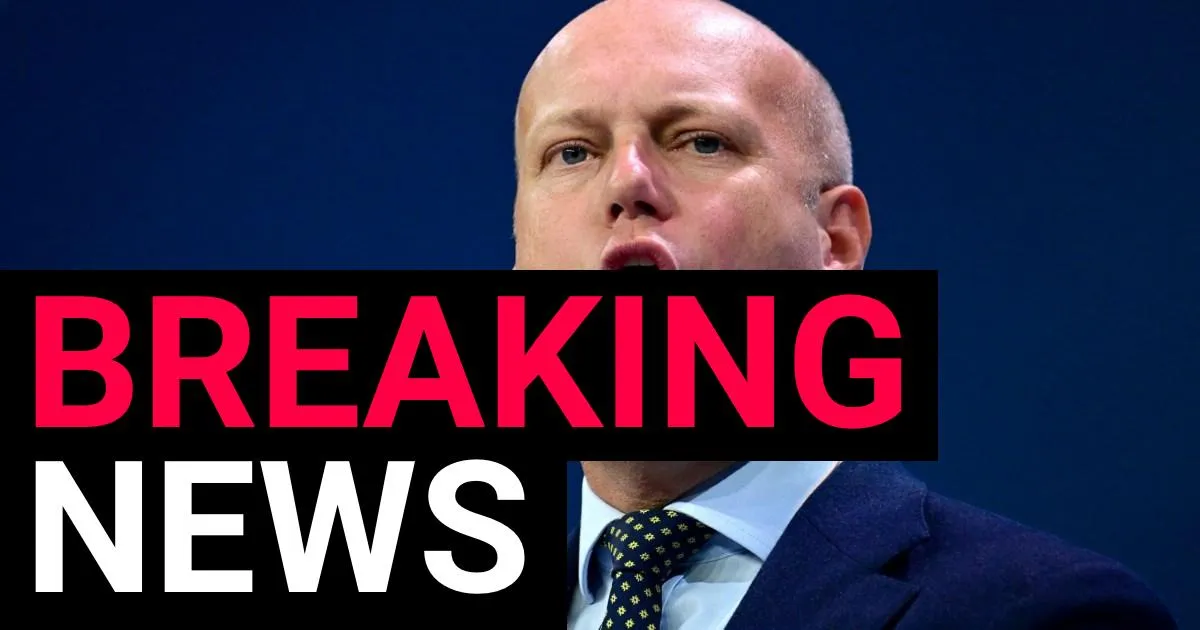
Politics is often described as a game of survival, but few players expect to be knocked out by events outside the chamber. Dan Thomas, the leader of Reform UK in Wales, has announced he is stepping down just four months after taking the job. The timing of his resignation is striking—it follows his arrest over the weekend on suspicion of assault and engaging in controlling or coercive behaviour. In a personal statement, Thomas said he had been reported to police and subsequently released without charge. He did not attempt to hide the seriousness of what had happened, but he did try to frame his decision as something more than a scandal. He insisted he had done nothing wrong and explained that he was stepping aside because he could not bear to see his team’s work overshadowed by headlines about his private life. It was, in many ways, the kind of statement that politicians prepare when they want to sound noble in retreat. Whether it will work remains to be seen, but it certainly marks a sudden end to what had once looked like a promising chapter for Reform in Wales. Thomas had become the leader of the opposition at the Senedd after the party’s success in May’s Welsh elections, when it came second only to Plaid Cymru in terms of seats. For a party that had often been dismissed as a protest movement rather than a serious governing force, that result was a genuine triumph. Reform’s MSs were suddenly a visible opposition presence in Cardiff Bay, and Thomas was the face of that breakthrough. Now, just a few months later, he is leaving under a cloud, having barely had time to put his mark on the role. What makes this even more chaotic is the way the announcement landed: at almost exactly the same moment, another piece of bad news hit the party, transforming what could have been a manageable crisis into a full-blown political storm. If politics is about timing, then this was the worst possible time for a man who had hoped to lead his party into the next wave of Welsh political history.
Thomas’s own words were carefully chosen, and in them you could hear the strain of a man trying to protect both his reputation and his colleagues. “I stress that I have done nothing wrong,” he said, “but I do not want the coming headlines to be a distraction from the fantastic work our Senedd team is doing in holding this government to account.” There is an undeniable logic to that reasoning. A leader facing a police investigation for an alleged offence cannot easily stand at the dispatch box and demand public trust, especially in a party that is supposed to be tough on crime and personal responsibility. But by stepping aside, Thomas is also leaving a vacancy at a critical time for Reform. The party has spent years positioning itself as the antidote to establishment politics, and now its own establishment in Wales has been shaken. There is a bitter historical echo here too: Thomas was the first leader of Reform in Wales since Nathan Gill, who is currently in prison after being convicted of taking bribes to make pro-Russia statements when he was a Member of the European Parliament. Gill’s story involved corruption and betrayal, while Thomas’s involves allegations he strenuously denies, but the pattern is nevertheless uncomfortable for a party that has promised to clean up politics. Each time Reform has tried to plant a flag in Wales, something has gone wrong. Thomas’s resignation therefore feels less like a single bad week and more like a continuing problem. It also raises questions about who will now lead the party’s Senedd group and whether a figure with less baggage can emerge from the chaos. For a party that thrives on disruption, this is the kind of disruption it did not ask for. Yet there is also a strange vulnerability in Thomas’s statement, a sense of a man holding onto his dignity while the ground slips beneath him. He may be leaving the political stage, but this is not the way he wanted to leave it, and there is something almost sad about seeing a leader try to control the narrative of his own downfall.
Then there are the facts of the police investigation, which are stark and serious. Gwent Police issued a statement confirming that on Sunday September 13, a 45-year-old man from the Aberbargoed area was arrested on suspicion of assault and engaging in controlling or coercive behaviour. The man was not named by police, but the details match Thomas and his home area. He has been bailed pending further enquiries. It is important to say that an arrest is not proof of guilt, and Thomas has publicly declared his innocence. Still, the nature of the allegations is no small thing. In British law, controlling and coercive behaviour is a pattern of abuse used to dominate another person, and it is often seen in the context of intimate relationships. Even to be investigated in this territory is a heavy burden, for the accused no less than for the person who made the report. The fact that Thomas says he was released without charge might sound reassuring, but it does not mean the matter is closed; it means the police are still working through what happened. For anyone in public life, waiting in that kind of limbo is a private nightmare. You have to keep going, keep smiling, keep pretending that everything is normal, while knowing that any moment a new detail could emerge in the press. Thomas has chosen to remove himself from that position, perhaps because he understands that a story like this cannot be contained, or perhaps because he simply wants to deal with it in private. Either way, his abrupt departure sends a message to voters that Reform’s Welsh operation is in crisis at the same time as trying to reassure them that the party is a stable alternative to Labour, the Conservatives, and Plaid Cymru. Stability is a hard thing to sell when your leader is resigning after four months. And for those watching from the outside, there is an unavoidable sense of unease, because the allegations touch on something deeply personal and serious. Politics can be bruising, but this is the kind of story that no opposition researcher or rival party had to manufacture; it arrived on its own, with the force of a wrecking ball.
If the resignation was a blow, what followed was something closer to a public humiliation. While Thomas’s statement was still making its way around the news cycle, Plaid Cymru announced that one of his own Members of the Senedd had defected. Sarah Cooper-Lesadd, the Member for Pen-y-Bont Bro Morgannwg, declared that she had left Reform UK and joined Plaid Cymru’s Senedd group. In her announcement she did not mince words. Reform, she said, was “not serious about governing Wales” and was “far more interested in division, opposition and headlines than in finding solutions.” Those words must have stung far more than any headline about the police investigation, because they came from someone who had once shared a platform with Thomas, who had campaigned under the same flag, and who had been elected alongside him in the same wave of discontent. To lose a colleague is one thing; to lose her to a rival party, with a public attack on the party’s core values, is another. Cooper-Lesadd’s decision is not just a change of membership card. It reduces Reform’s numbers in the Senedd, complicates the arithmetic of the opposition, and hands Plaid Cymru a symbolic victory. Politically, it is the kind of switch that makes a party look as if it is falling apart. And perhaps more importantly, it shifts the story. Instead of a single leader with a legal problem, the news becomes about a party that cannot hold on to its people. Wales has seen defections before, but this one has a distinctly personal edge. Cooper-Lesadd was not simply leaving for greener pastures; she was walking out the door and turning around to say that the people she had worked with did not have the country’s interests at heart. There is a kind of courage in that, but also a melancholy, because it means she was unhappy long before the current drama unfolded. It suggests that the cracks in Reform’s Welsh project were already visible to those on the inside, not just to opponents who wanted to see the party fail.
Plaid Cymru, understandably, welcomed her with open arms. Marc Jones, the Senedd group chair for Plaid Cymru, explained that the decision to allow her to cross the floor had not been taken lightly. He said it had followed a period of reflection, discussion, and a proper internal process in line with the party’s constitution. He also went out of his way to emphasise Cooper-Lesadd’s sincerity. “It has been clear for some time to many of us that Sarah is sincerely motivated by a desire to make a positive difference,” he said, “particularly for some of the most vulnerable people in our society.” Then came the line that will echo around Cardiff Bay for weeks: “It has also become clear that she is uncomfortable with Reform UK’s politics, rhetoric and values.” That is a polite way of saying Reform repelled her. It is also a reminder that politics is not just about policies and seats, but about atmosphere, culture, and the way people talk about each other. For Reform, those words are damaging because they come not from an enemy but from a former supporter. Plaid Cymru will now use Cooper-Lesadd as a living example of what they claim is the difference between their approach and Reform’s. They may not gain huge numbers from a single defection, but symbolically they have shown that not everyone who is drawn to Reform stays there. They have also strengthened the narrative that Reform’s greatest enemy is itself. When a party spends so much energy attacking the political establishment, it can be easy to forget that its own internal culture matters just as much. This defection forces that culture into the open. Whatever the truth of Thomas’s arrest, Cooper-Lesadd’s words suggest that the party’s Welsh branch has serious issues with tone, direction, and perhaps even personal conduct. For a party that wants to win over Welsh voters in the next election, that is hard to answer. And it makes the coming leadership choices in Reform more fraught than ever, because whoever takes over will have to repair not just the party’s public image, but also the sense of trust and shared purpose within the group itself.
All of this leaves Reform UK in a strange and uncomfortable place. The party has become one of the most talked-about forces in British politics, and in Wales it finally looked as though it had found a foothold. But in a single afternoon, it lost its leader and a member of its parliamentary group, and was forced to defend its values in the face of accusations from both a police force and a former disciple. There is no easy way to spin that. It is also worth pausing to remember the human dimension behind the political drama. Whatever one thinks of Dan Thomas or Sarah Cooper-Lesadd, real lives are involved. Thomas is now a private citizen facing a police investigation, a man whose reputation may never recover no matter how the case ends. Cooper-Lesadd is a politician who felt she could no longer be associated with her own party, and she has paid the price of making that decision in public. And the voters who supported Reform in May are left wondering whether they backed a movement or a mirage. Politics is supposed to be about ideas and choices, but moments like this remind us that it is also about people—their ambitions, their mistakes, their families, and their shifting allegiances. Reform will survive, of course. Parties always do. But the party’s Welsh operation has been badly wounded, and the road back to credibility will not be easy. In the coming months, questions about Thomas’s successor and Cooper-Lesadd’s future will be answered, and the police will eventually decide what to do with the investigation. Until then, the most human reaction is probably to step back from the drama and remember that no headline tells the whole story. For Dan Thomas, the story is no longer about politics. It is about clearing his name. For Reform, the story is about what remains when the headlines fade. And for the rest of us, it is another reminder that the people who enter public life are not always the unflappable figures they appear to be. They are just as fragile, just as complicated, and just as vulnerable to the unpredictable course of events as anyone else. In the end, a resignation like this does not just reshape the political map. It leaves behind a quieter story, one of damaged trust, disappointed hopes, and the long and private task of picking up the pieces.