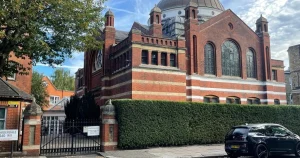



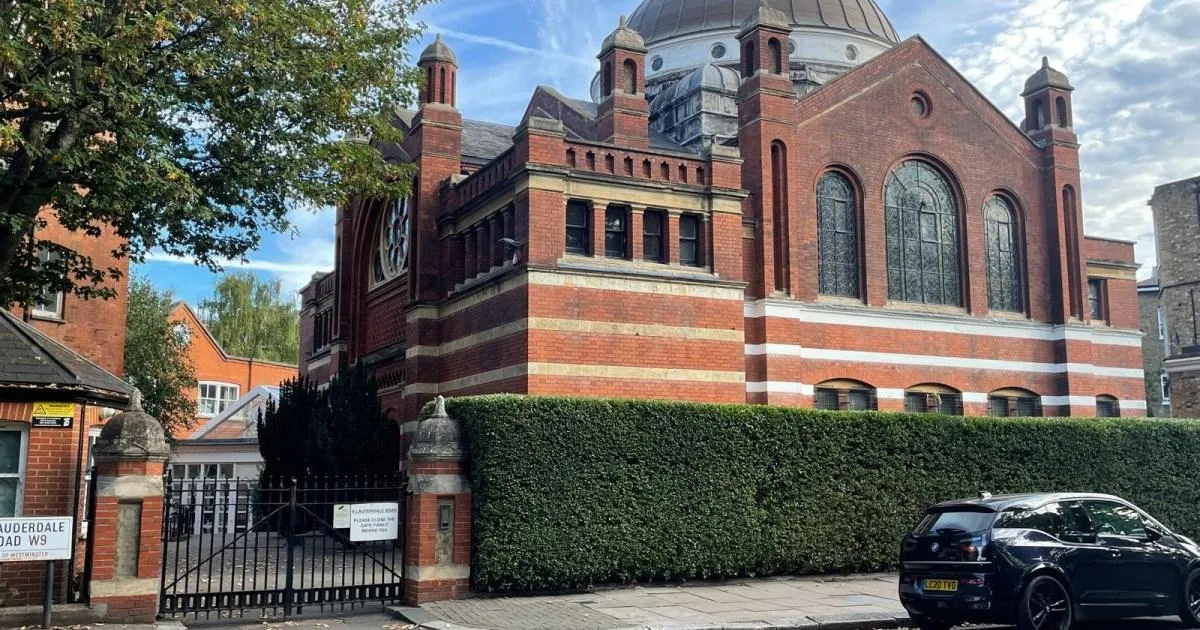
On Sunday, 13 September, the sun was still high over Maida Vale when the last of the worshippers stepped out of Lauderdale Road Synagogue. It had been a morning of prayer and reflection, the second day of Rosh Hashanah, the Jewish New Year, a time when families come together to ask for peace, health and a good year ahead. Around 700 people had filled the Grade II listed building, its ornate Victorian interior steeped in history, its congregation drawn from across the city. Then, as the crowd dispersed and the street began to return to its usual rhythm, a group of hooded figures appeared. Five young people, according to witnesses, aimed fireworks at the synagogue and let them off. Staff later described seeing two fireworks aimed at the building, and the bangs echoed through the quiet residential streets, startling residents and terrifying those who had only moments before been at prayer. It was the middle of the day, brazen and sudden, and by the time anyone understood what was happening, the suspects were running away. No one was hurt, but the emotional damage was immediate. A synagogue employee, still shaken, described how the rockets could have caused a fire or worse. The building, with its stained glass windows and long memory of Jewish life in London, had been targeted simply because of what it represents. The attack did not happen during a service, but it happened immediately after one, when the streets were filled with men, women and children carrying prayer books and festive greetings. It was a deliberate attempt to turn a day of hope into one of anxiety, and it succeeded. For those leaving the synagogue, the transition from the spiritual safety of the sanctuary to the threat of a street-level assault was jarring. Many had young children by the hand. Some had elderly relatives leaning on their arms. They had come to celebrate, not to be targets. The police were called at 15:56, and officers arrived quickly, but the damage to the community’s sense of security was already done. In the days that followed, the story spread, not just through Maida Vale but across the Jewish community in Britain, prompting grief, anger and a familiar, weary question: why here, why now?
Inside the synagogue, staff were left to piece together what had happened, replaying the few confusing seconds on CCTV and trying to reassure a congregation that had been shaken to its core. One employee told Metro that the group were “young teens, I would say”, and that they ran off immediately after launching the fireworks. The same staff member pointed out that the area has “loads of CCTV”, which made the attack all the more reckless and unsettling. Why would anyone risk being caught on camera to target a place of worship in broad daylight? The answer, he suggested, was intimidation. “They launched the fireworks just after 700 people had been at the synagogue,” he said. “It could have been much worse. The rockets could have caused a fire or something; it was very dangerous and is scary for our congregation. One of the bangs was really loud and people have told me they were really frightened.” His words carried the weariness of someone who has had to think about security at every major event, someone who knows that a house of prayer must now also be a fortress. He said security would be tightened even further, especially on important days in the Jewish calendar. That is the cruel arithmetic of this kind of incident: a community celebrates its holiest moments, and in the same breath must calculate exit routes, camera coverage and the thickness of window glass. The fact that the rockets were aimed at the synagogue’s windows makes the intent clear. This was not a random teenage prank. It was an attack on a symbol of Jewish presence in London, carried out at a moment when the building was full of families. For the staff, the fear is not only about what happened, but about what could have happened if one of the fireworks had smashed through a window into a crowded room. The thought is unbearable, and yet it is exactly the thought they are forced to live with.
Local residents and worshippers described a “massive bang” that seemed to shake the pavement, followed by the sight of hooded figures fleeing the scene. It was a moment that did not fit the calm of the neighbourhood, a place of tree-lined streets and family homes, where the synagogue has long been a familiar landmark. One mother of two, who attends the synagogue, said the attack was “brazen” and “designed to intimidate”. She added: “If these were young teenagers, then we have to worry about what they are learning and who from.” Her words point to a deeper anxiety. The suspects may have been children, but the hatred they acted out did not emerge from nowhere. Somewhere, in a classroom, a WhatsApp group, a social media feed or a conversation at home, they learned that a synagogue was an acceptable target. That is perhaps the most frightening part of the incident: the ease with which a group of young people decided, on a Sunday afternoon, to turn a Jewish place of worship into a target for fireworks. They did not throw stones or shout insults; they aimed explosive devices at a building full of people. The fact that no one was injured owes more to luck than to care. The mother’s question—what are they learning, and from whom?—haunts anyone who has watched the rise of antisemitic incidents across the country. It is not enough to dismiss this as youthful stupidity. The choice of target, the timing, and the coordinated nature of the group suggest something more deliberate. Even if the perpetrators did not fully understand the weight of what they were doing, the community they targeted understands it all too well. They have seen this before, in different forms, in different decades. They know that small acts of hostility can grow into larger ones if they are not confronted. And they know that the burden of responding—of remaining visible, resilient and rooted—falls on them, even when they are exhausted by it.
The Metropolitan Police are investigating the attack, and officers are reviewing footage from the network of CCTV cameras that surrounds the synagogue. The suspects had left before police arrived, and no arrests have been made. In a statement, the Met said: “At 15.56hrs on Sunday, 13 September, officers were called to reports of a group of suspects discharging fireworks at a synagogue in Ashworth Road, Westminster. Officers attended the scene, but the suspects had left prior to police arrival. No injuries were reported. No arrests have been made and police enquiries, including CCTV analysis, are progressing at pace.” The statement went on to say that additional patrols are in place “to help ensure Jewish communities feel safe, protected and reassured during this important religious period.” It added: “The Met remains committed to protecting Jewish communities and ensuring people can celebrate and worship without fear of hate crime or intimidation.” For the congregation, the presence of extra officers is a comfort, but also a reminder of the world they live in. It takes something to see a police car outside your synagogue and feel grateful rather than alarmed. The fact that this is now normalised is itself a kind of grief. Still, the police response matters. Hate crime thrives on silence and invisibility, and the public commitment to patrols sends a message that the attack has been seen, and taken seriously. CCTV footage may yet identify the suspects. The community hopes it does, not only for justice, but for accountability. If these were young teens, they need to be spoken to, educated, and, if appropriate, held responsible. Their families need to answer for what they have learned. And the wider society needs to reflect on the conditions that allow antisemitism to flourish. A synagogue should not need additional patrols on the second day of Rosh Hashanah. A congregation should not have to feel relieved that the fireworks were aimed at the windows and not at the people. These are not normal facts. They are warning signs.
The Community Safety Trust, which advises Jewish communities on security, described the incident as serious and concerning. A spokesperson said: “We are aware of an incident in London over Rosh Hashanah, the Jewish New Year, in which a group of youths reportedly set off fireworks towards the synagogue premises. This did not occur during services and we do not believe that anybody was hurt, but it is nonetheless a serious incident that will undoubtedly cause concern.” The CST attended the scene, remains in contact with the synagogue, and is working with police to establish the full circumstances. They urged anyone who witnessed the incident or who has information to come forward. The incident fits into a wider and worrying pattern. The CST recorded 1,926 antisemitic incidents nationwide in the first six months of this year, a 21% increase on the same period last year. Behind that statistic are real people: schoolchildren arriving home frightened, families avoiding visible Jewish symbols, elderly survivors of past hatred feeling history repeat. Every incident, no matter how minor it may seem from the outside, sends ripples through the community. Synagogues review their security protocols. Parents decide whether to send their children to Jewish school trips. Community events are planned with the police. The burden of vigilance is constant. What makes the Lauderdale Road attack especially painful is the timing. Rosh Hashanah is meant to be a season of hope, of new beginnings, of reflecting on how to live better. To be met with fireworks aimed at a synagogue on such a day is to be reminded that hatred does not pause for holy days. It is also a reminder that antisemitism is not an abstract historical force, but a living reality that can appear in a west London street in the middle of the afternoon, carried by a group of teenagers who think they can get away with it. The CST’s appeal for information is not just about catching the perpetrators. It is about showing the community that they are not alone, and that these acts will be taken seriously.
Yet in the face of this, the congregation of Lauderdale Road Synagogue is determined not to be defined by fear. The building has stood for more than a century, through wars and upheavals, through changing neighbourhoods and shifting politics. It has seen generations of worshippers come through its doors, celebrating births, mourning losses, and marking the rhythm of the Jewish year. A few fireworks, however frightening, will not end that history. The response of the community has been one of solidarity. Neighbours have expressed shock and support. Jewish organisations have condemned the attack. The police have increased patrols. The CST is working alongside the synagogue to ensure that security is as strong as it can be. All of this matters, but perhaps the most powerful response is the simplest: the community will continue to gather, continue to pray, continue to celebrate. The next Shabbat will come, the next festival will be observed, and the doors of the synagogue will open again. That is the quiet defiance of a community that refuses to be intimidated. At the same time, there is a practical plea. Anyone with information about the attack is asked to call the police on 101 or to remain anonymous via Crimestoppers on 0800 555 111. Every piece of information helps. Every witness matters. The suspects may have run off, but they were captured on CCTV, and their faces may yet be recognised. For the Jewish community in London, the hope is that this incident will be treated with the seriousness it deserves, and that the young people involved will learn something from the consequences. But the larger hope is for a world where a synagogue does not need to be guarded, where a mother does not have to worry about what her children are learning from the hatred around them, and where a new year begins with sweetness, not fear. Until then, the community will hold on to its traditions, support one another, and keep the light of the synagogue burning—because that, in the end, is what Rosh Hashanah asks of them: to choose life, to choose hope, and to choose to remain.