


Eighteen Years of Waiting: The Story of Ryan Cornelius
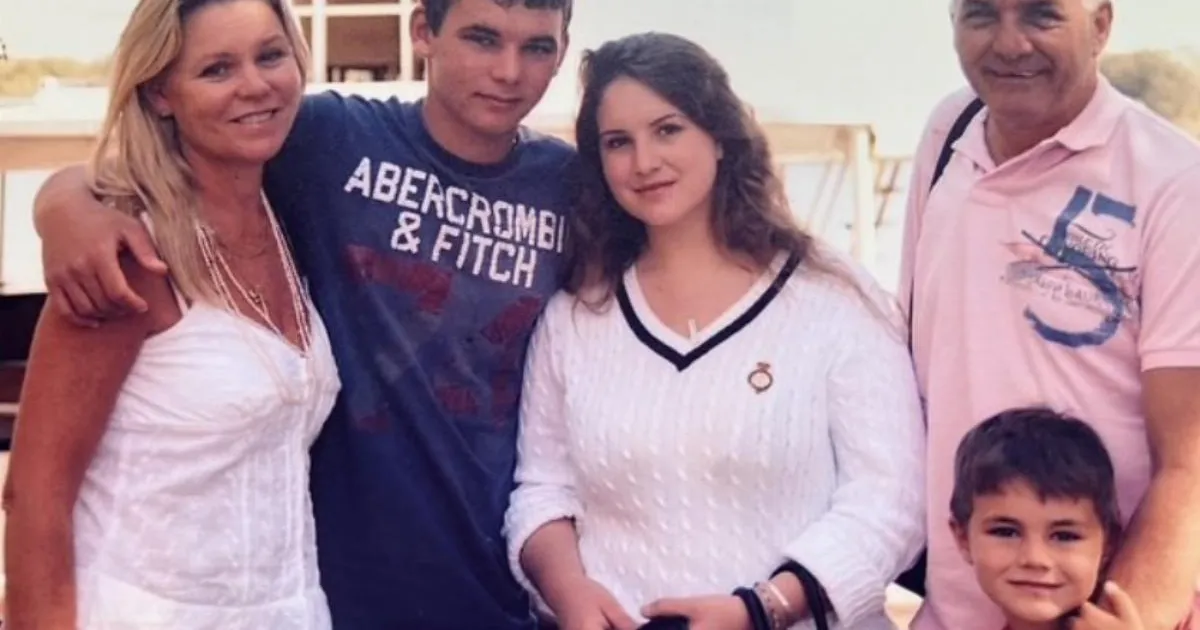
Time moves differently when you’re waiting for someone you love to come home. For Heather Cornelius, the past eighteen years have been measured not in days or months, but in the milestones her husband has missed. The children who grew up without their father present at birthdays, graduations, and weddings. The grandson who was born just last month, a tiny life that will never know the warmth of his grandfather’s embrace in those precious early years. When Ryan Cornelius was arrested in Dubai in 2008, his eldest son was just sixteen years old, still finding his way through adolescence. Now that son is a father himself, holding his own newborn child and wondering whether his own father will ever hold that baby. The youngest son, who was only six when armed authorities took his father away, is now a twenty-four-year-old man trying to build his own life while carrying the weight of his father’s absence. His daughter, once a teenager of nineteen, is now thirty-seven, having lived more than half her life with her father behind bars.
The family once knew Ryan as a vibrant, joyful presence. Heather remembers him as a fun father during the limited time he had with his children before his world collapsed. But those memories have grown distant and painful over nearly two decades of separation. Ryan is now seventy-two years old, his health failing in conditions that Heather describes as dreadful. She speaks with urgency that borders on desperation when she says her husband’s life is deteriorating, that he will die soon if she cannot secure his release. The words carry the weight of someone who has watched helplessly as time and circumstance have stolen years from her family. This is not a story about legal technicalities or international diplomacy, at least not for Heather. It is a story about love, about waiting, about watching someone you promised to grow old with growing old behind bars instead of beside you. It is about the cruel mathematics of a prison sentence that has already consumed more than two decades of a man’s life, with no clear end in sight.
The circumstances surrounding Ryan’s initial arrest sound almost mundane, a routine layover that became a nightmare without end. He was traveling home from negotiations in Karachi, where he had been discussing an oil refinery project, when authorities in Dubai detained him at the airport. The charges would eventually center on allegations that he defrauded the Dubai Islamic Bank by failing to keep up payments on a loan. But Ryan and his family have always maintained his innocence, with his brother-in-law Chris Pagett insisting that Ryan and his business partners were actually ten million dollars ahead of their repayment schedule at the time of the arrest. The conviction and subsequent imprisonment have been marked by irregularities that have drawn attention from international human rights bodies. In 2018, just two months before Ryan was due to complete his ten-year sentence, he was summoned to a judge’s office and informed that his sentence would be extended by another twenty years. According to information received by the UN Human Rights Council’s Working Group on Arbitrary Detention, the extension was requested by the bank itself, raising serious questions about the impartiality of the judicial process that has kept Ryan imprisoned for so long.
If Ryan does not secure early release, he will be eighty-four years old when he finally walks free, assuming he survives that long. His grandson, who he has never met, would be starting secondary school. The math of this situation is almost too painful for his family to contemplate, yet they live with these calculations every single day. At seventy-two, Ryan is not a young man, and the conditions of his imprisonment have taken a severe toll on his health. His family reports inadequate medical care and poor living conditions, factors that have led UN experts to warn of the risk of irreparable harm. This is not a case that can simply continue indefinitely, because Ryan simply does not have indefinite time left. His family watches the clock with the desperate awareness that each passing day brings them closer to a tragic outcome they are fighting desperately to prevent.
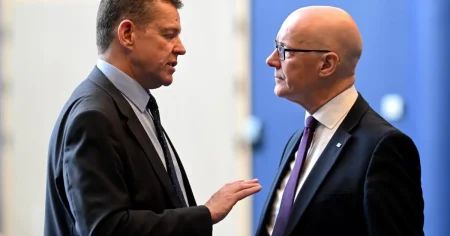
The family’s frustration extends beyond the UAE authorities to their own government in the United Kingdom. On Monday, Heather and Chris delivered a letter to Number 10 Downing Street, addressed not to the Prime Minister but to the Mayor of Manchester, Andy Burnham. It is a curious detail that reveals how desperate the family has become in seeking any ally who might help. Heather was inspired by a speech Burnham gave in July about the Hillsborough Law, in which he spoke with genuine passion about victims of injustice. She believes that someone who understands that kind of pain might also understand what it has felt like to be in her position these past eighteen years, watching helplessly as her husband’s case is ignored or mishandled by those who have the power to help. The letter represents yet another attempt to find someone, anyone, who will take up their cause and fight with the urgency that the situation demands.
Chris Pagett has been particularly vocal in his criticism of how successive UK governments have handled Ryan’s case. He describes what has been done to Ryan by powerful people in Dubai as utterly cynical, but he reserves his harshest words for the British government’s approach. For the first fourteen years of Ryan’s imprisonment, Chris says the government’s response was simply to ignore the case entirely, declining to even examine the facts. After the UN investigation brought international attention to Ryan’s situation, the approach supposedly changed, but Chris describes the new posture as little better. Every eight months or so, he says, the government raises Ryan’s case, and then they do nothing. When Ed Miliband was appointed as foreign secretary in the summer, Chris wrote to him seeking assistance, but he has not yet received a reply. The Foreign, Commonwealth and Development Office maintains that they continue to raise Ryan’s case with UAE authorities and provide consular support, but for a family watching their loved one deteriorate, these assurances ring hollow against the backdrop of eighteen years of inaction.
The UN Human Rights Council’s Working Group on Arbitrary Detention has called on the Emirati government to release Ryan without delay, warning that given his age, the length of his detention, his deteriorating health, and reports of inadequate medical care, urgent action must be taken to avoid irreparable harm. Yet despite this international pressure, Ryan remains imprisoned. It is understood that Alistair Burt, the government envoy for complex consular cases, has offered to meet with Heather to discuss the case, offering a small glimmer of hope in an otherwise bleak landscape. For Heather, each day is a battle against time and against a system that seems determined to keep her husband locked away until it is too late. She watches her husband age through barred windows during brief visits, holding onto the memory of the fun-loving man she married while confronting the reality of the man he has become. Eighteen years is an eternity when measured in missed anniversaries, birthdays, and holidays. It is the difference between children and grandchildren, between middle age and old age, between hope and something much darker. The family continues to fight, continues to raise their voices, continues to reach out to anyone who might listen. But with each passing day, the weight of those eighteen years grows heavier, and the fear that Ryan will never come home grows stronger.