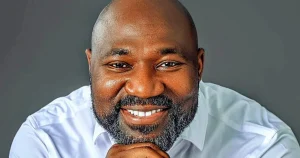


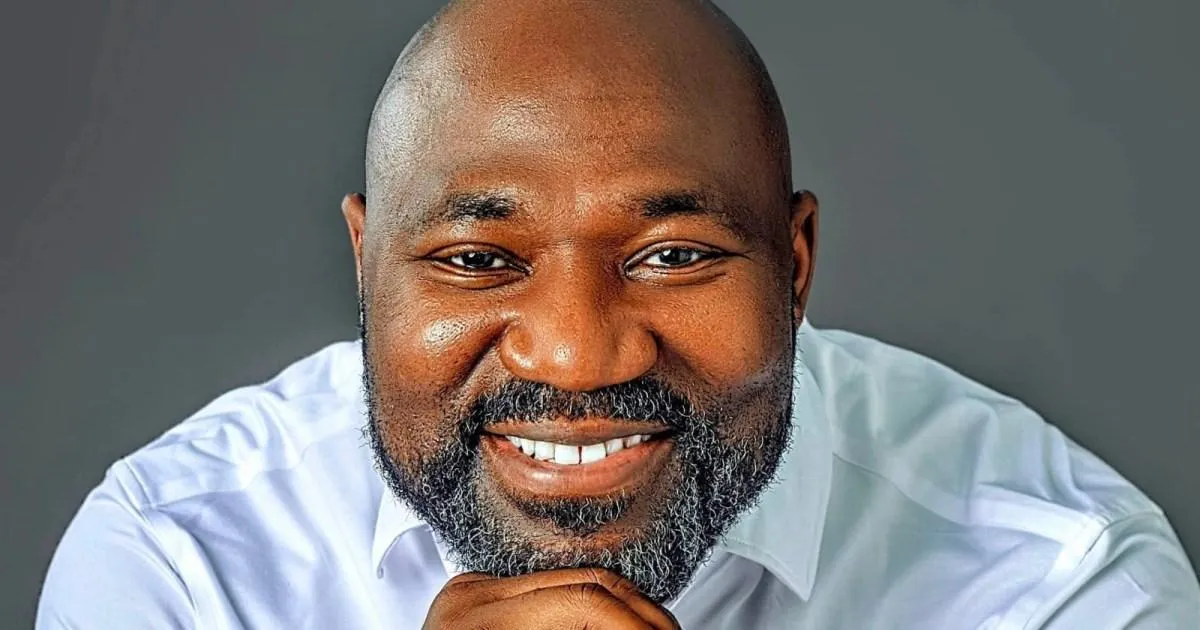
Festus Akinbusoye is not your average Conservative politician, and not only because he has a prized collection of Air Jordan trainers and a past life as a professional basketball player. Before he was a Westminster councillor, before he became Britain’s first Black police and crime commissioner, before he even considered running for Mayor of London, he was a teenager driving home from basketball practice in a Vauxhall Cavalier with a bass box in the back, pulled over by officers who told him they wanted to check he was not one of London’s most wanted. It was the first of six times he would be stopped and searched as a young man growing up in the capital. Most people who carry a memory like that might spend a lifetime distrusting the police. Instead, Akinbusoye went and joined them. Now, at 48, he is hoping to become the Conservative candidate for London Mayor in 2028, with a story that cuts against the grain of modern politics in almost every direction. He is a single parent of three, a former professional athlete, a man who has been on both sides of the thin blue line, and someone who says he understands the capital “warts and all.” That, he insists, makes him the candidate best placed to end nearly a decade of Labour rule at City Hall and finally give the Conservatives a chance to win back a city they have not controlled since Boris Johnson left office in 2016.
His journey from being stopped by police to leading them is remarkable enough on its own. Born and raised in London, Akinbusoye went to school and university in the capital before embarking on a career that took him far from the traditional path of a Tory politician. He enjoyed a spell as a professional basketball player in the Budweiser League, something that still informs his discipline and team-minded approach to public life, and he built up a personal collection of Air Jordan trainers along the way. But it was his decision to enter policing that defined him. In 2021, he was elected Police and Crime Commissioner for Bedfordshire, becoming the first Black person in British history to hold such a role. He served from 2021 until 2024, representing a force that often found itself in the national headlines for the wrong reasons. During his tenure, he saw firsthand how a stretched police service struggles to meet the demands of a growing population, how officers burn out under the weight of their caseloads, and how public confidence starts to fracture when police simply cannot turn up to every call. That experience now shapes his central pitch for London: more officers on the streets, a serious reorganisation of the Metropolitan Police, and a determination to make the capital safer without pretending that every community, or every borough, faces the same problems.
His policing plan is bold and deeply personal. Akinbusoye wants to increase the Met’s headcount to 40,000 officers over two terms in office, an eight-year ambition that would require a major recruitment drive and, just as importantly, a serious effort to keep the officers London already has. As he puts it, “We cannot police a growing city with a shrinking police force.” He points to the pressure on officers, the endless caseloads, the transfers out of London to forces with less intense demands, and the resulting loss of public confidence when the police are too stretched to respond to the incidents that matter most to ordinary people. He also wants to boost the number of special constables and conduct an audit of the police budget and the Mayor’s office, determined to make sure money is being spent where it is needed rather than being swallowed by bureaucracy. Perhaps most significantly, he wants to bring back dedicated borough commanders for all 32 London boroughs, reversing a system that merges areas and, in his view, leaves communities without a clear local leader to hold accountable. It is a vision of policing that feels both modern and oddly traditional, built on the idea that safety has to be local, visible, and personal.
When asked about his own experiences of being stopped and searched, Akinbusoye does not speak with bitterness. He speaks with the understanding of someone who has seen police work from the inside. “There should be better stop and search,” he says. The first time he was stopped, he was 18 and coming back from basketball practice. The officers found nothing. When he asked why he had been pulled over, the answer was simply that they wanted to check he was not one of London’s most wanted. Rather than turning him against the Met, those six encounters made him want to improve it. He calls himself “the biggest champion and challenger to the police,” a phrase that captures his unusual position as a Conservative who talks tough on crime but refuses to demonise the officers on the front line. He knows what it feels like to be unfairly suspicious in the eyes of the law, and he also knows what it feels like to be the person responsible for keeping the public safe. That dual perspective is at the heart of his mayoral bid. He wants more police, but he wants them to be better too, better trained, better supported, and better connected to the communities they serve.
Outside of policing, Akinbusoye has his sights set on some of the most contentious issues in London politics. He would order a review of the ULEZ charge, particularly in outer London boroughs where public transport options are far less plentiful than in the centre. In his view, ULEZ is “fair enough” in central London, where people have real alternatives to driving, but in outer boroughs it becomes a penalty, not a policy. “People should not be penalised in this way,” he argues, while acknowledging that clean air and the environment are vitally important. He also wants to crack down on truancy, putting more resources into improving school attendance, and he wants to look at the costs being heaped onto the hospitality industry, a sector that has struggled enormously in recent years. It is a policy platform that tries to speak to the everyday frustrations of Londoners, the cost of living, the difficulty of getting around, the sense that crime is rising while the police are invisible, and the feeling that politicians in City Hall have lost touch with ordinary lives. What makes it interesting is not just the specifics, but the way Akinbusoye frames them. He does not sound like a man reciting party lines. He sounds like someone who has lived in the city, raised children in it, and wants to fix the things that make it harder than it should be.
The political road ahead is not easy. Akinbusoye faces James Cleverly, a former cabinet minister and long-serving London Assembly member, for the Tory nomination. Cleverly is widely seen as the frontrunner, but Akinbusoye believes his life story and his direct experience of policing give him an edge that no amount of political experience can match. He also has to convince Conservative leader Kemi Badenoch that his vision is the one that gives the party its best chance of winning City Hall for the first time since Boris Johnson’s mayoralty ended in 2016. The final decision will be made by Conservative members in London, who will vote on their candidate. Sadiq Khan, meanwhile, has won three terms and has not yet confirmed whether he will seek a fourth. The next mayoral election is scheduled for May 4, 2028, which gives Akinbusoye time to build his case, but also time for the political landscape to shift. As he left a recent meeting, the ebullient candidate punched the air and declared, “Festus for mayor!” It was a moment of pure, unfiltered optimism, the kind you might expect from a man who has spent his life defying expectations. Whether that optimism translates into votes remains to be seen, but there is no doubt that he brings something rare to the race: a personal history that mirrors the experiences of millions of Londoners, and a belief that the city’s best days are still ahead of it. In an era of cynical politics and rehearsed soundbites, that alone feels like a genuinely human story worth paying attention to.