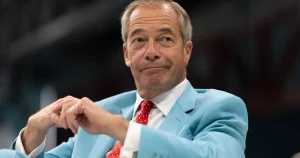

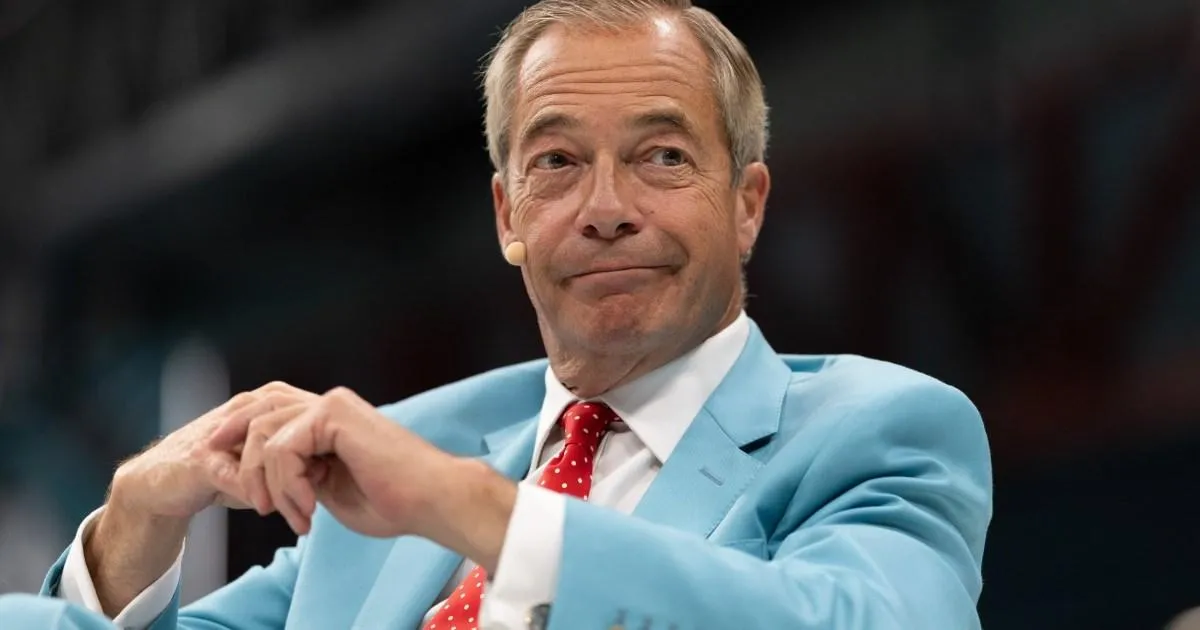
There are fortnights that slip by without leaving a trace, and then there are fortnights that feel like an entire lifetime compressed into fourteen days—the kind that ages you, breaks you, lifts you up, and drops you again before you have time to catch your breath. For Nigel Farage, the period since the beginning of September has been exactly this kind of whirlwind. It has been, to borrow the comparison in the original article, a journey worthy of Odysseus—minus the Cyclops, perhaps, but with no shortage of monsters, storms and unpredictable gods. There have been setbacks that would have finished a lesser political career, and victories big enough to make even the most cynical observer wonder whether some invisible hand is toying with the British electorate. The symmetry is almost too neat: a party conference designed to project statesmanship descended into chaos; a massive cash injection lifted spirits only to raise awkward legal and ethical questions; a scandal in Wales reopened wounds that the party thought it had stitched shut; and yet the polls, stubbornly refusing to play by the rules of conventional storytelling, continued to place Reform UK practically side by side with Labour. It is the kind of rollercaster that would drive a normal person to a quiet room and a very strong drink. But it also reveals something essential about the age we are living in: the political narrative changes every few hours, but the underlying forces that feed populist movements—anger, distrust, a feeling that the system is rigged—remain as deep and as dangerous as ever.
The first act of this drama took place in Birmingham, where Reform UK gathered for what was meant to be its coming-of-age moment. The conference, which opened on September 3, was billed as the occasion when the party would finally set out its plans for its first 100 days in power. It was supposed to be a showcase of discipline, a carefully choreographed attempt to convince the British public that Reform was no longer a protest vehicle but a credible alternative government-in-waiting. Instead, the event was blown apart within hours by a Channel 4 sting. Undercover journalists, posing as dodgy donors hoping to buy influence, had infiltrated the party’s inner circle, and the footage was explosive. Two senior officials lost their jobs in quick succession. Farage and his allies were left in the impossible position of having to deny wrongdoing while also appearing in damning clips, and the next two days were spent firefighting, scrambling, and trying to control a story that had already escaped. By the time the delegates packed their bags and boarded the train home from the National Exhibition Centre, Reform looked like a party in freefall. The carefully scripted message about competent governance had been replaced by images of the chaos that has so often defined the party’s short and turbulent existence. It was, by any measure, a disastrous week—the kind of political car crash that opposition parties are supposed to exploit and governing parties are supposed to fear.
But then, just when the obituaries were being written, something extraordinary happened. Less than a week after the conference, Reform announced two donations of £36 million each, from Ben Delo and Christopher Harborne, a pair of crypto billionaires with a history of backing the party. In a single stroke, the narrative shifted from scandal to strength. Suddenly the headlines were no longer about undercover reporters or disgraced officials; they were about war chests and political influence. Farage looked like a man who had been vindicated, a leader with the resources to challenge the old parties on every front. But the good news, predictably, came with a catch. The arrival of so much money triggered days of uncomfortable questions about where it had come from, why it had been given, and what the donors expected in return. Then came hints from the government that at least some of the money might need to be handed back when new rules targeting overseas donors took effect. It was a perfect illustration of the double-edged nature of modern political funding: enormous sums of cash can buy attention, but they also invite scrutiny, and scrutiny has a way of turning into scandal. For every story about Reform’s financial firepower, there was another about the ethical minefield lurking beneath the surface. Farage had spent his political career attacking the establishment, but now he looked increasingly like a man who had found his place at the centre of the very system he claimed to despise.
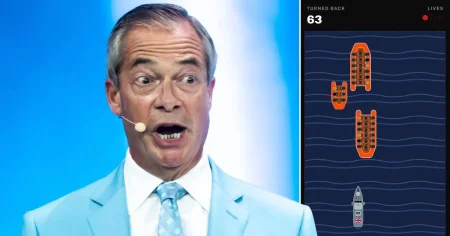
Amid the swirling controversy over the donations, the hits just kept coming. The news broke yesterday afternoon that Dan Thomas, the leader of Reform Wales, had stepped down after being arrested on suspicion of assault and coercive or controlling behaviour. Thomas was subsequently bailed pending further enquiries, but the political damage was immediate. For anyone with even a passing memory of the party’s recent history, the echo was unmistakable: Nathan Gill, the previous Welsh leader, is currently in prison for his part in a pro-Russia bribery scandal. This was not just a scandal—it was a pattern, and a deeply uncomfortable one at that. As if to complete the picture of a party in turmoil, it was also announced that Sarah Cooper-Lesadd, a member of the Welsh Senedd, had defected from Reform to Plaid Cymru, taking a wrecking ball to the party’s claims of electoral momentum. Three Reform councillors in Durham then quit, citing their own concerns. And, as if the political universe had suddenly developed a sense of humour, the party also released a phone game that was widely mocked for its terrible design. This is the texture of a political movement that lurches from crisis to crisis, a chaotic operation where every victory seems to contain the seeds of the next defeat. It is also exhausting, not just for the party’s opponents, but for the people who support it and pin their hopes on its success.
Yet here is the strangest part of the whole fortnight: none of this chaos has moved the needle on the party’s polls. Despite the endless run of bad headlines, the public seems largely unmoved. Most of the main pollsters still place Reform within touching distance of Labour. According to YouGov, the two parties have been neck and neck on 23 per cent for three weeks straight, a remarkable stability that defies the turbulence of the news cycle. Luke Tryl, the director of More in Common, told Metro that we should “expect Reform’s floor to remain high” because the “fundamental drivers” of its vote have not gone away. That sense that the system is rigged, that ordinary people have been left behind, that the major parties are all the same—these attitudes remain as potent as ever. But Tryl also offered a sobering warning: parties do not get into government on the strength of their base alone. They have to persuade people who are naturally risk-averse, who might be sympathetic to Reform’s message but nervous about its competence. The conference’s “100 days” theme was designed to do exactly that—to project an image of calm, sober, careful planning, a party that could be trusted with the levers of power. The events of the past two weeks have made a cruel mockery of that ambition. Every scandal, every resignation, every poorly timed disaster has chipped away at the idea that this is a party ready to govern, and not merely a protest movement fuelled by anger and opportunism.
So where does this leave Nigel Farage? The honest answer is that it is still too soon to tell. Politics, like life, is a game of unintended consequences, and the same forces that seem to threaten his position may ultimately prove to be his best form of protection. His supporters see him as a rugged outsider, willing to take on the establishment and weather the inevitable attacks. His critics see a man around whom scandal has become a default setting, a leader whose entire operation runs on a combination of hype and grievance. Both views contain more than a grain of truth. What the last fortnight has shown is that Farage remains the most unpredictable and, in many ways, the most powerful figure in British politics—a man who can stumble into a crisis and still walk away, at least for now, with his base intact. But the funniest thing about survival is that it is not the same as success. The real test for Reform is not whether it can survive another scandal, but whether it can mature into a party capable of turning protest into power. That requires more than money, more than charisma, and more than an endless supply of enemies; it requires trust, and trust is a fragile thing, easily shattered and painfully slow to rebuild. The last fourteen days have demonstrated, beyond any doubt, that Farage possesses an almost supernatural ability to turn disaster into attention. What they have not shown is that he knows what to do with it. And so the path ahead remains as unpredictable as ever, a strange and winding road through the wreckage of the news cycle, guided less by strategy than by instinct, and always, always one mistake away from the next chapter of the same old story.