


On a seemingly ordinary December morning, the bustling environment of Heathrow Airport’s Terminal 3 was shattered by a terrifying and brazen act of violence that left a trail of chaos, fear, and injury in its wake. What began as the final leg of a long-haul journey for two weary female passengers arriving from Johannesburg quickly descended into a nightmare of chemical assault and theft, orchestrated by a masked gang with apparent impunity. The attack, which occurred at around 8am on December 7th last year, was not a simple snatch-and-grab but a calculated, “serious and sustained” display of aggression that would have lasting consequences for dozens of innocent people, ultimately culminating in significant prison sentences for the four perpetrators. The incident forced a full lockdown of the terminal for hours, disrupted travel plans for countless others, and served as a stark reminder of the unexpected dangers that can lurk even in the most controlled and secure environments of modern travel.
The victims, two women who had just disembarked from a British Airways flight from Johannesburg, South Africa, were immediately targeted as they made their way through the airport car park. They were singled out by a group of three men, who, clad in dark clothing and with their faces concealed, approached them with hostile intent. The gang’s weapon of choice was CS gas, a powerful irritant designed to incapacitate, which they sprayed directly into the women’s faces in a shocking bid to overpower them. Their objective was clear: to steal the women’s suitcases. The sheer aggression of the assault was meant to disable any resistance, but the attack was thwarted in its initial phase when other passengers, witnessing the horrific scene, bravely intervened by blocking the lift doors, preventing the gang from following their intended victims into the elevator. This act of collective courage, however, inadvertently led to a wider catastrophe, as the toxic cloud of CS gas, trapped within the confines of the lift, was released in full force when the doors opened on the ground floor, creating a noxious and terrifying environment for everyone in the vicinity.
The fallout from the gas release was immediate and severe, transforming the airport’s arrival hall into a scene of medical distress. The potent chemical agent affected dozens of passengers and airport staff, with the impact felt most acutely by those in the nearby Caffè Nero. Among the victims was a barista who described the sudden onset of illness as terrifying; she recounted how she “felt fine one minute and then almost instantly unwell,” coughing and vomiting blood as the gas overwhelmed her respiratory system. The human cost of the gang’s actions was further highlighted by the testimony of a customer service agent who described the incident as “terrifying,” detailing how she “felt dizzy and like I was going to pass out.” Her concern was amplified by the plight of a woman in a wheelchair she was assisting, who “was struggling to breathe and using an inhaler” in a desperate attempt to counteract the gas’s effects. The panic spread far beyond the immediate blast radius, with a man who was ordering a taxi in the car park recalling that “20 to 30 people were all coughing” and that he himself was “struggling to breathe,” painting a vivid picture of widespread fear and respiratory distress that gripped the terminal’s ground floor.
Amidst this pandemonium, the original targets of the attack—the two women from Johannesburg—were not given respite. The four-man gang, undeterred by the chaos they had unleashed, pursued them to the airport’s taxi forecourt. There, they confronted the women again, threatening them with violence and finally succeeding in their goal by seizing their suitcases. The luggage, which contained the personal belongings and mementos of the victims’ journey, has never been recovered, adding a permanent sense of violation and loss to the traumatic ordeal. The attack was so brazen and well-executed that Judge Inyundo noted in court that the group “had a particular and determined interest” in the women’s suitcases, suggesting they may have been tipped off about the contents or were targeting them for a specific reason. The judge’s statement, “Your group followed and confronted the pair (of women) who tried to get a taxi… Your group threatened violence to them and took the suitcases from them,” underscored the predatory nature of the crime, which combined extreme violence with calculated theft.
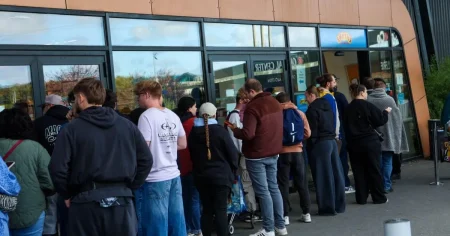
The wider impact of the attack extended far beyond the direct victims, crippling one of the world’s busiest airports and causing significant disruption for thousands of travelers. The lockdown of Terminal 3, a necessary security measure in response to the chemical incident, caused hours of delays to shuttle buses and trains, leaving passengers bound for flights and those arriving to meet loved ones stranded and confused. The ripple effect of this single, criminal act was immense, turning a hub of global connectivity into a scene of confusion and anxiety. The emotional and psychological toll on those present—both the directly affected and the many witnesses—was profound, with the fear and helplessness of the moment becoming an indelible memory for all who experienced it. This incident demonstrated how a single, reckless act of violence could have a disproportionate impact, disrupting the lives of hundreds and undermining the sense of safety that is fundamental to public spaces.
In the aftermath of the investigation, justice was swift and decisive. Tyrone Richards, 31, Anton Clarke-Butcher, 25, Omoneke Whyte, 31, and Denzel Eduardo, 29, were all identified, arrested, and subsequently convicted for their roles in the “serious and sustained” violence. At their sentencing, the severity of their actions was reflected in the custodial sentences handed down. Tyrone Richards, who appeared by video link from HMP Wayland in Norfolk, was jailed for 27 months. Omoneke Whyte and Denzel Eduardo, who were at HMP Wormwood Scrubs, were each jailed for 23 months, while Anton Clarke-Butcher, from the same prison, was sentenced to 21 months. While the sentences bring a measure of closure and accountability, they cannot undo the terror inflicted on that December morning. The gang’s callous disregard for human life and safety, their willingness to use a chemical weapon in a crowded public space for the sake of stolen luggage, marks them as a serious threat. This case serves as a chilling cautionary tale, a stark reminder of the audacity of criminal gangs and the profound, far-reaching consequences of their violent actions, which echo long after the last siren has faded.