


It was the kind of scene that no one aboard a transatlantic flight ever expects to experience: the sudden, violent crack of an explosion in the middle of the cabin, followed by the unmistakable smell of smoke, the flicker of flames, and the desperate scramble of flight attendants responding to an emergency at 35,000 feet. The date was an ordinary day in the skies between Amsterdam and Curaçao, and the aircraft was operated by KLM, the Dutch flag carrier. But the man at the center of the drama was not a random passenger, nor a first-time flyer. He was Camiel Eurlings, a former CEO of KLM itself, a polished and prominent figure in Dutch business and politics, who had once been the ultimate authority over the very rules and protocols designed to prevent such a terrifying incident. According to reports, Eurlings, now 53 years old, had fallen asleep in his lie-flat business class seat while charging a portable power bank. He had violated a clear company policy requiring such devices to remain in a passenger’s sight and never be plugged in during flight. Around five and a half hours into the journey, that device is said to have exploded, igniting part of the cabin and forcing the plane to turn back across the Atlantic to Amsterdam’s Schiphol Airport.
The irony of the situation is almost impossible to overstate. Here was a man who once occupied the corner office at KLM, who had been responsible for the airline’s operations, safety standards, and corporate culture, and who had himself likely approved or at least overseen the very regulations that prohibit in-flight charging of lithium-ion batteries. As a former transport minister in the Netherlands, he had shaped national aviation policy. As a member of the Dutch House of Representatives and a Member of the European Parliament, he had engaged with laws governing transportation and public safety. He was not an uninformed traveler who simply did not know any better. He was the embodiment of the aviation establishment, a person who should have known, and almost certainly did know, exactly why power banks must not be charged at altitude. Yet, in a moment of ordinary human distraction—perhaps exhaustion after a long day, perhaps the comfort of a flat bed after takeoff—he did exactly what so many passengers have been told not to do. He plugged in his device, lay down, and drifted off to sleep, leaving the charging battery to its own dangerous chemistry.
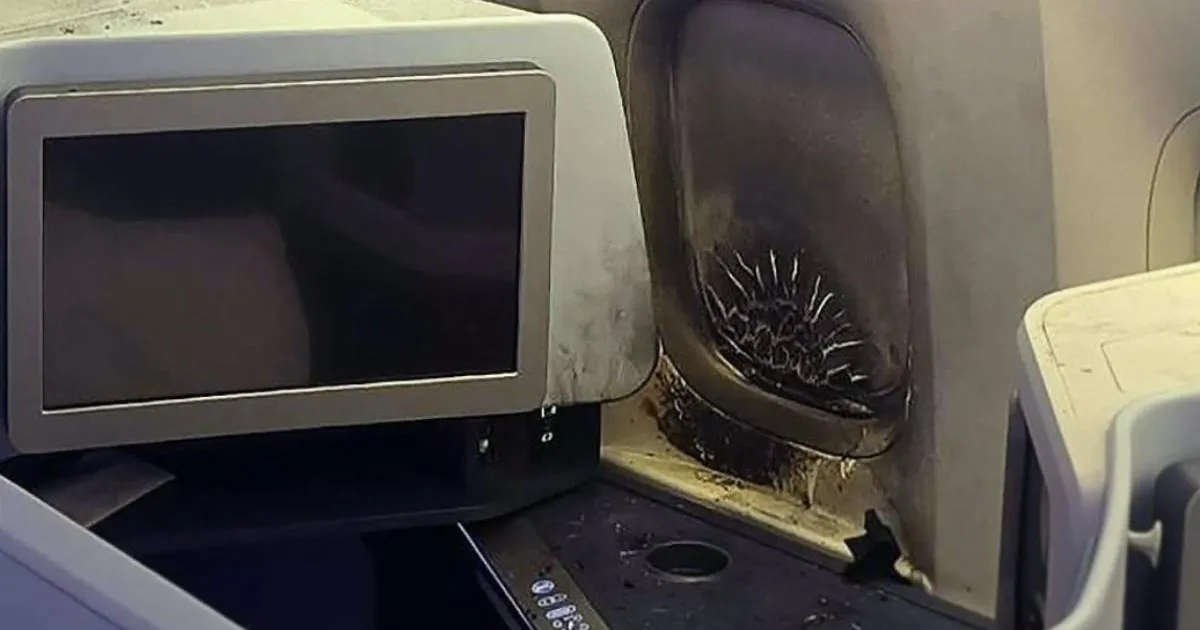
What happened next was a nightmare scenario that safety experts have repeatedly warned about. The lithium-ion battery inside the power bank likely entered a state known as thermal runaway, a chain reaction in which an internal short circuit causes the battery to rapidly overheat, releasing toxic gases, then flames, and potentially causing adjacent cells to ignite as well. Witnesses reported a sudden explosion, the type of event that can turn a routine cabin service into an emergency evacuation. Photos taken after the plane landed showed the window next to Eurlings’ seat charred black, the window shade coated with soot and residue from the flames. The power bank itself appeared completely burnt and melted, as did a phone charger that had been connected to it. The cabin crew acted quickly and professionally, extinguishing the fire before it could spread further, but not before one male passenger sustained burns. KLM declined to confirm whether that injured passenger was Eurlings himself, which only adds an uneasy sense of mystery to an already dramatic story. Regardless of the injured man’s identity, the incident was serious enough that the flight crew decided to abort the journey and return to Amsterdam, causing a significant delay and no small amount of fear and frustration for the other passengers aboard.
For anyone who has flown recently, the rules governing power banks have become part of the background noise of air travel. Passengers are repeatedly reminded that spare lithium-ion batteries must be carried in cabin baggage, never in checked luggage, and that they must be protected from damage and short circuits. Many airlines, including KLM, impose further restrictions: a maximum of two power banks per passenger, no power banks in overhead compartments, and absolutely no charging of such devices during the flight using the aircraft’s power outlets or USB ports. The reason is straightforward and rational. At cruise altitude, a fire in the cabin is not like a fire on the ground. Aircraft are enclosed spaces with limited escape routes, and a fire involving lithium-ion batteries can produce intense heat, dense toxic smoke, and flames that are extremely difficult to extinguish with conventional fire extinguishers. The combination of confined space, high altitude, and violent chemistry makes even a small battery fire a genuine emergency. Airlines have worked hard to educate passengers about these dangers, yet many travelers still casually plug in their devices and doze off, unaware that they are engaging in a dangerous gamble.
The human dimension of this story is worth pausing over, because it is so easy to judge and so difficult to resist the same temptation. Camiel Eurlings was a man at the top of his profession, someone accustomed to being in control, a former pilot of an airline in the political and executive sense. He had likely flown hundreds of times, perhaps thousands, and had probably passed through security checkpoints, listened to safety briefings, and read the same warnings that every other passenger reads. And still, he made the very mistake that his own company had warned against. This is a reminder that expertise and experience do not make people invincible. Fatigue, distraction, and the simple lure of convenience can override the best habits and the clearest knowledge. The same person who once delivered annual safety reports and emphasized compliance with regulations was now lying in a smoke-filled cabin because of an overlooked rule. One can imagine his shock, his embarrassment, and his profound regret as the aircraft turned around and headed back to Schiphol, the quiet luxury of business class replaced by the grim reality of an emergency descent and a return to an airport he once knew as a place where he was the one in charge.
In the end, this story is not really about technology or airline protocol. It is a cautionary tale about the gap between what we know and what we do. Every passenger who has ever boarded an aircraft has listened to the safety demonstration, ignored some part of it, and then silently promised that it would never happen to them. But fires do happen, batteries do fail, and even the most experienced travelers are not immune to the ordinary human error of falling asleep with a device plugged in. The former KLM CEO’s ordeal should serve as a powerful, humanizing reminder that aviation safety is a shared responsibility. It rests not only on the pilots, the engineers, the flight attendants, and the regulators, but also on each person who carries a battery in their pocket, a charger in their bag, and a power bank in their hand luggage. The rules are not designed to ruin anyone’s trip or to make the boarding process more inconvenient. They are written in the blood and ashes of past disasters, and they exist to ensure that everyone arrives safely, with no explosions in the cabin, no charred windows, and no moments of sudden terror in the quiet sky above the Atlantic. For Camiel Eurlings, a man who once led one of the world’s most respected airlines, the lesson must be as painful as it is simple: no one is above the rules, and sometimes the most important safety measure is simply staying awake.