

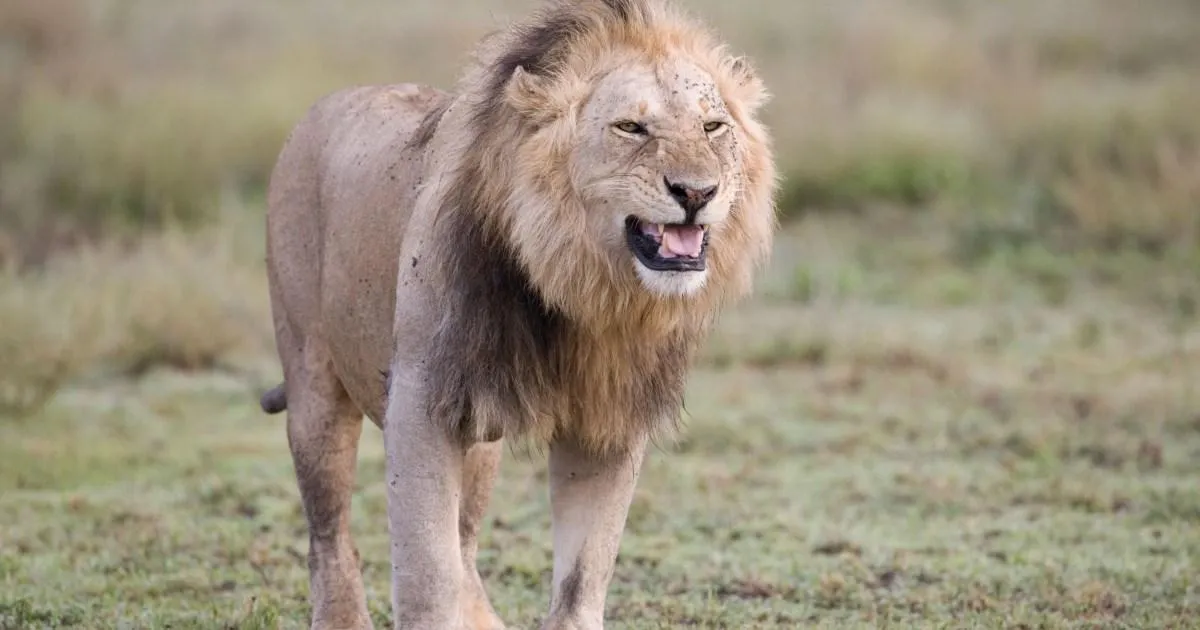
On the morning of September 18, in the rolling grasslands of Tanzania’s Ngorongoro Conservation Area, a scene of quiet devastation unfolded. Officials and rangers arriving in the remote Ndutu area were met by a sight no one could have prepared for: ten lions lying dead, their bodies sprawled across the golden savannah. The Ngorongoro Conservation Area Authority later released a statement saying that preliminary findings strongly suggested the animals had died after ingesting poison. An expert investigation is now underway to determine precisely what happened, how the poison was introduced, and who is responsible. But for the people who know this landscape, and for conservationists across the world, the loss is already profound. Lions are not solitary creatures. They are deeply social animals, living in prides held together by bonds of kinship, years of shared experience, and the delicate work of raising cubs. The death of ten lions at once is not simply a wildlife statistic; it is a shattered family, a broken thread in the intricate web of the ecosystem, and a devastating blow to a population that is already fighting for survival. The Ndutu area, with its scattered acacia woodlands and open plains, is no ordinary corner of the wild; it is a vital part of the Ngorongoro ecosystem, a place where predators and prey have coexisted for centuries. On this September day, it became the backdrop for a tragedy that speaks to the fragility of life in a changing world. The authority’s statement did not assign blame, and many questions remain. Was the poison laid deliberately for these lions? Was it left out in retaliation for lost livestock? Or did the animals stumble upon something meant for another species entirely? For now, the bodies of the lions are the only witnesses, and the silence of the plains offers no easy answers.
This tragedy strikes at the heart of one of the most extraordinary wildlife sanctuaries on Earth. The Ngorongoro Conservation Area is a UNESCO World Heritage Site, a landscape of unmatched beauty and ecological importance. Its vast volcanic crater, often described as a natural wonder, shelters an incredibly dense concentration of large animals. Around 25,000 large mammals roam the area, including elephants, buffalo, wildebeest, zebra, and the critically endangered black rhino. The area is also celebrated for its predators, and according to UNESCO, Ngorongoro has the densest known population of lions in the world. This makes the loss of ten lions all the more significant, not just locally but for global conservation efforts. The crater itself is a place where life unfolds in dramatic and intimate ways: lionesses stalk their prey across open plains, hyenas call in the twilight, and safari vehicles sit quietly as visitors witness the raw reality of nature. Yet Ngorongoro is not a pristine wilderness separated from human life. It was created as a multiple-use conservation area, one of the few places in Africa where people and wildlife were meant to share the same land. For generations, semi-nomadic pastoralist communities have lived there, moving their cattle, goats, and sheep through the grasslands and raising their families alongside wild animals. This delicate arrangement has never been easy, and over the decades, the balance has shifted. According to authorities, the human population in the conservation area has grown from around 8,000 in 1959 to more than 100,000 today. That extraordinary increase has placed enormous pressure on the land, on water resources, and on the relationship between herders and predators. The lion deaths are not an isolated event. They are woven into a larger story of land, livelihood, and survival, a story that has been building for years and is now reaching a critical point.
The tensions within Ngorongoro have long been simmering, and they have recently boiled over in tragic ways. The Tanzanian government has argued that the rising human population is putting increasing pressure on wildlife habitats, threatening the very ecological values that make the area a World Heritage Site. In 2022, the government launched an eviction programme designed to move communities out of the conservation area, a move that was met with anger, resistance, and fear. Some of the clashes between authorities and community members have turned deadly, deepening the mistrust between the two sides. For the pastoralist communities, this land is not just a park; it is their ancestral home, their identity, and the source of their way of life. They have lived alongside lions for centuries, developing traditions and practices that once allowed coexistence to work. But as droughts intensify, grazing land shrinks, and livestock losses to predators become harder to bear, the old relationships begin to break down. For a herder who has lost a cow or a goat to a lion, the decision to fight back with poison can feel like an act of desperation, even if it is illegal and ultimately self-destructive. It is within this atmosphere of tension that the ten lions were found dead. Nobody yet knows whether their deaths were the result of a deliberate act, a careless one, or a tragic accident. But the context matters. When an entire pride is wiped out, it is impossible not to ask whether this was an act of resentment, a message sent through the bodies of fallen animals, or simply the latest casualty of a conflict that has left both people and wildlife paying the highest price.
Beyond the immediate questions of whodunit, there is a larger and more painful truth: lions everywhere are in trouble. The International Union for Conservation of Nature classifies lions as vulnerable, a category that places them one step away from endangered. Their numbers have been declining across Africa for decades, driven by habitat loss, the disappearance of natural prey, and the growing intensity of human-wildlife conflict. As human populations expand, fences go up, farms spread across former hunting grounds, and wild spaces become smaller and more fragmented. Lions, which need vast territories in order to hunt and breed, are finding it harder and harder to survive. When lions prey on livestock, herders often see no choice but to retaliate. Poisoning is one of the most brutal and indiscriminate methods available. A poison placed in a carcass can kill a lion that feeds on it, but it can also kill hyenas, jackals, vultures, and any other scavenger that happens to share in the meal. It can even harm children and domestic animals. In the case of the Ngorongoro lions, poison may have been placed specifically to target predators, but the effects ripple far beyond the bodies that were found. For conservationists, this incident is a painful reminder that preserving wild animals is not just about protecting them from poachers; it is about addressing the underlying pressures that push ordinary people to see wildlife as a threat. A lion is not a trophy in these communities; it is a potential danger to the family herd, to a child walking to the water source, to the fragile economic security that sustains a household. Until those fears and losses are taken seriously, no amount of sanctuary status will keep lions safe.
The tragedy in Tanzania is not unfolding in isolation. Just across the border, in Kenya’s Amboseli ecosystem, a similarly disturbing pattern has emerged. Since June, at least twenty elephants have died after suspected pesticide poisoning. Authorities have not yet established whether those deaths were accidental or deliberate, but the scale of the loss is extraordinary. Kenya has recorded cases of elephant poisoning before, often linked to poaching for ivory or to conflicts between elephants and farming communities whose crops have been destroyed. Yet officials say the recent deaths mark the first incident in decades in which elephants have been killed on such a massive scale in this particular region. The Amboseli ecosystem is one of the most beloved wildlife areas in Africa, home to some of the continent’s most famous elephant families, studied and photographed for years. Elephants are deeply emotional and intelligent animals, with complex social bonds and elaborate mourning rituals. When a herd loses a matriarch, the impact is felt across generations. The thought of twenty elephants dying slowly, poisoned by pesticides, is almost unbearable for those who have dedicated their lives to protecting them. The similarities between the elephant deaths in Kenya and the lion deaths in Tanzania are impossible to ignore. In both cases, humans and wildlife are competing for scarce resources. In both cases, poison has become a weapon of last resort, a silent and devastating way to remove an unwanted animal. And in both cases, the individuals responsible may never be caught, because poison leaves little trace and the pressures behind it are so deeply embedded in the daily struggle for survival.
These cascading tragedies demand more than sorrow. They demand accountability, investigation, and a serious commitment to addressing the roots of human-wildlife conflict. The teams investigating the lion deaths in Ngorongoro deserve the resources and support they need to uncover the truth, not just to find the guilty party, but to understand the conditions that made such an act possible. For Tanzania, the challenge is enormous: to protect a World Heritage Site, to honor the rights of indigenous and pastoralist communities, and to ensure that conservation does not become a euphemism for displacement. For the people living alongside lions, life would be easier without the predators, but the loss of the lions would not only diminish the ecosystem; it would diminish the possibility of a future in which wildness and humanity can coexist. The Ngorongoro Conservation Area is one of the last great experiments in this kind of coexistence, and it is at a crossroads. If communities are given viable alternatives, fair compensation for livestock losses, and a genuine voice in decisions that affect their land, perhaps wildlife can still thrive. If not, the deaths of the ten lions may become a symbol of something darker, a preview of what the world loses when conservation is imposed rather than shared. The lions cannot be brought back. The empty spaces they once occupied will be felt for years, by the animals that remain, by the people who watched over them, and by the visitors who came to see them with wonder in their eyes. But their deaths could still carry meaning if they move us to act, to listen, and to find a better way. The grasslands of Ngorongoro have witnessed countless seasons of life and death, but this moment calls for more than endurance. It calls for change.