

The Day the Skies Fell Silent: Inside the Chaos of Another Air Travel Meltdown
The morning of Monday, September 21st, began like any other for thousands of travelers across the United Kingdom. Businesspeople clutched their coffee cups, families herded excited children toward departure gates, and holidaymakers dreamed of distant destinations. But within hours, that ordinary Monday would transform into a travel nightmare that left people stranded, frustrated, and questioning the reliability of the systems that keep our skies safe and orderly. The culprit was a familiar one: a technical glitch at the National Air Traffic Services, the organization responsible for managing the complex dance of aircraft in British airspace. This was the second such incident in less than two weeks, and for the thousands of passengers caught in the chaos, the timing couldn’t have been worse. What followed was a cascade of cancellations, delays, and emotional turmoil that would test the patience of even the most seasoned travelers.
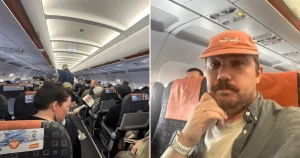
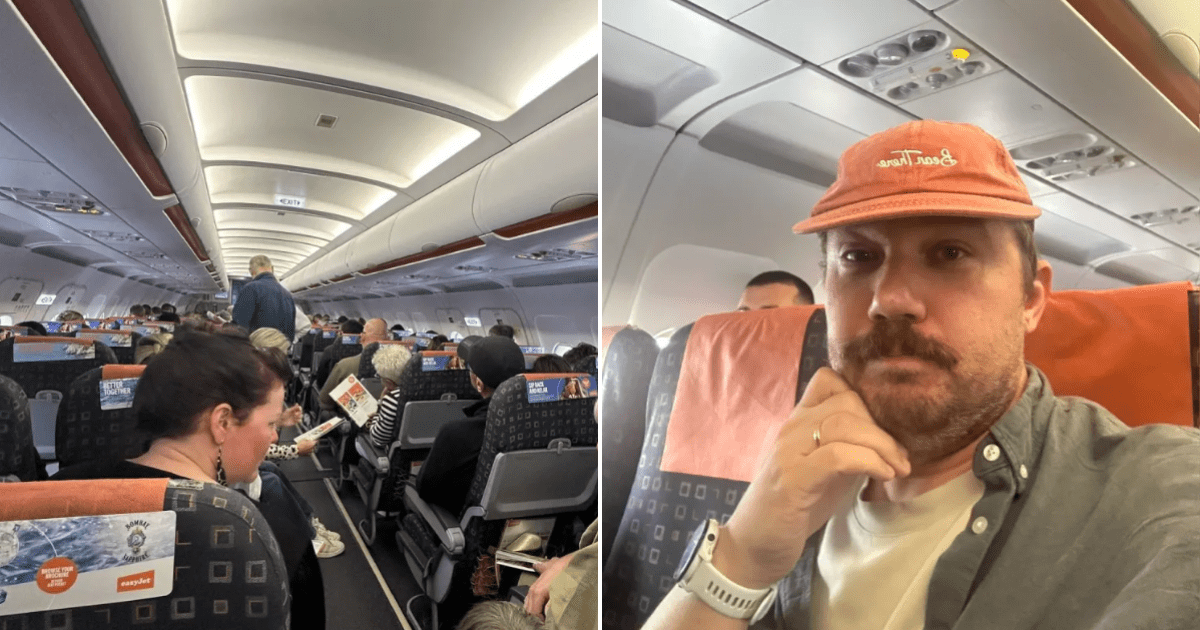
Imagine sitting in your seat on an airplane, the engines humming, the cabin crew preparing for takeoff, and then hearing the announcement that your flight won’t be going anywhere for at least three hours. That’s exactly what happened to Peter Allison, a 39-year-old director of a whisky company from Edinburgh. He had boarded his 8:15 AM flight with the expectation of a smooth journey to Bordeaux via Gatwick, where he was scheduled to attend a two-day work conference. Instead, he found himself trapped in a metal tube on the tarmac, listening to what he described as “sporadic and hard to follow” updates from the captain, filled with “plane jargon and what sounded like excuses.” The cabin crew, he said, were “pretty bad at communicating too,” leaving passengers hot, bothered, and increasingly anxious as children cried and adults exchanged worried glances. When the doors finally opened and passengers were given the option to disembark, there was a cruel catch: leaving the plane meant forfeiting any right to compensation or the ability to reboard if the flight eventually departed. Most chose to wait, trapped between frustration and the fear of losing their spot entirely.
The ripple effects of this technical failure extended far beyond Peter’s unfortunate experience. At Leeds-Bradford Airport, 22-year-old Finlay Mattheis found himself in his own personal purgatory. The young chef, who had booked a cheap three-night getaway to Bratislava, Slovakia, arrived at the airport expecting to depart at 7:55 AM for a football match he was eager to watch that evening. Instead, he learned his Ryanair flight had been delayed until 9:35 PM, effectively destroying his plans for the short break. What made the situation even more maddening was the discovery that he couldn’t simply go home to wait out the delay. The airport’s policy was clear: if he left, he couldn’t return with the same boarding pass, despite living only 50 minutes away. So there he sat, for over twelve hours, watching other flights depart while his remained stubbornly grounded. The irony wasn’t lost on him that his flight seemed to be one of the worst affected, with others being held back for only an hour or two. For travelers like Finlay, whose entire holiday was meant to be a brief escape from everyday life, the lost time was irretrievable, and the emotional toll was significant.
The human cost of these disruptions goes far beyond missed flights and frustrated passengers. Peter Allison, after finally making it to Gatwick following the prolonged delay at Edinburgh, faced another cruel twist of fate. His original connection had been missed, but he had managed to purchase new tickets for a British Airways flight to Bordeaux, spending £100 of his own money in the process. The flight was scheduled to depart just before 9 PM, but as the evening wore on, that too was cancelled, leaving him stranded at the airport with the prospect of searching for a last-minute hotel room in an unfamiliar city. His frustration boiled over when asked what he would say to the bosses at National Air Traffic Services. “We all have to learn from times we’ve messed up,” he said, his voice carrying the weight of a day spent in transit purgatory. “You messed up a few weeks ago, and it’s happened again. Someone needs to a. figure it out, and b. get their knuckles wrapped. It’s us, the travellers, who are having to deal with it. And it’s not very nice on anyone. People rely on you providing dependable services. So sort it out.”
The scale of the problem became clearer as the day progressed. Hundreds of flights were cancelled across airports in northern England, Scotland, and Northern Ireland, disrupting the plans of thousands of people who were trying to travel for both work and pleasure. The Department for Transport confirmed the technical issue, with Transport Secretary Heidi Alexander acknowledging the disruption in a statement: “There has been a further IT issue affecting NATS. Engineers have fixed the problem and systems are resuming. I know this will be deeply frustrating for passengers after the previous issue. There may be some delays as things reset. Please check with your airline for updates.” The experts at NATS, for their part, insisted this was a new problem, unrelated to the earlier incident this month. “Early this morning we experienced a network issue at our Prestwick centre in Scotland,” their statement read. “To maintain safety, air traffic regulations were applied to manage traffic demand while our engineers investigated. It is nothing to do with the problem we had earlier this month. The issue has now been fixed and we are running at full capacity.”
Yet the damage was already done, and for the thousands of affected passengers, the technical details offered little comfort. Adding insult to injury, the Civil Aviation Authority delivered the unwelcome news that disrupted passengers were unlikely to receive compensation for their ordeal. Under current regulations, technical issues at air traffic control are classified as “extraordinary circumstances” beyond the airlines’ control, which means carriers aren’t obligated to pay the standard compensation fees that apply to other types of delays. This explanation, while technically accurate, does little to soothe the frustrations of travelers who have lost money on missed connections, paid for emergency hotel rooms, or watched their carefully planned holidays dissolve into chaos. Airlines are technically required to provide food and drinks during delays, but as Peter’s experience demonstrated, even basic communication was lacking. Ryanair’s chief operating officer, Neal McMahon, was particularly vocal in his criticism, calling for NATS chief Martin Rolfe to resign over what he characterized as chronic failures in the system.
The chaos wasn’t confined to British skies either. Across the Atlantic, American travelers were experiencing their own version of transportation hell as an air traffic control issue caused ground delays at some of the country’s busiest airports. The culprit there was a “fibre cable accident” – construction crews had accidentally cut into a fibre line in New Jersey, according to US Transport Secretary Sean Duffy. The affected airports read like a who’s who of American aviation hubs: New York’s JFK and LaGuardia, New Jersey’s Newark, Boston’s Logan International, and Philadelphia International. At least 183 flights were reportedly axed, with nearly 200 more delayed. Flight-tracking website Flightradar24 reported that no commercial flights landed at Newark Airport for nearly eight hours, a testament to the severity of the disruption. The timing couldn’t have been more inconvenient, striking as world leaders prepared to gather in New York City for the United Nations General Assembly. For all the advanced technology that supposedly governs modern air travel, these back-to-back incidents served as a stark reminder that the systems we depend on remain vulnerable to failure, whether from technological glitches or simple human error.
As the sun set on this chaotic day, the skies slowly began to return to normal. Engineers had fixed the problems, flights were resuming, and passengers were finally making their way to destinations – albeit hours behind schedule and significantly poorer in spirit. But the emotional scars of this travel ordeal will linger far longer than the day itself. For Peter Allison, the whisky director who missed half his business conference, there was the frustration of lost professional opportunities and wasted money. For Finlay Mattheis, the young chef who sat for twelve hours at an airport for a trip that was supposed to be a brief escape, there was the crushing disappointment of lost leisure time that can never be reclaimed. And for the thousands of other unnamed travelers who found themselves caught in the web of systemic failure, there was the fundamental feeling of powerlessness that comes when forces beyond your control upend your carefully made plans. The airlines blamed NATS, NATS blamed technical issues, and passengers were left to pick up the pieces. As one frustrated traveler pointed out, people rely on dependable services, and when those services fail, it’s the ordinary people who suffer the consequences. The question that lingers in the air, as unwelcome as a delayed flight announcement, is simple: when will this happen again, and what lessons have truly been learned? For now, the only certainty is that air travel, with all its miracles of modern engineering and coordination, remains fragile in ways we rarely consider until the moment it fails us.