


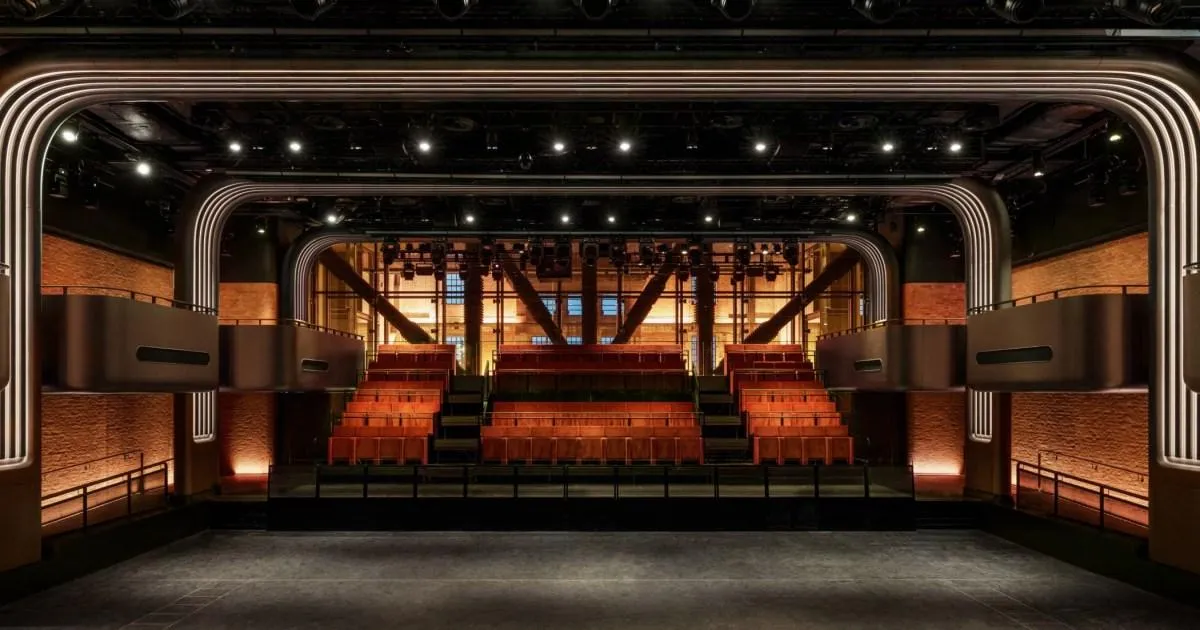
Nestled in the heart of one of London’s most iconic industrial landmarks, Apple has just unveiled something that has nothing to do with a new iPhone and everything to do with the sound of live music. Hidden behind the red brick walls of Battersea Power Station, beneath the company’s European headquarters, lies a brand-new music venue that feels more like a secret theatre than a tech giant’s corporate pet project. From the outside, the power station is a cathedral of industrial heritage, its towering chimneys and Art Deco silhouette a familiar part of the London skyline. But step inside the newly created Apple Music Hall, and the world shifts. The venue has its own separate entrance, a deliberate move that allows fans to slip inside without ever having to wade through the bustling shopping centre next door. It’s a clever design decision, one that creates the feeling of entering a private world. The moment the heavy doors close behind you, the modern retail chaos disappears, replaced by a warm, intimate glow. The lighting curves along the ceiling, plush red seats hug the walls, and the colour palette of faded brick and brass carries echoes of the building’s near-century of history. It feels less like a high-tech launch and more like stepping into an old Picturehouse cinema or a lovingly preserved 1930s theatre. That’s exactly the point. Apple has spent years perfecting this space, and every detail seems designed to make you forget you’re inside a power plant at all.
The venue itself is compact but mighty, with a maximum capacity of around 600 people for standing shows. That may sound small for a company used to filling stadiums, but that’s precisely the magic. Unlike the giant arenas where most artists play to a sea of indistinguishable faces, the Apple Music Hall offers a rare kind of closeness. The stage is a sweeping 38 feet wide and takes up roughly a quarter of the entire room. For the fans standing in front of it, the artist won’t feel like a distant speck on a distant screen. They’ll be right there, close enough to see the emotion in a singer’s eyes or the sweat on a guitarist’s brow. For those who prefer to sit, there are balconies and tiered seating at the back, but cleverly, those tiers are also part of a larger transformation. With a few subtle changes, the same space can turn into a cosy screening room or a fully seated theatre-style gig. It’s versatile, intimate, and surprisingly cosy. None of it feels overwhelming, and none of it feels cold or corporate. The original architecture of the power station is allowed to breathe, with fluted arches, exposed brickwork, and Art Deco flourishes that nod to the building’s 1930s origins. It’s the kind of place where you could imagine hearing everything from a stripped-back acoustic set to a full-throttle rock show, and the sound would be just as good either way, because hidden inside the design is the real jewel in Apple’s crown: a 48-speaker spatial audio system that wraps around the room like a warm embrace. It’s an immersive, almost three-dimensional way of hearing live music, one that places you right in the middle of the song rather than just in front of it. And for those who can’t be there in person, a discreet camera rig—hidden so well you’d never notice it—allows every gig to be recorded and streamed live on Apple Music, turning a small London show into a global moment in real time. It’s a clever, thoughtful setup, one that treats live music not just as an event but as an experience to be shared and preserved.
The timing of this announcement feels especially poignant given the state of live music in the UK right now. Last year alone, 45 live music spaces in London closed their doors for good. Across the country, smaller venues are struggling to stay afloat as the cost-of-living crisis tightens purse strings and people go out less. For every sold-out arena show, there’s a grassroots club fighting to keep its lights on, and for years, the conversation has been about how to save them. Apple’s answer, it seems, is to offer a different kind of space—not a venue that competes with the local pub’s backroom or the 200-capacity club down the road, but a one-off, destination-style hall where artists and fans can connect in ways that feel special. Oliver Schusser, Apple’s vice president of Apple Music and International Content, was quick to emphasise that the company isn’t trying to muscle in on the traditional live music scene. “Apple’s deep love for music dates all the way back to the very beginning,” he said, referencing the launch of the iPod, the long-running iTunes Music Festival, and the birth of Apple Music. But he made it clear that the Apple Music Hall is something new entirely—a commitment to artists and fans, a way of supporting live music “in ways only Apple can do.” It’s a noble sentiment, and one that carries some weight. Because unlike a typical commercial venture, this venue isn’t about selling as many tickets as possible. It’s not even clear that the general public will be able to buy tickets at all in the traditional sense. The space seems designed for one-off shows, intimate fan experiences, and events that feel more like moments than concerts. It’s a gift to the music industry, a statement that even in a digital age where streaming dominates everything, there is still profound value in the shared, physical experience of watching a performance unfold in front of you.
And if the main hall is the heart of the operation, the backstage area is its brain, a labyrinth of creative spaces that feels less like a dressing room and more like a boutique hotel crossed with a recording studio. Metro was given a sneak peek behind the curtain, and what’s hidden beneath Battersea Power Station is almost as impressive as the venue itself. The corridors wind through a series of rooms, each one kitted out with everything an artist could ever need. There are radio studios, purpose-built for live broadcasts and intimate interviews. There are podcasting rooms, fully equipped and ready for anything from album-deep dives to unfiltered conversations. There are two dedicated recording studios, where an artist could theoretically duck in before a show to lay down a quick vocal demo or work on a new idea. There’s even a songwriting room, quietly tucked away, in case inspiration strikes and needs to be caught before the artist even takes the stage. It’s the kind of space that most musicians could only dream of, and it speaks to a deeper understanding of the creative process. This isn’t just about putting on a show and sending the artist on their way; it’s about nurturing talent, giving artists the freedom to experiment, and creating an environment where great songs can happen almost by accident. The three dressing rooms are perhaps the most unexpectedly luxurious touch. They’re nicer than most hotels, with real showers, proper makeup stations, and a lounge area that overlooks one of the old turbine halls. You can imagine an artist sitting there, looking out at the industrial cathedral that once powered half of London, and feeling inspired by the sheer weight of history surrounding them. Zane Lowe, the host of Apple Music 1 and Apple’s global creative director, spoke about exactly that sense of wonder. “At Apple Music, we care deeply about music, the artists who make it, and their life stories,” he said. “We’re always looking for new opportunities to connect the artists and the fans because we are fans. What better way to celebrate this relationship than a new music venue where we get to experience amazing music in an amazing space and share it with the world. Great music and memories will be made at Apple Music Hall.” There is something delightfully human about that statement, a reminder that despite all the technology, the algorithms, and the billions of streams, music is still fundamentally about people.
The opening of the Apple Music Hall also carries a much broader significance for London and the UK as a whole. Battersea Power Station has been undergoing a massive regeneration for years, transforming a derelict industrial site into a gleaming new neighbourhood of luxury flats, offices, and shops. But some critics have wondered whether the area was losing its soul in the process, becoming just another sterile playground for the wealthy. Apple’s arrival suggests something different. By choosing to place its European headquarters here, and by investing real thought and money into this venue, the tech giant is making a statement: that this historic building can be a home for culture, not just a monument to it. Culture Secretary Lisa Nandy certainly sees it that way. “This is a huge vote of confidence in the UK as a global creative powerhouse,” she said. “When a company of Apple’s scale backs British music and talent, it’s a signal of just how strong our creative sectors really are.” Her words carry political weight, especially as the government looks to position the creative industries as a cornerstone of the post-Brexit economy. Music already contributes billions of pounds to the UK economy every year, and having one of the world’s most valuable companies choose London as the home for a project like this is no small thing. It’s a signal to other global players that the UK is still a place where big ideas can take root and flourish. But beyond the economics, there’s something almost poetic about the whole concept. A 1930s power station, built at the height of the industrial age, has become the beating heart of a digital empire. The same walls that once vibrated with the hum of turbines now vibrate with the sound of electric guitars and soaring vocals. It’s a beautiful metaphor for the way old and new can come together, not in conflict, but in harmony. The building’s massive chimneys no longer pump smoke into the sky, but they still stand guard over a space where dreams are made, memories are created, and songs find a home.
In the end, though, the success of the Apple Music Hall will not be measured by its architecture, its technology, or even its backstage perks. It will be measured by the experiences it creates. The first time a fan stands in that room, close enough to touch their idol, and hears a song they love fill the air with stunning clarity, they will remember it forever. The first time an artist walks out onto that stage, heart pounding, and feels the warmth of six hundred pairs of eyes looking back at them, they will feel the same rush of joy that performers have felt since the very first fireside performances. Apple may be one of the biggest companies on the planet, but in this moment, at least, it seems to understand that the magic of live music comes from vulnerability, connection, and a shared sense of wonder. It’s about being in the same room, breathing the same air, and losing yourself in the same melody. The company could have built another sleek, marble-clad flagship store. Instead, they built a place that feels like it was made for the artists and the fans, a place where the pressure of the outside world fades away. Whether you’re standing in the crowd, sitting in the balcony, or watching from behind a camera lens, the Apple Music Hall offers something increasingly rare in our fragmented, digital lives: a chance to feel truly present. The real test, of course, will come when the first notes ring out through the auditorium, when the first guest arrives at the backstage door, when the first fans walk through that separate entrance and into a world that feels both brand new and strangely familiar. But if the reaction of those lucky enough to get a sneak preview is anything to go by, Apple has not just built a music venue. They have created a sanctuary for sound, a stage for stories, and a testament to the enduring power of coming together to listen. In a city full of music halls, this one just might be special. And somewhere, in the hidden corridors beneath the power station, you can almost imagine the ghosts of the past smiling down, happy to know that the building is still alive, still humming, and still making beautiful noise.