
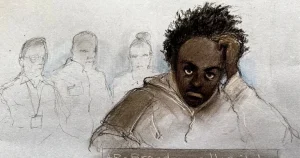


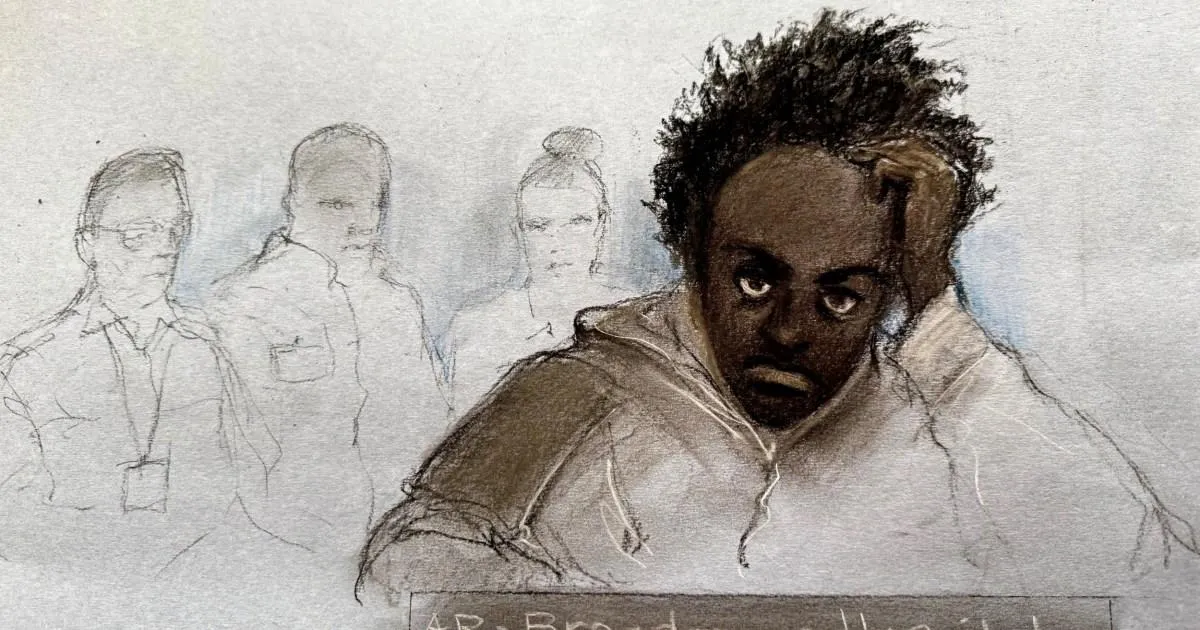
There are moments in a courtroom that feel heavier than the walls around them, and Axel Rudakubana’s latest appearance was one of those moments. The 20-year-old, already serving a life sentence for one of the most shocking crimes in recent British history, appeared via video link from prison before Westminster Magistrates’ Court. He rested his head on his hand, a small gesture that seemed less like defiance and more like exhaustion, though it is impossible to know what was truly going through his mind. This was not a hearing about the murders that horrified the nation in the summer of 2024, but about what he is accused of doing while locked inside the infamous Belmarsh prison last year. The charges are serious: attempting to cause grievous bodily harm, two counts of assaulting an emergency worker, and possession of an offensive weapon in prison. According to prosecutors, Rudakubana allegedly threw boiling water mixed with sugar at a prison officer through the hatch of his cell door on May 8, 2025. The officer involved was quickly treated, and the court was told that this immediate medical help prevented lasting injury. Even so, the image of that moment is disturbing—a sudden, violent act directed at someone simply doing their job inside a high-security facility.
The alleged attack did not happen in isolation. Court documents describe a pattern of behaviour that paints a worrying picture of Rudakubana’s time in custody. Two days before the boiling water incident, he had allegedly threatened to “soak” a female officer outside his cell if she did not give him a newspaper. He then reportedly threw an unknown liquid at her, though she was not hurt. After the more serious attack, Rudakubana reportedly accused prison officers of poisoning his food, a claim that suggests a deep mistrust of those caring for him and possibly a fragile mental state. These details matter because they reveal the human reality behind the headlines. Prison officers are not just names in a file; they are people who wake up every morning, put on uniforms, and walk into a world where violence can explode at any moment. They are tasked with maintaining order, but also with gently managing individuals who may be disturbed, dangerous, or both. The officer in this case was lucky, but the fear and trauma of such an attack can linger long after the physical wounds heal. It is a reminder that the consequences of violent crime ripple outward, touching even those who work in the shadows of the justice system, far from the public eye.
But the case against Rudakubana does not end there. The court also heard about an incident on October 28, 2025, when he allegedly punched a male officer who had challenged him as he tried to walk past staff. The officers were apparently trying to establish whether Rudakubana had taken certain medication, a routine procedure in prison that should never have escalated into violence. Then there was the discovery of sharpened stone shards in June 2025, seemingly pried from the floor of his cell. When an officer asked him about them, Rudakubana said he was keeping them for self-defence. That explanation is troubling in its own way, as it suggests either a genuine fear for his safety or a calculated justification for possessing a weapon. The prosecutor described how the stones were hidden on the underside of a shelf, carefully placed where they would not be immediately seen. These are not the actions of someone calmly serving out a sentence; they are the actions of someone who appears to be planning, reacting, or at the very least, struggling to cope with the reality of confinement. The charges he now faces reflect a legal system trying to hold him accountable for his behaviour in prison, while also keeping everyone around him safe.
Of course, it is impossible to discuss Axel Rudakubana without remembering the devastating crimes that placed him in Belmarsh in the first place. On July 29, 2024, he walked into a Taylor Swift-themed dance party in Southport and attacked children who were doing something utterly innocent: dancing, laughing, celebrating life. Alice da Silva Aguiar, just nine years old, had a future full of promise. Bebe King, only six, should have had decades ahead of her. Elsie Dot Stancombe, seven, was someone’s little girl, someone’s whole world. Eight other children were injured, along with two adults, and the entire community of Southport was left shattered by grief and disbelief. Rudakubana was only 17 at the time, but he was tried and convicted for the murders, receiving a life sentence. At some point after the verdict, he was transferred from prison to Broadmoor, the high-security psychiatric hospital where some of the most mentally unwell offenders in the country are held. This detail is crucial. It suggests that those responsible for his care believe his mind is as troubled as his actions, and it raises difficult questions about how society handles an individual who has caused so much harm while also suffering from profound psychological issues. The families of his victims may feel no sympathy for him, and it is not hard to understand why. But the fact remains that Rudakubana is a deeply disturbed young man, and the system must find a way to balance punishment, treatment, and the protection of others.
Today’s hearing was brief but significant. Rudakubana was not asked to enter pleas, and he spoke little during the proceedings. He appeared via video link, likely from a secure room, and his posture was described as resting his head on his hand. It is easy to imagine the scene: a young man in a prison-issued jumpsuit, appearing on a screen in a sterile courtroom, surrounded by lawyers and security. The judge remanded him in custody, meaning he will remain where he is for now, and he is due to appear at the Old Bailey on October 19. That court date will likely draw significant attention, not only because of who he is, but because of what his behaviour in prison reveals about the challenges of containing someone like him. Belmarsh is one of the most secure prisons in the United Kingdom, designed to hold individuals accused or convicted of the most serious offences, including terrorism and murder. Yet even within those walls, violence remains a constant threat, and the staff who work there must remain vigilant every single second. The alleged incidents involving Rudakubana are a stark reminder that custody is not always a calm solution; it can be a pressure cooker, especially for someone with his history and mental health struggles.
For the families of Alice, Bebe, and Elsie, news of Rudakubana’s prison behaviour must feel like another wound reopened. They have already had to endure the unimaginable pain of losing their children, the gruelling trial, and the knowledge that the person who took their daughters’ lives continues to exist. Hearing that he is allegedly attacking prison staff and fashioning weapons may bring anger, confusion, and sadness. It is also a reminder that justice is never neatly wrapped up. A sentence, even a life sentence, does not erase the harm or end the story. Meanwhile, the prison officers who have faced Rudakubana’s alleged violence are also victims in their own way. They are public servants who deserve to go home to their families at the end of a shift, unharmed and unafraid. We can only hope that the legal process brings some measure of accountability, and that the medical professionals at Broadmoor are given the resources and support they need to manage his care. There are no easy answers here. Rudakubana is both a perpetrator and a patient, a person who caused unimaginable suffering and yet remains a human being in need of containment and perhaps treatment. The greatest mercy we can offer to those he has hurt is to ensure that no one else falls victim to his violence, and that the systems meant to protect us do not fail again. In the meantime, we remember the children who lost their lives, the survivors who carry scars, the officers who face danger daily, and the fragile, imperfect justice that holds it all together.