
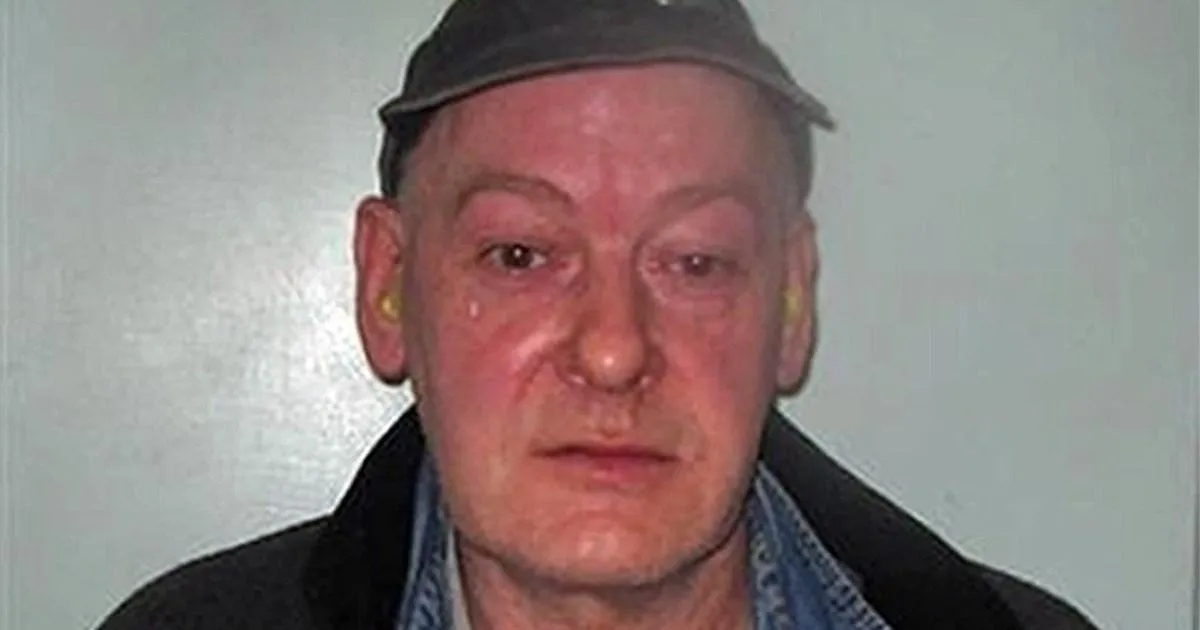
John Sweeney, the double murderer who terrorized women for years, has died in prison at the age of 69, taking a dark and devastating secret with him to the grave. For decades, the families of Paula Fields and Melissa Halstead have not only grieved their murdered loved ones but have also carried the unbearable weight of knowing that not all of them have been found. Sweeney, who killed and dismembered his former girlfriends, never revealed where he hid their heads, and he never showed a moment of regret. Now, the retired detective who dedicated years to catching him has made a heartbreaking public appeal: if anyone knows where those remains are, please come forward. Howard Groves, a retired Metropolitan Police officer who led the investigation, says he has never stopped wondering about the unanswered questions. He believes deeply that someone out there, maybe a friend, a cellmate, a neighbour, or a stranger holding a terrible secret, knows what happened to Paula and Melissa. With Sweeney no longer alive, there is finally an opening for the truth to emerge without fear. “That’s one of the things I ask myself: does somebody out there know? Because I suspect that someone does, other than Sweeney,” Groves said. “If they do feel they can only do it now that he’s passed away, they’re giving the family the opportunity to deal with that grief that’s still hanging over them.” It is a quiet, compassionate plea from a man who understands that some wounds never fully heal, but that even the smallest piece of information can help close a door that has been open far too long.
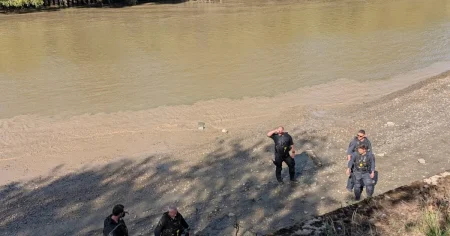
The crimes that Sweeney committed were almost unspeakably brutal, leaving a trail of shattered lives across Europe. Paula Fields was only 31 years old when her mutilated body was discovered in London’s Regent’s Canal in 2001. More than a decade earlier, in 1990, the body of Melissa Halstead, just 33, had been found far from home in a canal in Rotterdam, the Netherlands. For years the two cases seemed separate, distant tragedies. But patient, determined detective work eventually revealed a horrifying connection. Sweeney had been in relationships with both women, and both had become his victims. He dismembered them with a cold, methodical cruelty that went beyond simple violence. For him, cutting a woman’s body into pieces was not just a means of disposal. It was an act of total control, designed to erase any trace of them from the world and to make certain their remains could never be laid to rest. The heads, investigators believe, were kept or disposed of separately, and for reasons known only to Sweeney, he refused to say where. That refusal left a permanent open wound for the families, a grotesque uncertainty that has lingered for decades. By the time Sweeney was finally convicted in 2011, he had already managed to avoid justice for more than twenty years. He sat through part of his trial as if he were above the proceedings, capable of shutting out the evidence against him while the court described in detail the suffering he had caused.
Groves, who retired from policing twelve years ago, remains haunted by the case. He knows that for Paula’s and Melissa’s families, the conviction of their killer, while important, was never enough. A verdict in court cannot replace the missing pieces of someone you love. It cannot give you a place to visit, a grave to tend, or a reason to stop wondering. “I think it’s very difficult for us to appreciate the set of circumstances they find themselves in,” Groves said. “Your loved one has been murdered; you know all their remains haven’t been recovered. You would appeal to the better nature of anybody that has got that information to come forward.” His words reflect a deep understanding that unresolved grief is a particular kind of torment. It is the grief of a child looking at an empty chair, of a parent who still says goodnight to a photograph, of a friend who never stops scanning faces in a crowd. For these families, the missing heads have become more than an item in a police report. They are a symbol of the cruelty that was inflicted on Paula and Melissa in their final moments, and the cruelty that has followed them ever since. Every time a memory surfaces, so does the thought of the body, broken and incomplete. The appeal from Groves is not just about solving a mystery. It is about bringing a small measure of peace to people who have been living in the shadow of violence for too long. It is about saying, even now, that their loved ones deserve to be whole.
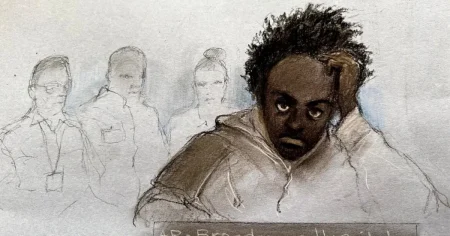
During the trial, Sweeney’s behaviour in court gave those who watched him a rare but chilling glimpse into his true nature. Most people who are falsely accused of murder would cling to every word, desperate to hear the evidence, eager to defend themselves. Sweeney did the opposite. He sat in the defendant’s dock with bright orange earplugs lodged in his ears, physically blocking out the voices of the prosecution and the witnesses. He was, as Groves described, in another world entirely. “He would just sit there with a pair of orange earplugs,” the former DCI recalled. “I always remember to this day; a lot of us were sat in awe thinking, ‘Hang on.’ You are at court claiming you’re not guilty – if I was not guilty in court, I’d want to hear every single thing being said by the prosecution and the defence witnesses. He sat there with the earplugs in and he was just in another world.” For Groves, that image summed up the extraordinary arrogance of the man. “That was my lasting memory of him. Not somebody who showed any remorse, any regret, nothing at all.” It was not just indifference; it was a calculated performance designed to show that he was untouchable. Sweeney was someone who had spent his entire adult life controlling and manipulating the people around him, especially the vulnerable women he targeted. He chose partners who might be down on their luck, isolated from family or short on self-esteem, and then slowly, carefully, took over their lives. He controlled their movements, their friendships, their money. He made sure they had nowhere to turn. And when they finally tried to leave, he killed them. In the courtroom, with the truth laid out for everyone to see, he still could not give up the illusion of control. The earplugs were a final act of defiance, a way of saying that even facing life in prison, he did not have to listen to anyone.
It is also important to remember that Paula Fields and Melissa Halstead were so much more than victims, more than names in a murder file, more than just “former girlfriends” of a serial killer. Paula was thirty-one years old, with a life, a personality, and people who loved her. She laughed, she dreamed, she had everyday moments that made her uniquely herself. She was someone’s daughter, perhaps a sister, an aunt, a friend. Melissa was only thirty-three when she died in a foreign country, thousands of miles from home, alone and vulnerable. She was a woman with her own story, her own fears and hopes, and people who never stopped loving her. The world has remembered them mainly for how they died, but their families remember them for how they lived. They remember birthdays and inside jokes, the little things that made them smile, the future that was stolen from them. Sweeney did not simply take their lives; he tried to take everything, including their dignity. He threw Paula into a canal, he stuffed Melissa into a bag, and he thought that would be the end of it. But the women have not been forgotten. Their memory has been kept alive by a detective who refused to give up, by journalists who demanded justice, and by families who still hope for the final piece of the puzzle. The fact that Sweeney is now dead will not bring Paula or Melissa back. It does not erase the horror of what happened. But it does mean that they are no longer linked, even in death, to the man who killed them. They are free. And the man who believed he could control everything, even after his own death, has lost his final grip on the truth.
Now the only question that matters is whether someone will finally come forward with information about where the heads were hidden. Howard Groves believes, with all his experience and all his intuition, that somebody knows. Perhaps it was a former cellmate who heard a boast over the years, a relative who noticed something strange, or an acquaintance who always suspected Sweeney was capable of terrible things. Maybe there was a moment, a look, a confession whispered in the dark that was never fully understood until now. Sweeney’s death changes things. The fear he inspired, the power he held over people, the silence he imposed with his violent temper, all of that has died with him. There is no longer any reason to protect him. There is no longer any reason to carry the weight of his secret alone. “If they do feel they can only do it now that he’s passed away, they’re giving the family the opportunity to deal with that grief that’s still hanging over them,” Groves said. This is not about revenge, and it is not about punishing a man who can no longer be punished. It is about basic human decency. It is about giving a mother the chance to bury her daughter whole, to put flowers on a grave that contains every part of the person she raised. It is about allowing a brother or sister to say goodbye in the proper way. It is about ending a chapter of grief that has gone on far too long. The police may have closed the case, but they have not closed their hearts. The families are still waiting. Every year that passes, they wonder whether this will be the year the phone rings, whether this will be the year somebody decides to do the right thing. Sweeney may have believed he took his secrets to the grave, but graves cannot protect anyone. The truth is still out there. It just needs someone brave enough to speak it. And if they do, Paula and Melissa can finally rest in peace, and their families can finally begin to heal.