

Paragraph 1: A Return to the Spotlight
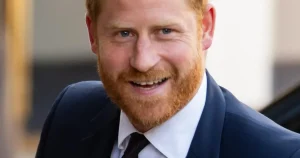
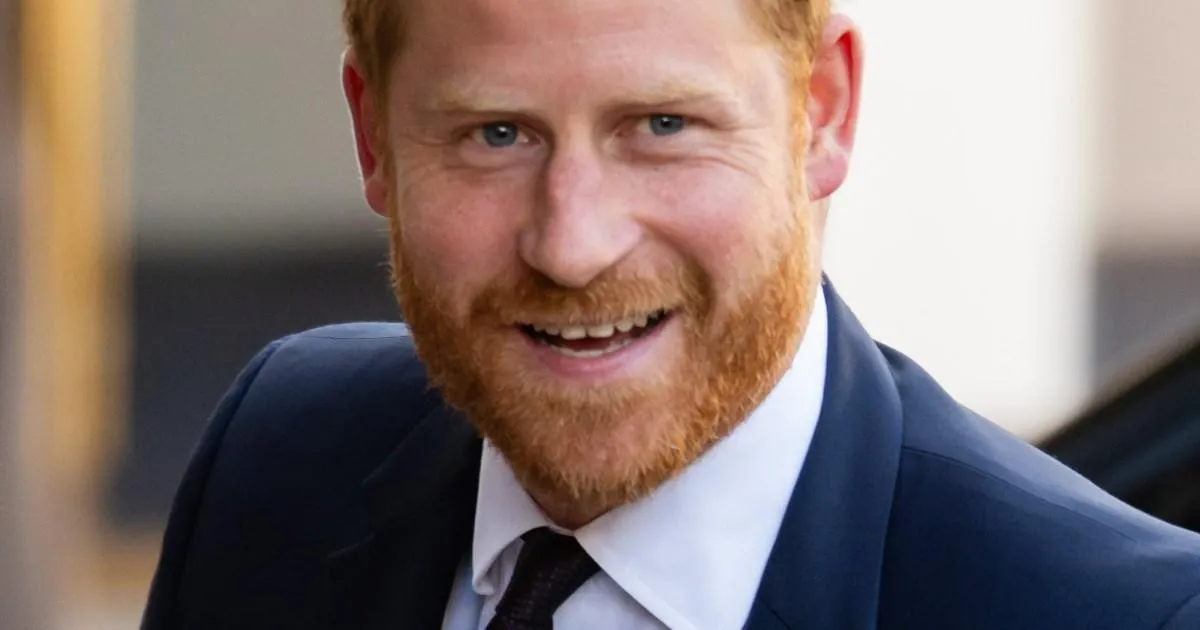
The air in the grand ballroom of the Royal Lancaster Hotel was thick with anticipation, not just for the celebration of extraordinary young people, but for the quiet, subtle return of a prince who has become synonymous with both duty and defiance. Prince Harry, Duke of Sussex, stepped out of a sleek black car and into the flash of cameras, his expression a careful blend of composure and warmth. It was his first public engagement since his uncle, Earl Spencer, had detonated a truth-bomb into the already fragile narrative of the royal family, accusing King Charles of a “giddy” and heartless reaction to the death of Princess Diana. Yet here he was, impeccably dressed in a smart blue suit and tie, not to address the controversy, but to honor the resilience of seriously ill children. The absence of his wife, Meghan, was notable, but it did not diminish the gravity of his presence. He had chosen to appear alone, a solitary figure carrying the weight of a family history that seems to repeat its own painful melodies. As he made his way inside, there was something almost poignant about the contrast between the glittering award ceremony and the storm cloud of familial strife that followed him like a shadow, a reminder that even in moments of public service, the past is never truly behind a man who carries the memory of his mother in every step.
Paragraph 2: Honoring Courage and Finding Solace in Service
The Wellchild Awards, as they have done for years, transform a five-star hotel into a sanctuary of hope and courage. This year, the room was filled with children whose lives have been defined by hospital visits, medical procedures, and battles that no child should ever have to fight, yet they stood tall, their smiles bright with an indomitable spirit. For Prince Harry, this is familiar ground. He has long championed the cause, serving as a patron of WellChild, and his dedication to these young heroes is one of the most consistent threads in his public life. The highlight of the evening came when he met Will Messer, the winner of the Inspirational Child 7-11 category. With a gentle warmth that seemed to cut through the formal setting, Harry knelt down to chat with Will, his eyes meeting the young boy’s with genuine attention. And then came the moment that stole the show: he presented Will with a signed, one-of-a-kind Prince Harry Funko bobblehead toy. The sight of the Duke holding a miniature version of himself—a playful, almost surreal artifact—brought a laugh from the crowd. It was a humanizing gesture, a departure from the rigid protocols of royalty. Later, he met Margot Jones-Billington, the winner in the 4-6 age category, and engaged with other staff and trustees, each interaction marked by a sincerity that felt devoid of performance. For Harry, these moments are not just obligations; they are lifelines, a way to channel his own grief and purpose into something constructive. In a world where his personal life is dissected daily, this room full of brave children offers a quiet refuge.
Paragraph 3: The Shadow of a Bitter Family Feud
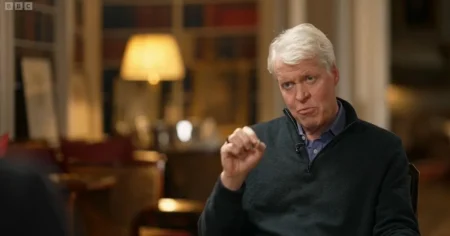
Yet even as he smiled and shook hands, the ghost of a bitter argument hung in the air. Days before, his uncle Charles Spencer had given a bombshell interview to the BBC in which he revived the painful memory of Diana’s funeral, claiming that King Charles had reacted to a suggestion with what Spencer described as a “giddy” and callous remark: “We’ll forget her soon enough.” The context, as Spencer recounted, was the planning of the funeral cortege. The Earl had approached his then-brother-in-law, Charles, to argue that Diana’s young sons, just 15 and 12 at the time, should not have to walk behind their mother’s coffin through the streets of London. Spencer contended that Diana “wouldn’t have wanted that” for her boys. According to the Earl, his plea was met with fury. “He went ballistic, would be the right term,” Spencer told Laura Kuenssberg, describing a tirade about duty and inadequacy. “And then he stopped, and I thought, ‘Oh now he’s going to pull himself together and say something more appropriate.’ And then he said, ‘We’ll forget her soon enough.'” The words, chilling in their bluntness, have reignited a public conversation about the late Princess’s relationship with the monarchy and the emotional scars carried by her sons. For Harry, this must feel like a reopening of an old wound, brought into the open by his own flesh and blood.
Paragraph 4: Revelations That Were No Surprise
Earl Spencer’s memoir promises to be a seismic event in royal history, a sibling’s reckoning with a tragedy that still resonates. But in his interview, he was careful to clarify something that might otherwise seem shocking: he had already spoken with William and Harry about the contents. “I don’t like to talk about what I’ve been speaking about to William and Harry, but this will not be a surprise to them,” he said, adding, “I will tell you that these words will not be a surprise to them.” This quiet revelation suggests that the princes, long viewed as the walking wounded of the royal narrative, have known about their father’s alleged comments for years. The public, however, is learning about it only now. The implications are profound. It paints a picture of a strained relationship between the heir to the throne and his nephews, one where the legacy of Diana remains an unhealed fracture. For Harry, who has already written extensively about his own struggles with the institution and the toll of his mother’s death, this is not new information; it is a painful reminder of the emotional landscape he grew up in. The timing of the award appearance, then, becomes even more significant. He did not cancel. He did not hide. He showed up, which in itself is a statement of resilience—a nod to the very qualities of bravery he was there to celebrate.
Paragraph 5: The Poignant Act of Showing Up
Body language experts and royal watchers were quick to note that Princess Diana’s legacy was, in a way, present in every gesture Harry made that night. There was no visible tension in his jaw, no forced smile. Instead, he leaned in when talking to the children, his hands often resting gently on their shoulders or wheelchair arms, a quiet intimacy that Diana herself was known for. Any hint of personal turmoil was pushed aside, replaced by a focus on others. In a room filled with families facing unimaginable challenges, the Duke didn’t seem like a man burdened by family drama; he seemed like a man using his privilege to bring a little light into the world. It is easy to imagine that in these moments, Harry finds a sense of purpose that eludes him elsewhere. The WellChild Awards allow him to be the person he has always wanted to be—not the spare heir, not the Duke of Sussex, but a compassionate advocate for those who have been dealt the hardest cards. His decision to appear at all, despite the swirling controversy, speaks to a maturity and commitment that has often been overshadowed by the louder narratives of feuds and lawsuits. He was there for the children, and nothing else mattered that evening.
Paragraph 6: A Family History Written in Grief and a Hopeful Future
As the evening drew to a close, the image of Prince Harry holding that little bobbing doll of himself seemed to linger in the minds of those present. It was a symbol of the surreal existence he leads—a man contained in plastic, yet still navigating the raw, unvarnished reality of loss. The controversy over Diana’s funeral is not just a historical footnote; it is a living memory that shapes the relationships between the current monarch and his nephews. Earl Spencer’s decision to go public, whether driven by loyalty to his sister or a desire to set the record straight, has reopened questions that will not be easily quieted. For Harry, the path forward is one of carving out his own legacy, much as his mother did before him. His work with WellChild is a testament to that, offering him a way to transform his own grief into a force for good. As he left the Royal Lancaster Hotel, the applause of the evening still echoic in his ears, he carried with him not just the memories of smiling children but the weight of a family name that is forever tied to both tragedy and tenacity. The awards will be remembered for their celebration of courage, but they will also be remembered as the night a prince chose to stand tall in the middle of a storm, proving that even the most fractured of histories can yield moments of grace.