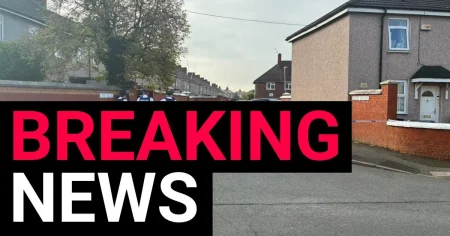


On the night of November 9, 1994, the quiet terraced streets of Moston, Manchester, became the scene of a brutal and senseless act of violence that would echo for more than three decades. Michael McDermott, a 26-year-old man, was lying on the sofa at a relative’s home on Ashville Terrace when a group of masked men armed with baseball bats and knives forced their way through the front door. It was around 10:30 in the evening, a time when most people would expect to feel safe in their own homes, and Michael had no chance to defend himself before the attack began. The intruders set upon him with terrifying ferocity, inflicting multiple injuries including severe stab wounds before fleeing as suddenly as they had arrived. They crossed the road, disappeared into an alleyway leading onto Oakville Terrace, and were driven away by a waiting vehicle. In those brief, chaotic moments, Michael’s life ended and a devastating ripple of grief began its long, unrelenting course through the lives of everyone who loved him. For his family and friends, that November night became a permanent scar in their lives, a wound reopened every anniversary, every birthday, every quiet memory of a man taken far too soon.
In the aftermath of the attack, the investigation struggled to yield justice. The men had worn masks, the attack had been swift, and despite the best efforts of the police, the case eventually went cold. For years, Michael’s family were left with the agony of unanswered questions. Who had done this? Why had these people targeted Michael? Would anyone ever be held accountable? They watched as months turned into years, and years into decades, all while carrying the weight of a loss that never faded. Michael was not just a statistic or a case file; he was a son, a brother, a relative, a friend. He was a young man with a future that was stolen from him in a sudden explosion of violence. The community of Moston, too, felt the shock, and the sight of the police tape and the quiet horror that settled over the street that night became part of local memory. But the world moved on, as it does, while Michael’s loved ones remained frozen in their grief, forever wondering if the people responsible would ever be brought to justice.
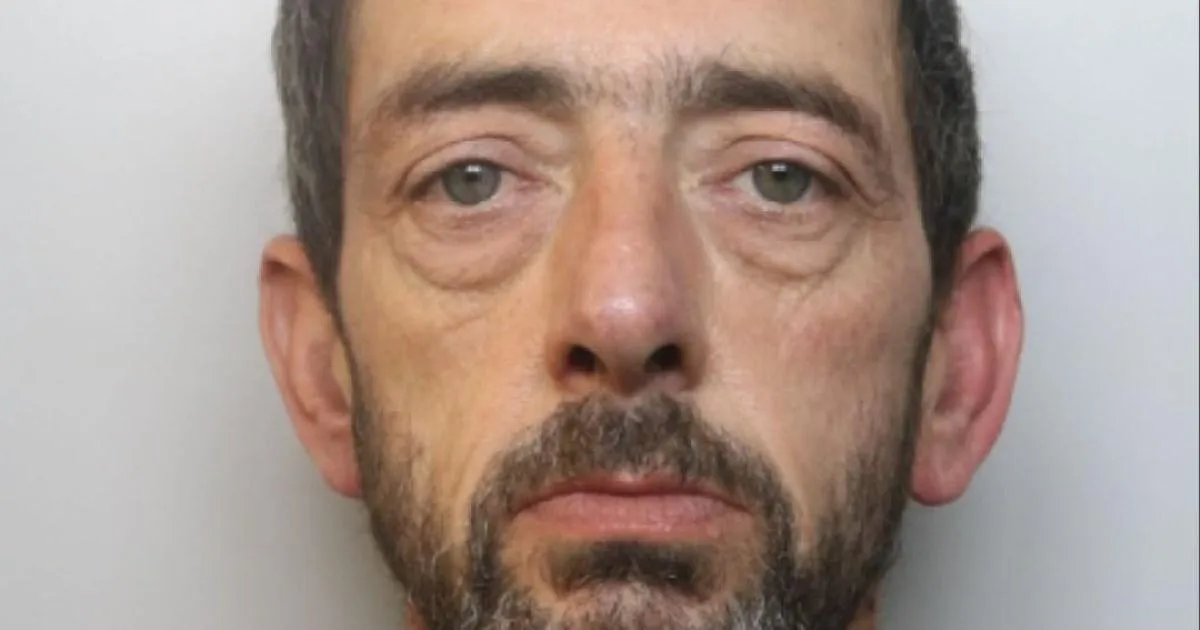
Then, after more than thirty years, something extraordinary happened. Robert Lloyd, a man who had been living with the weight of his own past, walked into a police station and confessed to his involvement in Michael’s murder. It was October 2025, more than three decades after the attack. The confession was not prompted by a new piece of evidence or a sudden cold case break, but by the slow, gnawing burden of guilt that had evidently never left him. Lloyd, now 53 years old, had been a younger man when he took part in the attack, part of that masked group responsible for the violence that ended Michael’s life. His decision to come forward was, in its own way, a turning point in a case that had been dormant for so long. Greater Manchester Police’s major investigation team reopened the case with fresh purpose, and Lloyd was formally charged. In a development that must have seemed almost impossible to Michael’s family for so many years, Lloyd pleaded guilty to murder, accepting responsibility for his part in a crime that had haunted so many people for so long.
The sentencing took place at Manchester Crown Court in March of that same cycle, where the full weight of the law finally caught up with one of the men involved. Lloyd was jailed for life, with a minimum term of seventeen years behind bars before he could even be considered for release. It was a significant sentence, reflecting the severity and violence of the offence, but of course, no sentence could bring Michael back. For Michael’s family, the moment was bittersweet. On one hand, there was a deep sense of validation, a confirmation that their long wait had not been in vain, and that someone was finally held accountable for the horror they had endured. On the other hand, the sentencing also brought all of the pain and trauma flooding back, forcing them to relive the night of the killing in brutal detail. Reporting restrictions had been placed on the case while police continued their inquiries, but those restrictions were lifted by a judge on the Monday following the sentencing, allowing the public to finally know what had happened and what had been done about it.
Detective Inspector Rachel Smith, from GMP’s major investigation team, spoke publicly about the case, expressing the hope that Michael’s family could finally feel a sense of reassurance and peace after the sentencing. She acknowledged that Michael’s death thirty years ago had been devastating for his loved ones and had left unanswered questions ever since. But she was also clear that the investigation was not over. Lloyd may have confessed and been sentenced, but he was not the only person involved. Detectives are now working tirelessly to identify the other members of that masked group, the individuals who had burst through the door with him, the person or persons who had driven the waiting vehicle, and anyone else who played a part in planning or carrying out the attack. The message from the police was simple and direct: it is not too late. Anyone with information about the attack, no matter how small or insignificant it might seem, was urged to come forward. The force released contact details and reminded the public that anonymous information could also be given through Crimestoppers, ensuring that people could share what they knew without fear of reprisal.
Michael McDermott’s story is not just a tale of violence and grief, but also a reminder of the complex nature of justice and the human heart. Lloyd’s confession after thirty years is a strange and sobering moment, proof that guilt can sit heavy on a soul, festering in silence until it demands to be acknowledged. It does not excuse his actions, nor does it erase the terrible suffering he contributed to, but it does show that even after decades, the truth has a way of surfacing. For Michael’s family, the life sentence handed down to Lloyd is not about revenge or closure in any simple sense. It is about knowing that someone was finally held to account, that their boy was not forgotten, and that the community did not let his memory fade. The search for the other attackers continues, and there is hope that Lloyd’s conviction may encourage others with information to come forward, perhaps out of guilt, perhaps out of loyalty, perhaps out of a desire to see justice done. In the end, while nothing can undo the tragic loss of a young life, the belief that it is never too late to seek justice is what carries this case forward. Michael McDermott is gone, but his name is not forgotten, and for the people of Moston and beyond, the hope is that those remaining responsible for his murder will one day face the same scene in a courtroom, finally forced to answer for what was done on that dark November night.