


Paragraph 1: The Shattering of an Evening’s Peace
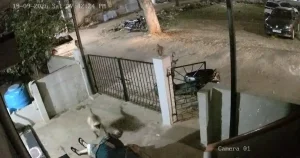
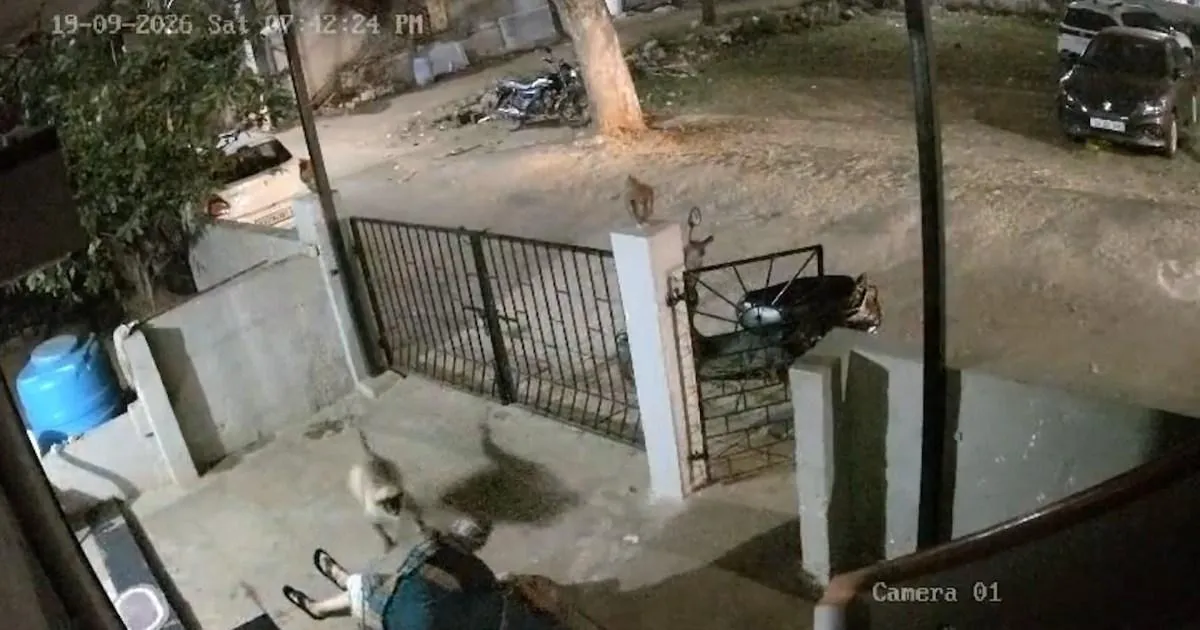
The evening air in B.T. Patil Nagar hung heavy with the promise of a typical Indian twilight. Crickets were beginning their nightly chorus, and the scent of marigolds, dust, and simmering spices drifted through the small, meticulously kept courtyard that had been home to 91-year-old Najamunnisa Begum for decades. It was September 19th, a date that would soon be etched into her family’s memory with agonizing permanence. She stood at the entrance of her modest home, a fragile silhouette against the fading amber light, listening to the familiar, comforting sounds of her neighborhood—the distant hum of traffic, the barking of a stray dog, the laughter of children playing nearby. But then, a noise cut through the gentle symphony. A rustle, a scrape, a movement in the shadows near the side of the house. It was a sound that did not belong. Curiosity, that deeply human instinct which has driven explorers, scientists, and grandmothers alike for millennia, tugged at her frail frame. She shuffled towards the side of the house, her steps slow and deliberate, her thin fingers brushing against the rough plaster wall for balance. She peered around the corner, her eyes squinting to make out the source of the disturbance in the dimming light. What she saw would alter the trajectory of her family’s life forever. There, crouched low, its dark eyes reflecting a glint of the setting sun, was a monkey. In a heartbeat, the tranquility of the evening was shattered by a primal, savage violence. The animal, perhaps startled by her presence or emboldened by a complete lack of human fear, did not retreat. Instead, it launched itself at the elderly woman with terrifying, predatory precision. The CCTV footage, grainy and silent, captures the brutal, swift sequence in chilling detail. The animal’s hind legs extended in a devastating flying kick, striking Najamunnisa’s body with an impact far beyond what her aged bones could withstand. She was sent crashing backward, her body weightless for a fraction of a second before gravity violently reclaimed it. Her head struck the hard, unforgiving concrete ground with a sickening, resonant thud that echoed through the now-silent courtyard. The monkey, seemingly startled by its own aggression or perhaps just moving on to its next target, scurried away across the courtyard, leaving behind a scene of utter devastation where moments before there had been only peaceful twilight.
Paragraph 2: The Desperate Aftermath and a Mother’s Final Fight
For a few agonizing seconds, the world stood still. The only sound was the labored, shallow breathing of the fallen woman. Then, the door of the house swung open. Najamunnisa’s daughter, drawn by the sudden commotion and a mother’s primal instinct, rushed out into the courtyard. The sight that greeted her was a nightmare made real. Her mother, the matriarch of their family, lay sprawled on the ground, unconscious, a growing pool of dark blood seeping from the wound on her head. A scream caught in her throat. But the terror was not yet over. The monkey, which had retreated, suddenly turned and rushed back towards the daughter, baring its teeth, as if to attack again. It was a malevolent gesture, a final insult added to a grievous injury, before the animal leaped onto the garden wall and vanished into the encroaching night. The daughter, shaken to her core, knelt beside her mother, her hands trembling as she tried to rouse her. Neighbors, alerted by the commotion, came running, their faces a mixture of horror and disbelief. The ambulance arrived, and Najamunnisa was rushed to a private hospital, where doctors fought valiantly to save her. Initially, there was a flicker of hope. She was stabilized, her vital signs showing signs of recovery. The family allowed themselves to breathe, to believe that the nightmare was over, that their beloved mother would pull through. But the trauma to her 91-year-old body was too severe. Her condition deteriorated rapidly overnight. The doctors’ faces grew grim. The initial recovery was a cruel mirage. The following day, surrounded by the sobs of her children and grandchildren, Najamunnisa Begum succumbed to her injuries. She passed away, not from a chronic illness or the slow decay of time, but from a sudden, violent, and utterly senseless attack by a wild animal in the sanctuary of her own home.
Paragraph 3: A Pattern of Terror Across the Nation
The tragic death of Najamunnisa is not an isolated incident. It is part of a deeply troubling and escalating pattern of fatal encounters between humans and monkeys across India, a crisis that has been simmering beneath the surface of urban and semi-urban life for years. Just days before her death, on September 10th, a 55-year-old woman in Aligarh, Uttar Pradesh, lost her life after falling from a rooftop while desperately trying to escape a pursuing troop of monkeys. The incident, which occurred in broad daylight, highlights the constant fear and danger that residents in areas with high simian populations face on a daily basis. The woman, whose name has been withheld by authorities, was reportedly collecting something from her terrace when the monkeys cornered her. Her panicked retreat led to a fatal misstep. Then, just four days later, on September 14th, a similar tragedy struck in Shimla, the capital of Himachal Pradesh. Another woman, also middle-aged, died after falling from a rooftop following a reported monkey attack. In Shimla, the problem has reached critical levels, with aggressive rhesus macaques terrorizing residents, snatching food, entering homes, and attacking people with alarming frequency. The city, once a serene hill station, has become a battleground between humans and wildlife. These deaths, occurring within a week of each other, paint a grim picture. They are not merely statistics but represent the human cost of a complex ecological and social crisis. The monkeys, displaced by deforestation and habitat loss, have adapted to urban environments where food is abundant and predators are absent. However, this adaptation has led to increased aggression and a dangerous familiarity with humans, transforming what were once shy forest dwellers into formidable urban threats.
Paragraph 4: The Roots of a Deadly Conflict
The root causes of this escalating conflict are multifaceted and deeply embedded in the rapid transformation of India’s landscape. Decades of unchecked deforestation, urban sprawl, and the expansion of agricultural land have systematically destroyed the natural habitats of macaques and langurs. As their forests shrink, they are forced to venture into human settlements in search of food and shelter. Urban areas, unfortunately, offer a perfect buffet. Uncovered garbage bins, open food markets, and the careless feeding of monkeys by religious devotees or tourists have conditioned them to associate humans with food. This dependency has bred a dangerous boldness. They no longer flee at the sight of a person; instead, they often approach, threaten, or attack. The authorities, however, have largely failed to implement effective mitigation strategies. Sterilization programs are slow and underfunded. Translocation efforts are often ineffective, as monkeys have a remarkable homing instinct and return to their territories. Culling is ethically controversial and often blocked by religious sentiments, as monkeys are revered in Hindu mythology, particularly Lord Hanuman. This creates a political and administrative paralysis. Meanwhile, the risk to vulnerable populations—the elderly, children, and women—continues to rise. The government’s response is often reactive, addressing the issue only after a high-profile fatality, but failing to implement long-term, sustainable solutions. There are no comprehensive urban planning guidelines to manage wildlife populations, no robust public awareness campaigns to discourage feeding, and no effective rapid response teams to handle aggressive animals. The gap between the scale of the problem and the response to it is a chasm of negligence, resulting in a deadly game of roulette for ordinary citizens who simply want to walk out of their front doors without fear of being attacked by a wild animal.
Paragraph 5: The Unquantifiable Grief and Lingering Fear
Beyond the stark statistics and the environmental analysis lies the profound, immeasurable human cost. Najamunnisa Begum was not just a casualty in a wildlife conflict report; she was a mother, a grandmother, a pillar of her community. Her death leaves a gaping hole in the lives of her family. The daughter who found her will forever carry the horrifying image of her mother lying broken on the concrete. The grandchildren who lost a source of unconditional love and ancient wisdom will grow up with the haunting knowledge of how their grandmother died. The grief is compounded by the sheer absurdity and randomness of the tragedy. To survive nine decades of life, to witness wars, famines, the changing of eras, and the birth of generations, only to be killed by a monkey’s kick in your own backyard, is a cruel irony that defies comprehension. The family’s grief is also laced with a deep, simmering anger. Anger at the authorities who failed to protect them, anger at the animal that stole their matriarch, and a profound sense of helplessness. In the days following the incident, the neighborhood of B.T. Patil Nagar has been enveloped in a palpable sense of fear. Parents are reluctant to let their children play outside. Elderly residents are now terrified to step into their own courtyards, the very spaces that once offered peace and security. The community is haunted by the knowledge that the threat is still out there. The monkeys are still roaming the streets, jumping from walls, and watching the humans with their unsettling, intelligent eyes. The psychological trauma extends far beyond the immediate family, weaving a web of anxiety and vulnerability throughout the entire community.
Paragraph 6: A Somber Reflection and a Call for Change
The death of Najamunnisa Begum serves as a somber and urgent wake-up call. It forces us to confront an uncomfortable truth: we have created a world where the boundaries between human and animal territories have blurred to the point of lethal conflict. We cannot simply dismiss this as a wild animal attack, because in a very real sense, it is a consequence of human actions. Our relentless expansion has pushed these creatures into our backyards, and we have failed to adapt to the new reality we have created. The solutions are not easy, but they are not impossible. They require a multi-pronged approach that combines compassionate conservation with effective management. This means investing heavily in habitat restoration, creating green corridors that allow wildlife to thrive away from dense human populations, implementing strict waste management protocols to remove the lure of urban food, and launching public education campaigns that discourage feeding wild animals. It also means empowering local authorities with the resources and legal backing to handle aggressive animals swiftly and humanely, whether through better-equipped sterilization centers or dedicated animal control units. As we reflect on the tragic image of an elderly woman lying in a pool of her own blood, we must honor her memory by demanding better. We must ask our leaders why our mothers and grandmothers cannot feel safe in their own homes. We must advocate for a future where humans and wildlife can coexist, not through fear and violence, but through careful planning and mutual respect. Until then, the risk remains. The monkeys are still watching, waiting in the shadows, and the next victim could be any of us. For Najamunnisa, the twilight came too soon, and it came with a violence that no one should ever have to endure. Her story is a stark reminder of the fragility of life and the urgent need for change.