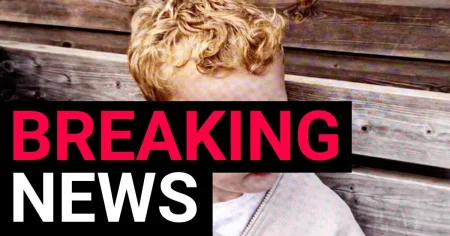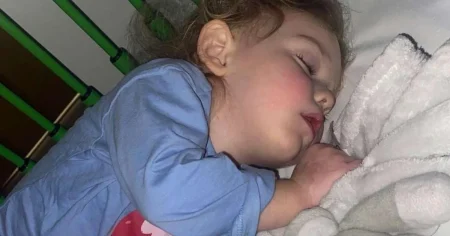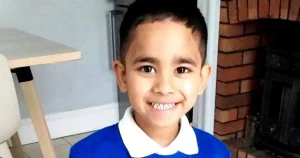

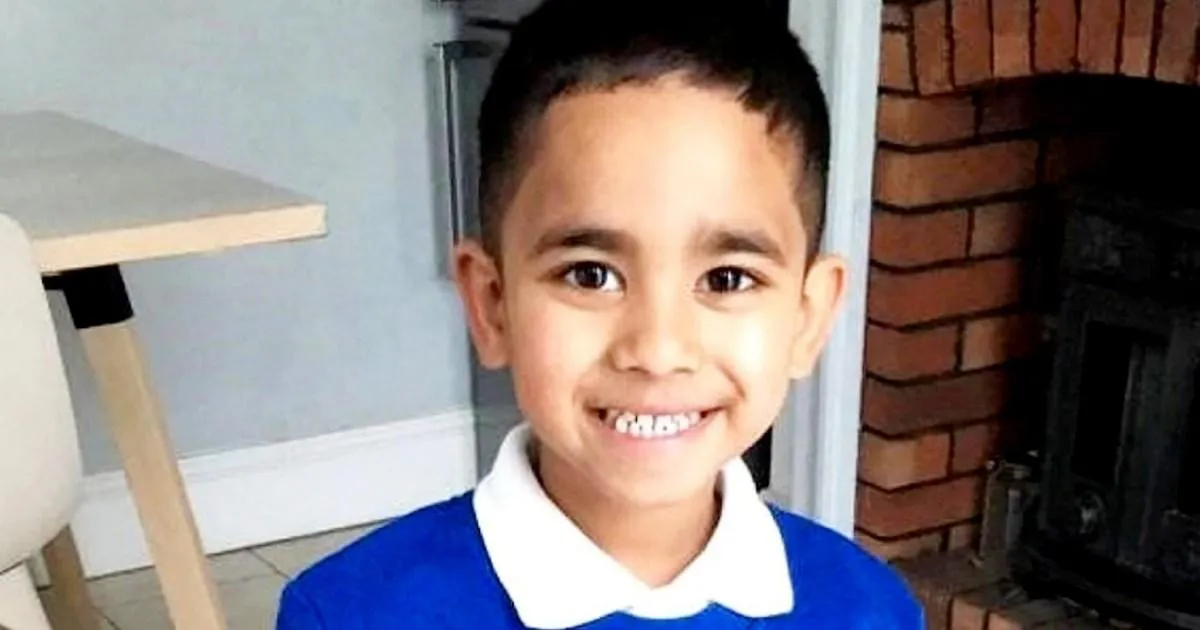
It begins with an image that no mother should ever have to carry: a five-year-old boy, small and still, lying alone on a stretch of narrow tarmac where no car was ever supposed to be. For Salma Begum, that image has not faded with time. It has stayed with her for four years, and it will likely stay with her for the rest of her life. Her son, Abdullah Ebrahim, was just five years old when he was struck and killed by a delivery driver who had chosen to take a shortcut down a road that was clearly marked as a no-entry street. The tragedy unfolded on Back Camberley Street in Beeston, Leeds, a slim back lane separating the rear gardens of two rows of terraced houses—a place where children might reasonably expect to play, to cross, to be safe. It was not a main road, not a through route, not a place where anyone would expect a black Nissan Note to suddenly appear. But on that day, Colin Agyei, a 32-year-old delivery driver, decided that saving a few minutes on his drop-offs was worth breaking the rules of the road. He drove the wrong way down a one-way street, through a no-entry sign, and into the path of a little boy who never had a chance to react. The consequences of that decision were catastrophic, and they have left a family shattered, a community grieving, and a mother forever haunted by the sight of her child lying alone in the road.
The details of the collision are as heartbreaking as they are avoidable. Agyei was working as a delivery driver, navigating the tight, unfamiliar streets of Leeds in search of quicker routes between stops. Back Camberley Street, with its narrow width and hidden location, must have seemed like a convenient cut-through—a way to shave precious seconds off his schedule. But the road was not designed for through traffic. It was not even designed for normal vehicle use at any meaningful speed. It was a back street, the kind of lane that exists for access to garages and bins, not for speeding delivery vans and cars. The one-way system was clearly signed, and the no-entry sign was there for a reason. Yet Agyei ignored it. He drove down the street anyway, in the wrong direction, at a speed that investigators would later determine was unsafe for the road’s condition. When Abdullah ran across the road, he did so without warning, because he had no reason to expect a vehicle. The road was typically empty of cars. It was a place where children could be children, where a five-year-old could dart from one side to the other without looking both ways, because looking both ways was not something that should have been necessary. Agyei hit the boy, and the impact was fatal. What makes the case even more painful is that Agyei claimed he was “oblivious” to the collision. He did not stop. He kept driving. It was only when Abdullah’s mother, Salma Begum, came out of her home that the full horror of what had happened began to surface. She found her son lying in the road, fatally injured, alone. No driver had stopped to help. No one had called for an ambulance on his behalf. The person responsible for the collision had simply driven away, unaware—or so he later claimed—that he had just taken the life of a child.
Salma Begum’s testimony in court brought the raw, enduring pain of her loss into the room. She spoke not just as a witness but as a mother whose world had been torn apart. “What I cannot understand, and what I will never forget, is that he failed to stop and left my child there,” she said. Those words carry the weight of four years of sleepless nights, four years of replaying the worst moment of her life, four years of trying to make sense of something that makes no sense at all. She described the image of Abdullah lying on the floor on his own, and she said that image has stayed with her every single day. It is not the kind of pain that fades with time; it is the kind that becomes part of who you are. A mother should not have to bury her child. A mother should not have to wonder why the person who killed her son did not stop, did not show mercy, did not even acknowledge what he had done. The grief is not just about the loss of Abdullah’s life, though that alone is unbearable. It is also about the circumstances of his death: the fact that he was alone, the fact that no one held his hand, the fact that the driver who struck him continued on his way as if nothing had happened. For Ms Begum, that abandonment is as devastating as the collision itself. She carries not only the memory of her son’s life but also the memory of his death, and the knowledge that in his final moments, he was alone on a cold road, far from the comfort of his mother’s arms.
The legal proceedings brought some measure of accountability, but no measure of healing. Agyei stood trial at Leeds Crown Court, where the jury heard the full details of the case. They deliberated for just 40 minutes before returning a guilty verdict on the charge of causing death by dangerous driving. It was a swift and decisive conclusion, a recognition that Agyei’s decision to drive down a no-entry street was not a minor lapse in judgment but a reckless act that cost a child his life. Judge Tom Bayliss KC sentenced Agyei to six years in prison. In his sentencing remarks, the judge made it clear that Agyei’s actions were driven by nothing more than convenience. “You took Abdullah’s life when you took a shortcut down a one-way street,” he said. “You did for no better reason that it saved you time as a delivery driver.” The judge also noted that the one-way system was clearly signed and that Agyei had ample opportunity to observe those signs. He described the street as a narrow road separating the back gardens of two rows of terraced houses—the sort of place where children may either be playing or crossing. It was, in the judge’s words, a place where a child could be expected to appear at any moment. And yet Agyei drove through it as if it were an ordinary shortcut, as if the rules of the road did not apply to him. The judge accepted that Agyei was remorseful and that he had been “oblivious” to the collision, but that did not change the outcome. It did not bring Abdullah back. It did not ease his mother’s pain. It did not undo the fact that a five-year-old boy was dead because a delivery driver wanted to save a few minutes.
The judge’s words were echoed by Detective Sergeant Steve Suggit, who spoke after sentencing about the broader tragedy of the case. “This was a truly tragic incident that resulted in the death of a young boy and robbed a family of a lifetime of shared memories,” he said. Those shared memories—birthdays, school days, holidays, all the ordinary moments that make up a childhood—were taken away in an instant. The detective also emphasized that the collision was completely avoidable. Had Agyei complied with the no-entry sign and not driven into Back Camberley Street, Abdullah would still be alive. The boy would not have been expecting a vehicle to be driving up the road, and he did not have time to react. Investigators tested the back street thoroughly and found that because of the nature of the road, it was not safe to drive on it at speeds over 7mph. Agyei was estimated to have been driving at around 15mph—more than twice the safe speed for that narrow, unpredictable lane. That may not sound fast in the context of a highway, but on a back street where children play, where sightlines are limited, and where no one expects a car to appear, 15mph is dangerously fast. It was fast enough to kill a child. It was fast enough to end a life. The detective’s words were a stark reminder that road safety is not just about obeying signs for the sake of obeying them; it is about protecting the most vulnerable members of our communities. Abdullah was a little boy, small and fragile, with his whole life ahead of him. He was exactly the kind of road user that drivers need to watch out for, and exactly the kind of road user that Agyei failed to see.
In the end, no sentence can truly equate to the grief that Abdullah’s family faces. Six years in prison may seem like a significant punishment, but for a mother who will spend the rest of her life without her son, it is nothing. It cannot bring back the sound of his laughter. It cannot fill the empty seat at the dinner table. It cannot erase the image of his small body lying in the road. What it can do is send a message: that dangerous driving has consequences, that a shortcut is never worth a life, and that the rules of the road exist for a reason. But for Salma Begum, justice is not a verdict or a sentence. Justice would be having her son back. Justice would be watching him grow up, go to school, make friends, dream dreams. Justice would be never having to testify in court about the worst day of her life. Instead, she carries the weight of a loss that no mother should ever have to bear. She carries it every day, and she will carry it forever. Her story is a reminder that behind every statistic about road deaths, there is a real person, a real family, a real child with a name and a face and a future that was stolen. Abdullah Ebrahim was five years old. He was loved. He is missed. And his mother will never forget the sight of him lying alone in the road, waiting for someone to help, waiting for someone to stop, waiting for the mother who arrived too late to save him. The image haunts her, and through her words, it haunts all of us. It is a call to every driver to slow down, to obey the signs, to remember that the streets we drive through are not just routes from one place to another. They are places where children live, where children play, and where one careless decision can change everything forever.