


Paragraph 1: A Family Day Out That Turned Into a Nightmare
It was meant to be one of those golden summer days that families remember for all the right reasons—sunshine, paddleboards, and the simple joy of a toddler exploring the sea. In early August, three-year-old Ivy Foster was doing exactly what she loved most: playing in the water at Christchurch, a picturesque seaside town in Dorset. Her parents, Kimberley and Oliver, watched her splash and swim, delighted by their “total water baby” who seemed more at home beneath the surface than above it. But as the tide began to recede, something felt terribly wrong. A “horrendous smell” rose from the water and the sand, so pungent and unsettling that the family decided to leave immediately. In hindsight, that foul odor was probably an early warning sign of serious contamination, but at the time it was just a strange, unpleasant end to an otherwise lovely outing. Within days, Ivy’s world—and her family’s—collapsed. She became violently ill, suffering from vomiting, diarrhea, stomach pain, and a high fever. A trip to the hospital confirmed their worst fears: Ivy had contracted an E.coli infection. Now, six weeks later, the little girl remains in a hospital bed at Poole Hospital, fighting an infection that has refused to let go, while her parents wait in anguish, unsure whether their daughter will ever fully recover. What began as a carefree day at the beach has become a prolonged medical ordeal, a nightmare that no family ever imagines when they pack towels and sunscreen for a seaside adventure.
Paragraph 2: A Tiny Girl’s Brutal Battle in the Hospital
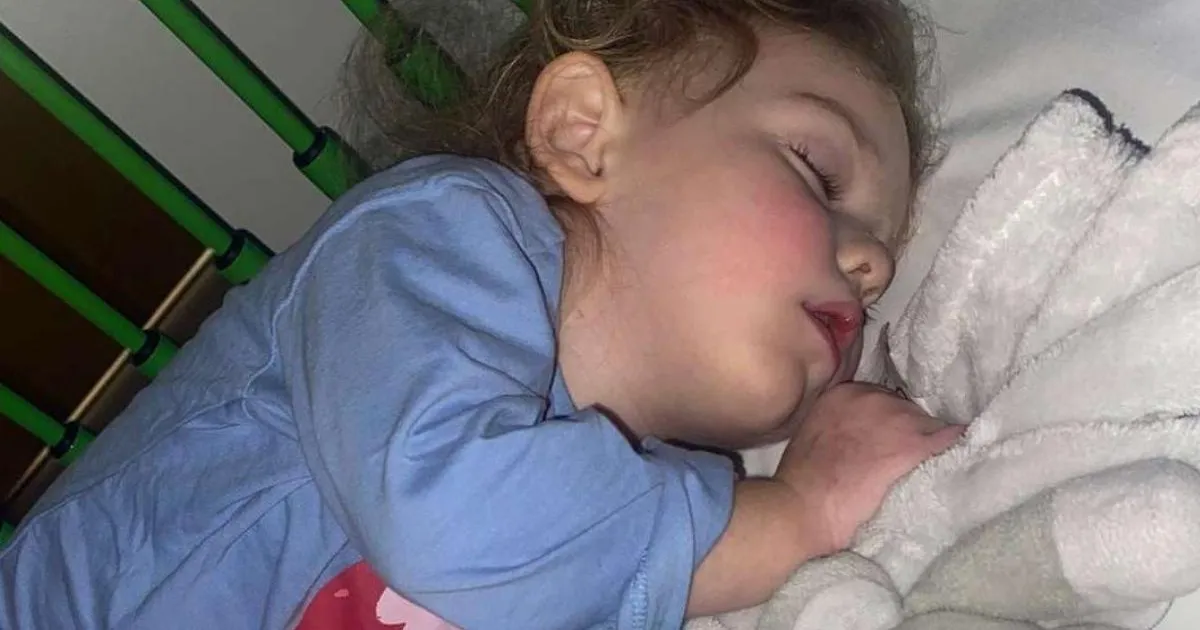
For a three-year-old, the world of hospitals is terrifying enough—but for Ivy, it has become a place of constant pain and fear. She has been through three rounds of IV antibiotics, each one a grueling attempt to beat back the E.coli infection that has taken over her small body. Her aunt, Sophie Piper, described the heartbreaking scene: whenever a nurse or doctor approaches, Ivy screams, terrified that they are going to hurt her. And who can blame her? Her hands and arms are covered in bruises, the marks of countless needles, drips, and cannulas. “She’s so tiny, she doesn’t deserve this,” Sophie said, her words carrying the weight of a family watching helplessly as their little girl suffers. The infection has proven stubborn and resilient. Even though doctors placed Ivy on intravenous antibiotics immediately after her diagnosis, she struggled to shake the illness off. She was treated in hospital twice, but the latest admission came last week, when medical professionals delivered devastating news: the E.coli strain was resistant to normal antibiotics. That resistance has turned an already difficult fight into a much more dangerous one. Ivy’s once lively, happy personality has been overshadowed by exhaustion, discomfort, and the trauma of repeated medical procedures. Her parents watch her endure scan after scan, blood test after blood test, and procedure after procedure, knowing that this is only the beginning of a long, uncertain road.
Paragraph 3: A Water Baby Kept From Her Element
Before this nightmare began, Ivy was a vibrant, joyful little girl. Her aunt remembers her as “a really happy, lively little girl,” someone who brought energy and light to every room. But Ivy’s greatest love was water. “She’s a total water baby,” Sophie said. “When she’s in it she spends more time underwater swimming about than on the surface. She loves the water, which makes this all the more sad.” That last sentence is perhaps the cruelest part of the whole tragedy. The thing that brought Ivy the most happiness has now become the source of her suffering. She is not only fighting an infection; she is separated from the element that made her feel most alive. The medical team at Poole Hospital has been running extensive tests and scans, particularly focused on her kidneys, which are especially vulnerable to damage from E.coli infections. But here is the agonizing truth: doctors have told Kimberley and Oliver that they cannot say with any certainty how severe the damage is. It could take months—perhaps longer—before they know whether Ivy’s kidneys have been permanently harmed. That uncertainty hangs over the family like a dark cloud. They are trapped in a limbo of hope and fear, trying to stay positive while preparing for the possibility that their daughter’s future may involve ongoing health complications. For now, all they can do is wait, hold Ivy’s hand, and pray that her small body can heal itself. But as the weeks stretch on, the emotional toll on everyone involved is becoming unbearable.
Paragraph 4: The Hidden Cost of a Child’s Illness
Beyond the immediate medical crisis, there is another layer of suffering that is rarely seen in hospital visitors’ rooms: financial and practical strain. Kimberley and Oliver are both self-employed. Oliver drives a taxi for a living, and Kimberley works as a hairdresser. Since Ivy fell ill, neither has been able to work. The hospital has become their second home, and their other children—Archie and Poppy—need care and attention too. The family is caught in an impossible juggling act: one parent stays at Ivy’s bedside while the other looks after their other children at home. There is no time for work, no energy for work, and no emotional space for work. Yet without work, there is no income. And without income, the bills pile up, adding financial desperation to an already desperate situation. Sophie described it as “huge pressure” on the couple, who are trying to focus all their energy on Ivy’s recovery but cannot escape the reality of unpaid rent, growing expenses, and the everyday costs of life that do not stop because tragedy has struck. To help, Sophie set up a GoFundMe page, hoping that the kindness of strangers might ease the burden. The response, she hopes, will remind the family that they are not alone. But no amount of money can erase the sight of a three-year-old covered in bruises, or the sound of her screaming when she sees a doctor. What the family truly needs is for Ivy to get better—and for the people responsible for the contaminated water to step forward and face the consequences.
Paragraph 5: A Community Shaken, But Questions Go Unanswered
Ivy’s story, unfortunately, is not an isolated one. Around the same time, eight-year-old Keeva Hollow fell ill with a bacterial infection after swimming at Avon Beach in the first week of August. Keeva has since recovered, but her mother Aishling was horrified to learn at a public meeting about the pollution in Christchurch Harbour that officials seemed unaware of what had happened to her daughter and to Ivy. “Someone has to take responsibility and start looking for answers to protect other children,” she said. The meeting was meant to address the ongoing pollution issues, with representatives from BCP Council, Wessex Water, and the Environment Agency in attendance. Kimberley desperately wanted to be there. She wanted to stand before those officials and tell them what had happened to Ivy, to demand answers, to make sure no other child would have to suffer as her daughter was suffering. Her friends had saved her a seat. But when Kimberley arrived, she was refused entry. Staff at the center told her the meeting was full. She was devastated. She pleaded with them, explaining that her three-year-old daughter was in the hospital fighting an E.coli infection caused by the very water that was being discussed. Still, they would not let her in. Aishling, who was inside the meeting, described it as shocking to learn that officials had no awareness of the children who had been affected. The sense of betrayal is palpable. Families have been sickened, a child is still in the hospital, and yet the institutions responsible for monitoring and protecting the water are seemingly not even tracking the human cost of the pollution.
Paragraph 6: No End in Sight, But Hope Remains
As Ivy finishes her third course of antibiotics, her parents face an anxious wait. The infection has proven resistant to standard treatments, and the long-term damage to her kidneys remains unknown. The doctors’ words echo in their minds: they will not know for months what the outcome will be. For now, Ivy remains in the hospital, small and frightened, enduring procedures that would break even an adult’s spirit. Her aunt Sophie summed up the family’s feelings with heartbreaking simplicity: “We just want Ivy to be completely well again, but it seems that may be a long way off. It is just unbelievable that a lovely family day out can end like this.” The truth is, Ivy’s family has been forced into a battle they never asked for. They are fighting not only for her health but for accountability, for answers, and for the safety of other children. They want to know how a popular beach could become so contaminated that a child’s life was put at risk. They want to know why no one seemed to be watching, why the warning signs were ignored, and why Kimberley was turned away from the very meeting where her voice could have made a difference. Despite everything, there is still hope—hope that Ivy’s young body will recover, hope that the infection has not caused permanent harm, and hope that the public outcry will force real change. Sophie’s GoFundMe page has become more than just a plea for financial help; it is a symbol of community solidarity, a way for people to say, “We care, and we want justice for this little girl.” Ivy Foster is still fighting, still enduring, still clinging to the promise of a future where she can swim again without fear. As her family waits by her bedside, they hold onto one belief: that this nightmare will eventually end, and that their sweet, lively, water-loving girl will one day laugh again—not in a hospital room, but in the sea, where she has always belonged.