


A newly uncovered government database has revealed that British citizens who criticize a specific counter-terrorism policy on social media are being quietly monitored and logged by officials. The program in question is known as Prevent, a safeguarding initiative designed to stop people from becoming terrorists. According to an investigation, the government’s Standards and Compliance Unit (StaCU), which oversees this program, has been actively collecting negative comments posted on platforms like X and Reddit. The unit has logged nearly eighty critical posts between March 2024 and February 2025, targeting unsuspecting social media users who had no idea their public complaints were being cataloged by the state. This secretive practice has raised serious alarms about the state of free speech and the right to dissent in the UK, with human rights groups arguing that criticizing government policy should not land a citizen on a government watchlist.
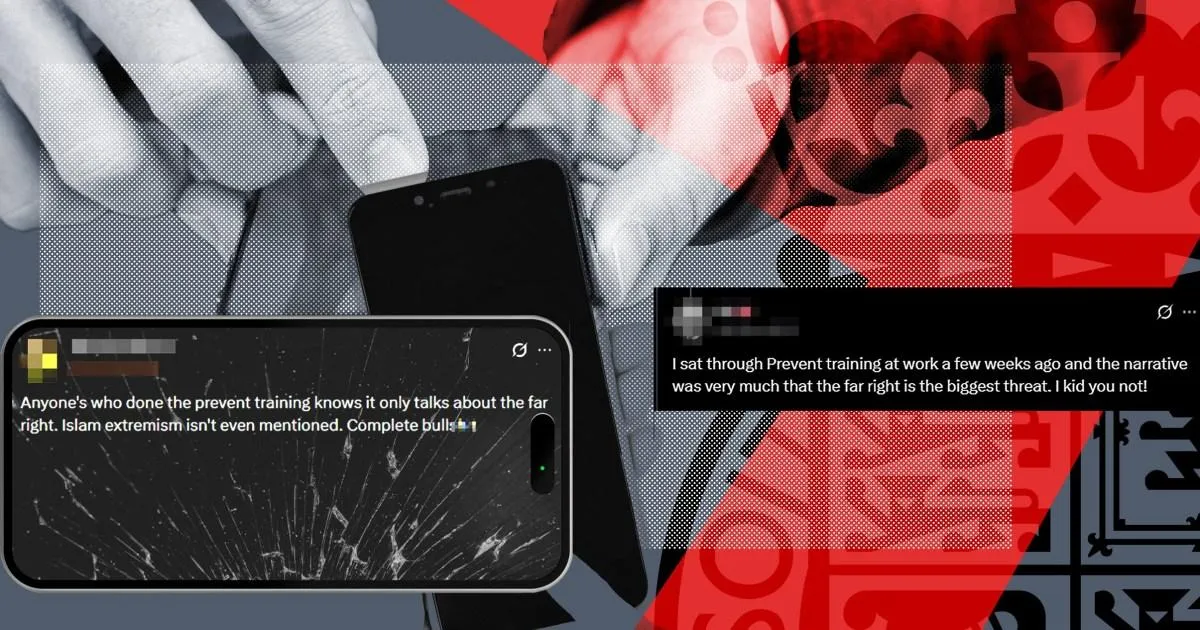
The database was obtained through a Freedom of Information request after a year-long battle by Jacob Smith, the Freedom of Expression and Belief Team Leader at Rights & Security International. The Home Office, which oversees the Prevent program, resisted disclosing this information for more than a year before being compelled to do so by the Information Commissioner’s Office. The very fact that the government fought so hard to keep this list secret has only deepened concerns about what else might be hidden from the public eye. The list itself is comprised of ordinary individuals sharing their honest frustrations about the effectiveness and fairness of the Prevent program. Many of the logged posts are simple complaints about the training provided to public sector workers, with some users arguing that it is biased. For instance, one X user was added to the database for calling the training “complete bullshit,” claiming it only focuses on far-right extremism and completely ignores Islamist extremism. Another individual was logged for similar remarks, noting that their workplace training heavily pushed the narrative that the far-right poses the biggest threat.
Beyond criticisms of training, the database contains posts making far more serious allegations about the program’s impact on minority communities. One tweet claimed that Prevent “closes down conversations in the classroom” because Muslim children are viewed as a threat. Another user was flagged for alleging that Muslim children could be referred to Prevent simply for saying “Free Palestine.” These posts touch on deeply sensitive topics regarding how the program is implemented on the ground and whether it disproportionately targets specific demographics. The digital rights organization Open Rights Group also found themselves on this list. Their flagged tweet criticized the lack of transparency in how data is managed and stored under the Prevent programme. Sarah Lasoye, their Programme Manager for Pre-Crime, expressed deep concern about the revelation. She stated that Prevent has expanded far beyond its original mandate of identifying those vulnerable to radicalisation, and is now being used to justify extensive surveillance. She emphasized that it is deeply concerning to see the program being used to monitor people and organizations simply for being critical of it, which raises serious questions about freedom of expression and the right to protest. She also pressed for greater clarity on how long this information is retained, who it is shared with, and what the ultimate purpose of gathering it is.
The process by which StaCU handles these posts adds another layer of concern. While the unit claims to independently verify the claims made in the posts, they were only able to do so for a mere ten percent of them. In some cases, the Commission for Countering Extremism, the parent body of StaCU, publicly responds to the posts. They often ask the original poster to submit a formal complaint about Prevent, providing a link for them to do so. However, they do not inform the user that their social media post has already been logged into an internal government database. This proactive approach to finding critics on social media and encouraging them to engage further with the system feels more like an attempt to build a case against dissenters than a genuine effort to improve the program. It is also unclear what happens to these posts once they are recorded, who ultimately has access to this information, and what criteria officials use to decide which posts warrant investigation. The opacity of the entire process is a major point of contention for privacy advocates.
A separate incident involving the Campaign Against Antisemitism highlights the seemingly arbitrary nature of what gets flagged. Their post, which criticized the police’s handling of a Hezbollah vigil and did not even mention Prevent by name, was also added to the database. A spokesperson for the group said they weren’t sure whether to be flattered or concerned, adding that if they were flagged for criticizing law enforcement’s lax attitude toward Islamist extremism, they stand by their statement. This specific case demonstrates that the monitoring extends beyond posts that explicitly name the program, suggesting a broader and more ambiguous scope of surveillance. For Jacob Smith, who spent over a year fighting for this information, the core issue is simple: people should be able to express their views on social media without having their words cataloged in government databases. He stressed that while these are social media posts, the users did not post with the expectation that the government might be looking at their feeds and gathering that data. He argues that a social media account feels like an almost private setting, and the idea that officials are compiling lists of critics undermines the very notion of a free society.
In response to the investigation, a spokesperson for the Home Office defended the program, stating that Prevent does not track people who have criticized it and does not target any particular community. They argued that keeping the public safe is the number one priority and that Prevent plays a crucial role in safeguarding those at risk of radicalisation, having moved more than 6,000 people away from violent ideologies since 2015. However, the evidence uncovered by this investigation directly contradicts the claim that the program doesn’t track its critics. The very existence of this database, painstakingly compiled of negative social media posts, suggests a culture of monitoring dissent that sits uncomfortably alongside the ideals of democratic expression. While the government frames this as a necessary part of understanding and improving a vital public safety tool, the public and civil liberties groups view it as a chilling encroachment on fundamental rights. The fear remains that simply voicing an opinion, a right enshrined in democratic principles, could have you added to a secret government list without your knowledge, leading to a society where self-censorship replaces open debate.